Tag Archives: dystopia

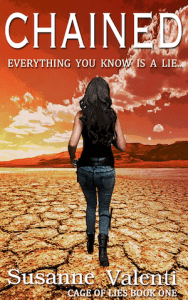
Chained by Susanne Valenti

Standard

chainedcoverChained by Susanne Valenti, e-book, 198 pages, published by Amazon Digital Services, Inc. in 2015.

Years before, humanity was afflicted by a contamination event, which left many dead, and others terribly mutated. Plants and animals were also affected, further endangering humans. The remaining people fled into the walled cities, and began living as part of the population, contributing to and being ruled by the strictures of the new society. Maya has grown up within the safety of the city, hidden behind The Wall, but when her life takes an unexpected course, she finds herself being led beyond the safety zone of the city. Suddenly her eyes are open to a whole other world, making her question everything she has ever been told.

Chained is a fast paced young adult novel suitable for high school students and up. It is packed with action, adventure and a little romance. Nothing explicit though! The story was rather violent with a lot of fighting and deaths, including the use of weaponry such as knives and guns. I enjoyed the action sequences, they were well written and exciting, perfect for getting the adrenaline pumping!

The plot was well developed and logical. I found the story to be engrossing, in fact I had a difficult time stopping myself from reading the next chapter when it was time for bed! Maya and all the residents of the city were being kept in the dark about so many things, and the Guardians used their fear of contamination to control them, a bit like a large cult. As Maya and Laurie began to discover some of the secrets, it made me wonder just what else was being hidden or controlled and why.

The world that has been created in this dystopian novel has the massive enclosed cities, but the rest of the land is similar to that of today, except that everything is exaggerated in size, speed and cognitive functionality. In some ways this makes it scarier, the animals and plants are familiar, yet like nothing we’ve ever experienced, it made me think of what the world might have been like in prehistoric times.

The SubWar area of the city really brought out the worst in people, who were not only condemned to fight for their lives, but appeared to enjoy the killing of others. This might be a comment on the nature of humanity laid bare. The whole situation with the serial killer Grey was a bit odd though. He was completely unhinged, but the way that he looked at Maya, I thought there would be some prior connection between them. The concept of going to fight in SubWar as a punishment is very scary, but Grey and his cronies were just terrifying.

Maya is the main character, and the narration mostly follows her throughout the book. She is petite with a tendency towards anger when frustrated, and has a habit of being somewhat clumsy. Overall I liked Maya, though I thought she should have been straight with Taylor about how she feels about their relationship. However, I think many teenagers could relate to her situation with Taylor, growing up friends, and then puberty changing things.

All of the characters were well written and likable, though I felt a bit sorry for Taylor, with his unrequited love interest in Maya. He seemed like a nice guy, loyal, caring, playful. I thought he would play more of a role in the story than he did, and I would have liked to get to know him a bit better. It could have been an interesting sub-plot with both Taylor and Coal lusting after Maya! Coal was more of a dark horse than Taylor. He has experienced a hard life that has sculpted him into a more mature and serious character than his years would normally lead to. Coal’s sister, Alicia, is tough, but also cheery and cheeky. She often has something snide on the tip of her tongue, but she genuinely embraces life and the people she shares it with. She was a big personality that I really liked. Laurie was more reserved, yet still strong and tough when required.

Susanne Valenti is an emerging author, and Chained is her first book in a five book series called Cage of Lies. This is the start of a great series for fans of dystopian fiction and I am very excited that there is more to come!


*I received this book as a digital copy from the author, who asked me for an honest review of this book. I did not receive any other remuneration, and the review is composed entirely of my own opinions.

Power’s Out by Rachel Meehan

Standard

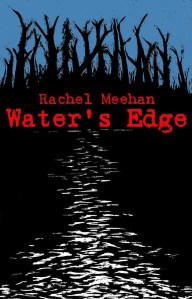
Water's EdgePower’s Out by Rachel Meehan, e-book, 223 pages, published by Cherry House Publishing in 2013.

Two years on from when Paul and Nairne leave the Grear farm behind in Water’s Edge, sees them traveling the countryside with Dog, staying away from the towns and trying to survive. Civilisation is crumbling, bandits control the roadways and the city streets, and there is a dwindling number of people to trust. When they stumble across a self-sufficient community residing in an abandoned convent, they are taken in and given shelter in exchange for Nairne’s assistance with their wind turbines. The community consists of about thirty people working together to survive, including some young people similar in age to Paul and Nairne. This could become home for the pair, ending their wanderings. Nothing is that simple though. Danger is present as they set out to help the community acquire much needed parts and supplies, which means venturing far beyond the safety of the convent’s walls. Their past is also creeping closer, but will it catch them at last?

The second book of the Troubled Times series, Power’s Out, was fast-paced and exciting. With lots of action, it is an exhilarating ride of survival. There was much more explicit violence in this story than its predecessor, which helps to illustrate how civilisation has fallen back to more instinctual behaviours as the world around it falls apart. When the constraints of society fall away and there are no longer any policing bodies to enforce laws, there is violence for gain, and violence for enjoyment. This is a terrifying insight into base human nature, but one which I think is rather accurate. There are plenty of unscrupulous people taking advantage of others in stable communities, but when there is no one to enforce the law, or those enforcers are corrupt, there arises the opportunity for these behaviours to increase. And that’s what we see in Power’s Out. The scenes of violence are vivid and scary, but the people behind the violence are even scarier!

It is easy to step into the Scottish landscape portrayed in this book, and follow along with Nairne and Paul, experiencing what they experience. All of the characters are richly described and developed, allowing the reader to get to know them. With the introduction of more characters from the community, different aspects of Nairne’s and Paul’s characters become evident. Paul and Nairne have become extremely close during their traveling and it is hard to let others in, though they are each tempted by a young member of the community. There are a lot more characters to get to know too. Suddenly Nairne and Paul don’t just have each other to rely on and interact with, they have to cope with others, most of whom do not realise how dire their situation really is. I liked Ronnie a lot. He’s a bit of a clown, but he is also loyal and caring. Iain, I didn’t like as much, he was a prig, but I think most of that came from being jealous of Paul and Isobel. She seemed a bit oblivious to how Iain felt about her, but perhaps she just didn’t want to acknowledge his feelings. She certainly took to Paul, and was likable as a character. I particularly liked Isobel’s father, Jack. He was sensible, kind, intelligent, and fair. He was also very accepting of Paul and Nairne, and was ready to learn from them and to be assisted by them, an attitude that not everyone in the community shared. The older members of the community, including their leader, Arthur, for the most part, were a bit naive, believing that things could continue as they were indefinitely, that they would be left untouched by the outside world.

The end of Power’s Out was very intense. I felt quite anxious as I read the last few chapters, wondering if Nairne and Paul would make it through, if the community would survive, and how things would play out. It left me feeling rather desperate to read the final installment of this wonderful trilogy!

Power’s Out is suitable for high school students through to adults. It contains violence and some bad language. The themes of societal breakdown and environmental disaster could be frightening for less mature readers.


*I received this book as a digital copy from the author, who asked me for an honest review of this book. I did not receive any other remuneration, and the review is composed entirely of my own opinions.

Water’s Edge by Rachel Meehan

Standard

Water's edge cover VFWater’s Edge by Rachel Meehan, e-book, 227 pages, published by Cherry House Publishing in 2013.

Daniel Grear is a firm believer in climate change, and the detrimental effects that it is having on the earth, especially the weather. To make their lives better, he moves his small family into the Scottish countryside onto acreage, where they can try to become mostly self-sufficient. They raise animals, grow food and produce their own electricity, and collect rain-water in tanks. Nairne and her older brother Zane both help out with chores about the farm after school, and Nairne is showing an aptitude for machines and caring for the animals. Coping with wild weather, including storms, excessive rain and heavy snow falls makes life on the farm harder, but they are much better off than many. As things worsen, and sea levels rise dramatically, parts of the UK and Europe flood, displacing hundreds of thousands of people. With a massive influx of people from further south, Nairne convinces Daniel to take in a family of boarders, a city couple, Garrick and Pam, with their teenage son, Paul. They seem alright on the surface, but Nairne quickly becomes uneasy and distrustful, with her feelings exacerbated when a couple of Garrick’s colleague’s move in next door. As food and fuel sources dry up, and even basic supplies become unaffordable, the Grear’s farm with all of its resources becomes a very desirable location. Nairne soon learns that some people will go to extraordinary lengths to get what they want, and beware anyone that might get in their way.

This is the first book in the Troubled Times series by Rachel Meehan. It deals with the issues of climate change and global warming and themes of human nature, including survival and desperation. The effects of climate change that we have seen so far have drastically accelerated, the polar caps are melting at an alarming rate, raising sea levels and causing storms. There is drought, fires, floods and storms that are devastating vast sections of Earth. These events could really happen to our world if we, as a human race, continue to trash the environment and use reckless amounts of fossil fuels. The author has obviously put a great deal of effort into researching climate change science, and this comes through in the details of this story. She has also put a lot of thought into how people would react if such a widespread catastrophe were to occur. The desperation to survive at any cost is evident in the town, with arguments, looting, fights and thievery, and that’s just the average law abiding citizens! They just want to have enough food, shelter and water to survive. The ones that want to take advantage of the situation, like Garrick and his mates, are ruthless, and concerned with profit and power far more than with getting enough to make their own survival possible. I concur with how this scenario plays, survival, even at the cost of others is basic animal nature, and I think that is how most people would react if they became desperate. That there will be some prepared to take things further is almost inevitable, we hear everyday on the news about people that have done something abhorrent even in the best of times, without remorse or guilt. This could only be amplified in the disarray of a global catastrophe.

All of the characters in Water’s Edge were deeply developed and realistic. Through the story I felt like I really got to know Nairne. She is tough, headstrong and practical, a great female lead character. I admired her abilities about the farm, and her disregard for what others might think of her. At fourteen, she has much more weighing on her shoulders than most, yet she slogs forth with tenacity, honesty and integrity. She’s got a sharp tongue, a temper, and she can come across as a bit abrasive, but I really liked her. I liked Zane and Daniel too, though not as much as Nairne. Zane was a shy follower, who befriends Paul readily. Daniel was a lot like Nairne, though with more years under his belt to learn to control his emotions. In contrast, their new boarders, Garrick and Pam, were extremely different. It was evident from the start that Garrick was a bit off, and Pam seemed to be rather vacuous and incapable of independence. They were well written city characters trying to adjust, and take advantage of, country living. Their friend and colleague, Stevie, and his gang were horrible men, and I can still see Stevie’s evil grin as he hurts someone. The character that changed the most was Garrick’s son Paul. Initially I disliked him, but as the story progressed, he grew on me. He really started trying to make a new life on the farm, helping out, and befriending both Zane and Nairne.

Water’s Edge was interesting,  logical, with well-formed themes and characters, and a little mystery. I enjoyed it, and have already moved onto the second book in the series, Power’s Out. I think it would be best suited to upper primary school and high school students. However, it may not suit less mature children, as the overall theme of disaster and dystopia might be too frightening, and there is some violence and death.

This book really makes me want to live off the grid in a secluded area being self-sufficient, in a well-secured and camouflaged compound with all my family by my side!


*I received this book as a digital copy from the author, who asked me for an honest review of this book. I did not receive any other remuneration, and the review is composed entirely of my own opinions.

Winterkill by Kate A. Boorman

Standard

IMG_3715Winterkill by Kate A. Boorman, paperback novel, 344 pages, published by Faber and Faber Limited in 2014.

Strictly ruled by a group of council members, the settlement has been isolated and lost from other people for several generations. It is surrounded by tall walls from which guards watch the surrounding forest through the night, waiting for signs of the malmaci, a dangerous beast that sometimes takes settlement members. It is important that no one leaves the safety of the settlement after dark, and even during the day, no one should stray too far into the woods. Most of the members of the settlement are obedient and adhere to the routines, rules and rituals of their community, but sometimes a member will stray from the path, becoming known as wayward or stained, bringing shame to their families. Another major concern for the settlement is the freezing winter known as the Winterkill which is almost upon them as Emmeline comes of age. As a cripple and a stained person, she is surprised by a marriage proposal, while still trying to figure out her feelings for another boy in the settlement. All the while she is drawn to the woods, curious as to what lies beyond the settlement. Her curiosity may result in dire consequences for herself, and the other members of her community, but without risk, there can not be discovery.

Winterkill reminded me a lot of M. Night Shyamalan’s film The Village. There were many similar points, isolated village, monster lurking in the forest, overbearing and strict leaders. I liked that movie, but I like this book even more. Right from the start I liked Emmeline. She has determination, courage and individuality in a society which promotes conformity and compliance. A very interesting and strong character that jumps from the page, I just wanted everything to work out well for her. I also liked Kane, the boy that Emmeline fancies. He too, was very well written, interesting and somewhat mysterious. The characters and the landscape became increasingly clear to me as I read, or more fell into Emmeline’s world. I felt her isolation, her shame, her disappointment and wariness. And I felt her desire to explore, to love and to make her Pa proud again. This is definitely a story I won’t forget in a hurry.

This young adult novel is suitable for upper primary through high school students. I found Winterkill to be an intriguing and page-turning read that I would recommend for any fan of dystopian fiction. I have read on Kate A. Boorman’s website that this to be the first book of a triology, with the next book to be released later this year. I will be eagerly awaiting the next installment.


The Giver by Lois Lowry

Standard

IMG_2459The Giver by Lois Lowry, paperback novel, 224 pages, first published by Houghton Mifflin in 1993, this edition published by HarperCollins Children’s Books in 2008.

Jonas lives in the perfect world of the community, where everything is orderly and precise, the rules are strict, and nothing ever changes. There is no inequity or inequality within the community, no diversity, no poverty, no war, no grief, even the family units are assigned by the Elders, nothing is left to chance. It is a community that has been so regulated and controlled that the people cannot imagine any other life could exist or has ever existed.

Upon becoming twelve, the children of the community are assigned their adult roles, in which they will train and then work for the rest of their lives, but Jonas’ assignment is different, he is selected to be the Receiver of Memory, a highly honoured and rare profession that only one member of the community performs. It is a destiny for one with bravery, intelligence and strength, and the “Capacity to See Beyond”. As Jonas embarks upon his training to become the next Receiver, he learns terrible and wonderful things about the world, and the past, that can hardly be believed. It brings him joy and pain and love, emotions that he has not previously experienced. Knowing the truth may prove too much for Jonas to bear.

One of my favourite book genres is dystopian and apocalyptic/post-apocalyptic novels, so I can hardly imagine how such a wonderful book slipped under my radar until now! From the first chapter, I was caught up in the world of the community and in Jonas’ life. I devoured The Giver, experiencing Jonas’ emotions as the life he has always known is exposed as lies, and feeling sorrow, anger and pain with him and for him. The removal of each person’s ability to choose their destiny and life felt like a personal sleight and betrayal, and I became a bit teary when I realised what baby Gabe’s fate would be. Needless to say, I really became immersed within this story, always a sign of a very good book.

I felt that the story ended somewhat abruptly, and unsatisfactorily. I think that was only because I wanted to know more about Jonas’ and Gabe’s lives and what was happening within the community. I wanted to know what happened to Jonas’ family and his friends, but the answers I sought were left to the reader to envisage. I know that this is a common way to end a novel, but sometimes I just really want a concrete finish. However, this tiny disappointment was short-lived, and is the way I often feel when I’ve just finished an excellent book. What can I say, I’m greedy and always want more from my favourite books and authors! It certainly has not dissuaded me from recommending that The Giver be read by everyone, especially those keen on tales of dystopia, and I will definitely be reading his one again.

The Giver is suitable for high school students, and more mature upper primary school students, but adults will also enjoy this book. I have been told there is a movie of The Giver now, but the book is always better, so if you plan to see the film, make sure you read the book first, it is well worth it!