Tag Archives: animals

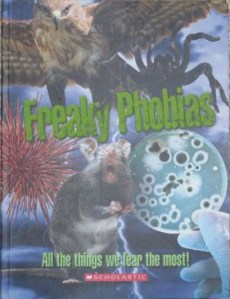
Freaky Phobias by Joel Levy

Standard

IMG_2519Freaky Phobias by Joel Levy, paperback non-fiction, 80 pages, published by Scholastic Australia in 2011.

This book is a fascinating insight into a range of phobias. It covers the most common ones, such as arachnophobia and claustrophobia, alongside some extremely unusual phobias. I never knew there was a word for the fear of otters or knees or kissing, but there is! And there are many other phobias that I had never considered, but discovered in Freaky Phobias.

Freaky Phobias is an informative and interesting book for primary aged children. I learnt quite a lot whilst reading Freaky Phobias, as did my second grader. It had a good depth of information for children, and plenty of fun facts to engage the reader. The photography depicted all of the terrors contained within the book with such clarity that my second grader wanted to skip some of the pages because she felt anxious.

Freaky Phobias contains an A-Z of Phobias, providing the names and descriptions of quite a few phobias. I think this glossary could have been enhanced by including the phonetic spelling of the names, as some of them are quite long and complicated words, which I had difficulty pronouncing.

This is quite a good non-fiction title for young learners (and big ones too!)


Tortoise and the Hair by P. Crumble and Louis Shea

Standard

IMG_2517Tortoise and the Hair by P. Crumble and illustrated by Louis Shea, paperback picture book, published by Scholastic Australia in 2014.

Tortoise is getting ready for his big singing performance, but he can’t find his favourite wig! He needs that wig to perform, but where has it got to? He starts searching all over the house. Meanwhile, the wig is having its own interesting journey, after Bear picks it up on the bus, and eventually Hare acquires it. Can Tortoise get the wig in time or will he perform without it?

We have laughed plenty through many readings of Tortoise and the Hair. It is an unusual twist to the old tale of the tortoise and the hare, playing with the words hare/hair. When we read this book the first time, I told my preschooler that Tortoise’s wig made me think of Elvis, and she said “who’s Elvis?”…. I really must try to educate my kids on such important things! Despite this shocking lack of knowledge, both my kids liked Tortoise, with and without the wig. I liked the message of the story that Tortoise can accomplish his dreams without the external reassurance of his wig. He is talented and special just being himself. It is an important thing for our children to remember, that everyone is special and being ourselves is the best we can be.

Amusing rhyming text and fantastic illustrations make Tortoise and the Hair a great book to share with preschoolers and lower primary school children. My kids like picking out funny things in the pictures, like the kangaroo paperboy and Monkey in his hammock. I was pleased to see Hare make an appearance too, racing to the venue!


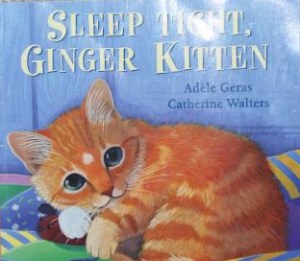
Sleep Tight, Ginger Kitten by Adèle Geras and Catherine Walters

Standard

IMG_2447Sleep Tight, Ginger Kitten by Adèle Geras and illustrated by Catherine Walters, paperback picture book, first published by Little Tiger Press in 2001, this edition published by Ice Water Press in 2001.

The sleepy little ginger kitten is looking for a place to nap. He gets disturbed in the bathroom, and on the bed, the box is too small and the shoes too lumpy, will he ever find a cozy and comfy place to sleep?

This picture book is suitable for preschool and lower primary school children, and is just perfect for kitten and cat lovers. The ginger kitten is extremely cute, and the book is beautifully illustrated throughout. I can remember my cats acting just like this when they were only kittens. Kittens are beautiful and funny creatures, and this story reflects their behaviour well. It reminds me of how lovely it is to have a sleepy kitten curled up on my lap purring. Sleep Tight, Ginger Kitten has been a favourite for both my kitten loving daughters from about three years old.

Paper Bowl Ladybird

Standard

IMG_17471

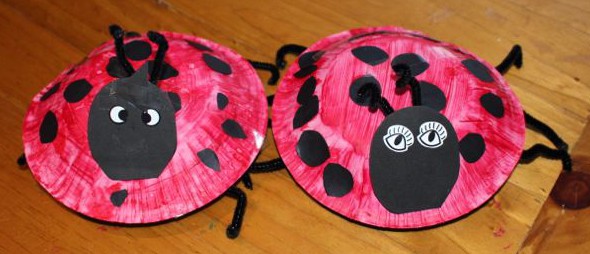
The kids are very excited by bugs at the moment, and they think ladybirds are particularly nice. They made a ladybird each from a paper bowl.

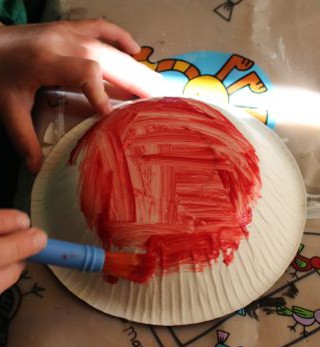
Painting.

Painting.

The faded colour of the painted bowls.

The faded colour of the painted bowls.

They started by painting their upside-down bowls with red paint. The tube stated “Rockin’ Red”, but it looked far more pink on the bowl. We did three coats of red paint on each bowl, but it still looked pinkish and thin. It’s a new tube of paint, and I’m quite disappointed in it, I was hoping for a more vibrant red for our ladybirds. No matter though, the kids still liked the colour!

Gluing on spots.

Gluing on spots.

I cut out the heads from some black foam, and the kids glued them onto the ladybirds’ bodies. They stuck on eye stickers, and added a curled black pipe cleaner for antennae. They also glued on lots of black paper dots that I had cut out earlier.

Sticking on the legs.

Sticking on the legs.

Six legs per ladybird made from black pipe cleaners, and sticky taped to the underside of the bowl, and they were finished. The kids are very proud of their new ladybird friends.

A's ladybird.

A’s ladybird.

L's ladybird.

L’s ladybird.


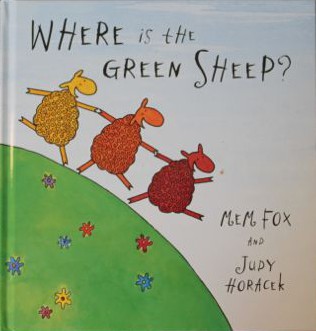
Where is the Green Sheep? by Mem Fox and Judy Horacek

Standard

IMG_1566Where is the Green Sheep? by Mem Fox and illustrated by Judy Horacek, hardback picture book, published by Penguin Books (Australia) in 2004.

There are blue sheep and star sheep, up sheep and car sheep, but where is the green sheep? Find out as you turn the pages, discovering many different sheep along the way.

A brilliant early childhood book, Where is the Green Sheep? is perfect for every child. We discovered it by chance at the library when my first child was a toddler. We borrowed it so often over the following months we finally went out and bought our own copy. It has been read many many times, to the point where the kids could repeat it verbatim without even opening the book. Despite this, I never tire of reading this book to my kids, it really brings them (and me) so much joy. Where is the Green Sheep? is a wonderful book to share with toddlers and preschoolers, and older children will also enjoy the lyrical text and cute pictures.

It is a fun rhyming search through the flock to find the elusive green sheep. The story and illustrations are simple, yet extremely engaging for young children. The text is large and easy to read. The language is suitable for children just learning to read as well. We like to read Where is the Green Sheep? aloud, building up the rhythm of the text, and the kids always join in for “But where is the green sheep?”. The sheep are very distinctive, and the kids enjoy discovering what type of sheep are on each page, as if they have never read it before.

No children’s library would be really complete without this magnificent picture book from one of Australia’s favourite authors, Mem Fox. Now don’t be a slow sheep, go out and find the green sheep! (from all good book sellers).


* Where is the Green Sheep? was the winner for the 2004 Children’s Book Council of Australia Book of the Year in the Early Childhood category.

Banjo and Ruby Red by Libby Gleeson and Freya Blackwood

Standard

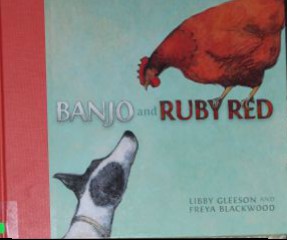
IMG_1486Banjo and Ruby Red by Libby Gleeson and illustrated by Freya Blackwood, hardback picture book, published by Little Hare Books in 2013.

Banjo is a chook dog. It is his job to round up the chooks and get them into their pen to be shut in for the night. He barks and chickens come from all over, except Ruby Red, who sits on the wood heap and ignores Banjo. When Ruby Red falls ill, Banjo finds her and cares for her during her recovery.

Gorgeously illustrated, this story of a wayward and head strong chook and her diligent round-up dog, is both moving and funny. I liked the barking and the squarking, with chooks flying everywhere, it reminded me of the chook yard my grandparents had when I was a child. My preschooler liked that Ruby Red ignores Banjo until he topples the wood pile, this made her laugh. I think she saw herself in Ruby Red, stubborn and resistant til the last! My second grader liked Banjo, and how he cared for Ruby Red when she was sick, even though she had antagonised him in the past. Friendship and love can conquer all.

Banjo and Ruby Red is a lovely book for sharing with preschoolers and lower primary school children, and a must have for primary school libraries!


* Banjo and Ruby Red was an honour book for the 2014 Children’s Book Council of Australia Book of the Year in the Early Childhood category.

Cardboard Roll Sheep

Standard

A loves sheep, and spends a lot of time playing with her sheep figurines. She also likes to draw and make sheep. This sheep was made with a cardboard roll and some cotton balls.

IMG_1500

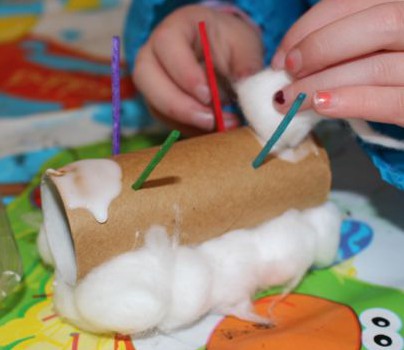
Matchstick legs.

Matchstick legs.

We added legs to the cardboard roll first. I made some small holes and A poked a coloured matchstick into each one. Then she got to gluing on the wool, which was lots of cotton balls. She added so many cotton balls that the sheep became a little heavy for its legs! Next time I think we might need to use popsticks or something else a little sturdier for legs. Either that, or we make the sheep less woolly.

Adding wool.

Adding wool.

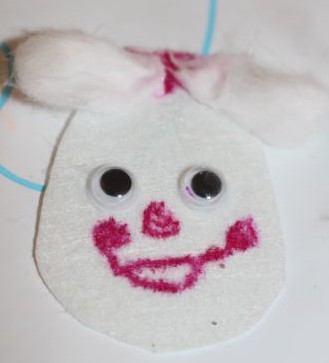
For the face, we used a piece of white felt. A decorated it with a mouth and nose and some googly eyes. She used a little bit of the cotton wool to make two droopy ears, and glued them to the top of the the head. Then she used some craft glue to stick the face to the body, and she had her sheep.

The sheep's head.

The sheep’s head.

A insisted it was just a baby lamb, but I think it looked more like a sheep that hadn’t been shorn for about three years!

A very woolly sheep.

A very woolly sheep.

Baby Bedtime by Mem Fox and Emma Quay

Standard

IMG_1479Baby Bedtime by Mem Fox and illustrated by Emma Quay, hardback picture book, published by the Penguin Group in 2013.

A mummy elephant gets her baby ready for bed with a beautiful bedtime lullaby. She tells her baby all the things she could do, such as nibbling on his ears, and gazing at him all night, but then the time for sleep has come.

Baby Bedtime is a lovely lullaby of love from a mother for her baby. The sentiment would be shared by many parents, and I definitely feel this way about my own children. The illustrations are just gorgeous, and gently rendered, making me feel relaxed and calm. Helpful for lulling little ones into sleep, this is perfect for reading to toddlers and preschoolers before bed. My second grader liked this story, but she thought she was a bit old for it.

Song for a Scarlet Runner by Julie Hunt

Standard

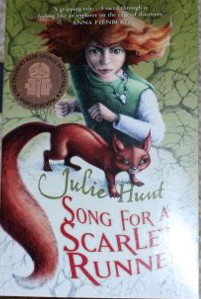
IMG_13590Song for a Scarlet Runner by Julie Hunt, paperback novel, 315 pages, published by Allen & Unwin in 2013.

Peat was cast out by her village as a baby for nothing more than her red hair and different coloured eyes. She is banished along with her sister and mother to the Overhang, where they tend the cows and make cheese for the village. A village that is four days walk away with no other settlements in any direction, only marshes and the Badlands. They live a life of work and isolation, until a stranger appears on the road from the Badlands. He continues on to the village, but brings with him a terrible disease, a disease that hits the village hard, and for which Peat is blamed. Suddenly she finds herself running for her life, knowing she cannot return, but not knowing where she might go either.

Peat encounters a small reddish furred creature with small sharp claws and teeth, which attacks her, steals her food, and then saves her life. She calls him the sleek, and he guides her through the marshes, helping her, feeding her, and occasionally biting or scratching her. The sleek leads her to a island in the marshes where she is trapped by a Marsh Auntie called Eadie. Peat finds herself learning the art of storytelling from the old healer. But, the healer has a secret, a long while before, she made a bargain and now she must pay up, and Peat is the price. Peat is trapped again, this time in a strange, far away land where time has stopped, and her only companions are a little boy that is 900 years old and his ghostly hound, who are also trapped there. Together and with the help of the sleek, can they find a way to escape, to re-enter the world they once lived in? Can they find the happy ending to their own stories?

An excellent read, Song for a Scarlet Runner, was unputdownable, a truly magnificent novel for younger readers from Julie Hunt. This fantasy adventure story was engaging and exciting, with vivid landscapes and detailed characters. The descriptive qualities of this novel were superb, bringing the adventure to life. I could hear the sleek chittering in impatience at Peat, see the multi-pocketed coat that Eadie always wore, and feel the wiry hair of the giant hound as they rode him away from the river. I became immersed in the story as I followed Peat through misfortune, injustice, friendship and love. Ultimately this was a journey of discovery to find her place in the world, and though pushed to take the first steps along the road, Peat makes the most of this opportunity to create her own destiny.

Song for a Scarlet Runner would be most suitable for middle to upper primary school children, though I would be happy for my second grader to read this book. The length of the novel is probably more prohibitive to very young readers than the content or the language. Though, as always, parents should help guide their children to make good book choices for their reading ability and interests. And, of course, reading a book like this with or to your child can be very rewarding!
Jeremy by Chris Faille and Danny Snell

Standard

IMG_1357Jeremy by Chris Faille and illustrated by Danny Snell, published by Working Title Press in 2013.

Jeremy is a baby kookaburra that has fallen out of his nest. The family cat brings him home when he is just a wrinkly little pink ball with closed eyes. The nest is too high to return the bird to, so the family look after him, keeping him warm and feeding him. Jeremy grows feathers, and gets bigger and stronger. All too soon he is ready to face the world on his own.

Jeremy is a heart warming tale of survival, that also serves to introduce the reader to the basics of how a kookaburra develops. The story itself is a simple narrative following Jeremy’s progress from ugly newborn to young adulthood, when he is ready to fend for himself.

Inside the front and back covers, lots of facts about kookaburras are presented, considerably increasing the depth of knowledge gained from this book. The illustrations in Jeremy are an asset to this book, as they are wonderfully life-like, and so detailed. They bring Jeremy to life as he grows and changes.

Several times as a child I found a poor baby bird that had fallen or been pushed from its nest, and tried to save it. None of mine were as lucky as Jeremy though. I was pleased that Jeremy grew into a healthy young kookaburra that could be released back into the wild, despite his shaky start. My preschooler was surprised, having never seen a newly hatched bird,  that baby birds have no feathers and are completely defenceless. She enjoyed the extra facts about kookaburras, and I’m pretty sure she learnt some things!  As this book is mostly non-fiction disguised as a picture book, I think it would be an excellent tool to help encourage children into reading more non-fiction. Good for curious kids in primary school and preschool, I enjoyed sharing Jeremy with my daughter very much.


* Jeremy was the winner of the 2014 Children’s Book Council of Australia Book of the Year in the Eve Pownall Award for Information Books category.