Author Archives: TodayWeDid

Unknown's avatar

About TodayWeDid

I spend my time sharing my love of reading, arts and crafts with my four children. I also review children's and YA books.

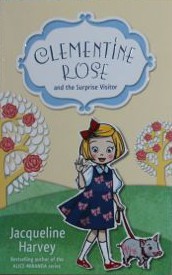
Clementine Rose and the Surprise Visitor by Jacqueline Harvey

Standard

IMG_1399Clementine Rose and the Surprise Visitor by Jacqueline Harvey, paperback, 133 pages, published by Random House Australia in 2012.

Clementine Rose is a sweet little girl of five living in an oversized estate house in disrepair, which her mother, Lady Clarissa Appleby, runs as a country guest house. Also living in Penberthy House, is the very old butler, Digby Pertwhistle, affectionately known as Uncle Digby. Along with her pet tea-cup pig Lavender, Clementine Rose lives a wonderfully happy life. However, all that is threatened when Lade Clarissa’s Aunt Violet appears, moves into the best room in the house with her extremely ugly sphynx, Pharaoh, and grumps and sneers at everyone and everything. Clementine Rose has never met anyone as rude and mean as Aunt Violet. How will they cope with Aunt Violet in the house, and when is she going to leave?

Clementine Rose and the Surprise Visitor is the first book in the Clementine Rose series from Jacqueline Harvey. It is a great introduction to Clementine, who is such a sweet and innocent character. And Aunt Violet is the epitome of sour old lady with her scary cat, and contemptuous sneering and sniping. All the characters are very well written, and the story is engaging and entertaining. The moment Clementine accidentally tosses a guest’s toupee into the fire is just hilarious, and her safari adventure in the library with her friends has prompted my kids to ask for a similar camp-out (though we don’t have fire to toast marshmallows over!). A fun read suitable for kids in lower and middle primary school, Clementine Rose and the Surprise Visitor will make them laugh, and will probably make them want a cute little tea-cup pig just like Lavender!

My second grader enjoys Clementine Rose stories, though she finds them a little easy going now  she will still listen when I read them to her sister. My preschooler just loves the Clementine Rose series, and wants me to keep reading and reading until the book ends! And then she wants to start another straight away. I really like sharing these books with her as well, I enjoy reading about Clementine’s adventures almost as much as she does!
The Treasure Box by Margaret Wild and Freya Blackwood

Standard

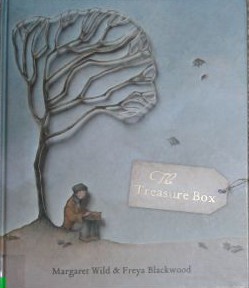
IMG_1398The Treasure Box by Margaret Wild and illustrated by Freya Blackwood, hardback picture book, published by Penguin Group (Australia) in 2013.

Peter and his father are forced to flee their home during the war. They take with them a book in a small iron box. This book is special to Peter’s father, and is the last remaining book after the local library was bombed. The road to safety is long , cold and arduous. When Peter’s father dies, he struggles on, taking the box with him, but when he can go no further, he buries the box beneath a tree. Peter escapes with his life, but he never forgets the iron box holding the treasured book.

The Treasure Box is a poignant story of war, death and loss. Peter loses everything he has ever known, yet he never forgets his father, his home or the treasured book. Some things are more important than gold, silver and rubies. Peter’s book is about his people, the people that were persecuted and forced from their homes, it is an important part of their history. When everything is lost, we still have our history and our memories. The Treasure Box reminds us of the importance of the written word and of history, which can help shape the future for the better.

The illustrations in The Treasure Box were perfectly matched to the story, creating just the right tone as the story progresses. Using subtle shadowing made some of the pictures appear to rise from the page, or created a looking-through-a-window effect. I also liked that some of the pages had parts made up of ripped texts, as if they had been made from the bombed library books.

This is a thought-provoking read for both young and old, and I found it incredibly sad. My preschooler and second grader were shocked when Peter’s father died, and the refugees buried him by the side of the road. They have never been exposed to war or its consequences, and this book was a real eye-opener. They asked a lot of questions, many of which I could not answer. They wanted to know why anyone would go to war, why they would force people to leave their homes, why they would bomb innocent people, why they would kill children, and how can we stop war. I wish I knew the answers and the solutions, and I wish no one had to endure the atrocities of war. The Treasure Box gave us a sorrowfully beautiful, age appropriate and heartfelt opening to discuss this very complicated and saddening topic.


Cloth Wipes Dispenser

Standard

We have used cloth nappies and cloth wipes with all of our children. We keep a shelf of cloth wipes above the change table for nappy changes, and we also keep a pile in the bathroom. I normally sit them on the edge of the bath, but now Baby T is so mobile, he keeps toddling into the bathroom and knocking the wipes into the bathtub. I really needed something to keep them out of his reach, so I had a go at making my own cloth wipes dispenser out of a juice bottle.

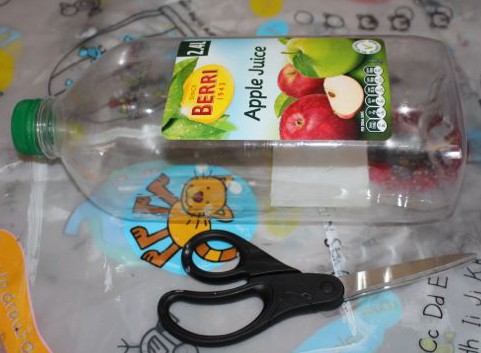
Juice bottle washed and  ready for cutting.

Juice bottle washed and ready for cutting.

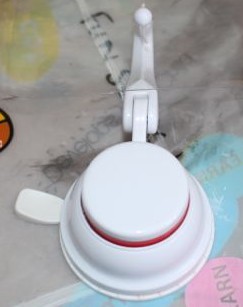
The hook.

The hook.

I washed the bottle and let it dry completely before cutting off the top of the bottle. I used the sharp point of a knife to pierce the plastic, and then used the scissors to cut where I needed to. I also cut a slot out near the base of the bottle where the wipes could be pulled out of.

The slot at the base of the dispenser.

The slot at the base of the dispenser.

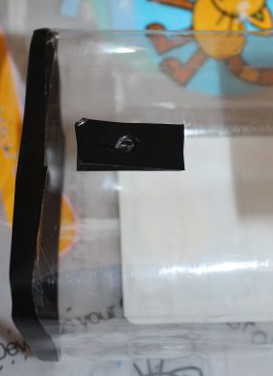
They edges of the cut plastic were a bit sharp, so I covered them with electrical tape to prevent us from getting cut when removing the wipes or re-filling the dispenser. The kids helped me place the tape on the bottle.

The edges smoothed under electrical tape.

The edges smoothed under electrical tape.

To hang the dispenser up, I used a big suction cup hook suitable for bathroom usage. I made a hole big enough for the hook in the back of the bottle, and then used some electrical tape to smooth the edges of the hole. I placed the hook through the hole and then it was ready to hang up. I find that the suction cup hooks tend to un-suction themselves fairly regularly no matter how clean and dry the surfaces are when placing the suction cup. It’s a bit annoying, but I didn’t have any other hooks to use, so this will do until I can replace it with something more permanent. Every time I go into the the bathroom I push the suction cup back down to help it suctioned.

Now our cloth wipes are out of Baby T’s reach, and the kids can still reach them from the toilet, it nice and easy to access the wipes, and I no longer have to pick them up out of them tub everyday. Having a cloth wipes dispenser in the bathroom has been very handy.

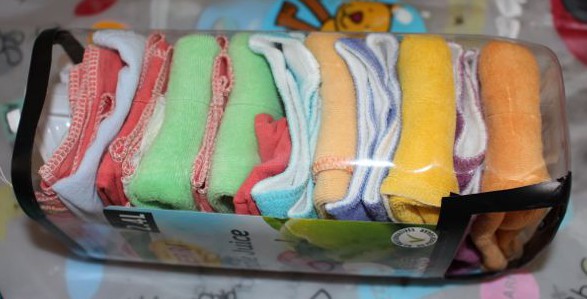
Full of cloth wipes ready for hanging.

Full of cloth wipes ready for hanging.

Hanging in the bathroom.

Hanging in the bathroom.

Sailboat

Standard

A few weeks back Big L brought home some Mexican take away, and the quesadillas came in these wonderful cardboard containers, lined with foil, so no food had touched the cardboard. I immediately saw a boat in these containers, and put them away in the craft box for another day.

The base of the take away container.

The base of the take away container.

A and I pulled them out during the week and removed the lid from one of the containers and turned the base into a sailboat.

Placing the mast.

Placing the mast.

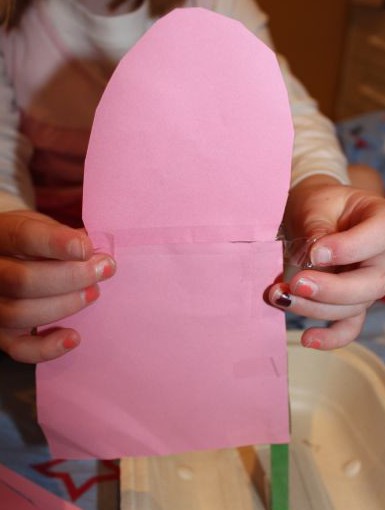
A joined two pop-sticks together end to end to form a mast. I made a small hole in the base of the cardboard boat to insert the mast. A then used tape to secure the mast to the base. She cut out some pink paper for her sail and taped it to the mast. I had been thinking we would just cut one of the paper squares in half diagonally to make a triangular sail, but A had other ideas, and made her own unique sail from two pieces of pink paper.

Adding the sail.

Adding the sail.

Taping on some water.

Taping on some water.

Around the outside of the base we added a layer of blue tissue paper as water for the boat to sail on.

Once her boat was finished, A put one of her dolls and a small teddy into the sailboat and took them for a ride.

Teddy and dolly ready for sailing.

Teddy and dolly ready for sailing.

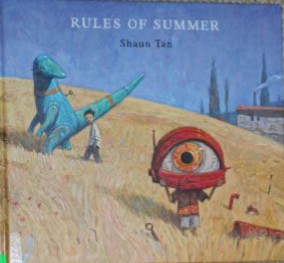
Rules of Summer by Shaun Tan

Standard

IMG_1396Rules of Summer by Shaun Tan, hardback picture book, published by Lothian Children’s Books in 2013.

Two brothers navigate the landscapes of their imaginations in a series of rules as learnt last summer by the younger brother. Never step on a snail or eat the last olive or drop your jar because you never know what the consequences might be!

A magical story about the power of the imagination, and the childhood belief that anything is possible. Rules of Summer reminds me of that old rhyme “Step on a crack and break your mother’s back” that we would sing as we jumped over cracks in the pavement as children. These rules are similar to that rhyme, with nature overtaking the lounge room if the backdoor is left open, a giant red bunny appearing when a sock is left on the line, and a tornado appearing when a snail is squished. As adults it’s easy to say that these things will not really happen, but in a child’s vivid imagination these are only some of the possible outcomes if you break the rules.

With the most engaging illustrations, it is easy to lose yourself in the pictures and re-ignite the spark of imagination and curiosity that may have floundered on the way to adulthood. Sharing this book with your child is a special journey for both children and adults, and is especially good for children in primary school.

Rules of Summer is a reminder to us all of the power and beauty of the imagination.


* Rules of Summer was the winner of the 2014 Children’s Book Council of Australia Book of the Year in the Picture Book category.

Kissed by the Moon by Alison Lester

Standard

IMG_1393Kissed by the Moon by Alison Lester, hardback picture book, published by Penguin Group (Australia) in 2013.

The wishes of a mother for her child. From waking to birdsong, experiencing the great variety of nature, and drifting into dreams, Kissed by the Moon, reads like a lullaby of love between mother and child.

This heart-warming book captures the beauty of the mother and child relationship. For her child she would like the simple pleasures of love, happiness, contentment, safety and experiencing nature in all its forms, things that many parents want for their own children. It is also beautifully and brightly illustrated, a pleasure to see. Kissed by the Moon is a lovely book to read to children before bed, from toddler through primary school, it will remind them of their parents’ love and help them to settle down for a peaceful sleep.


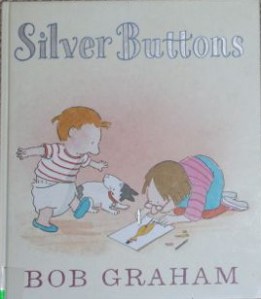
Silver Buttons by Bob Graham

Standard

IMG_1392Silver Buttons by Bob Graham,, hardback picture book, published by Walker Books in 2013.

Jodie is drawing a picture of a duck, in top hat with a cane and silver buttons on his boots. She is just about to draw the second button when her brother takes his first step, an ambulance goes past, phones ring everywhere, children sail boats in the fountain and a baby is born. As her brother tumbles to the ground, Jodie finishes her picture, only a minute has past, but so much has happened.

It’s just a short moment, but many things are occurring, in Jodie’s house, in her neighbourhood and right across the city. For Jodie, her brother taking his first step is a very important moment, but outside and elsewhere, important and not so important things are happening to other people and animals too. Things that we don’t think about much, unless we are the person experiencing them. This is a thought provoking book that can open a new world to children as they contemplate life outside of themselves.

Bob Graham’s distinctive illustrations are beautiful and full of life. We like to study the pictures to see what we can find, and these illustrations gave us plenty to look at. My preschooler spied the jogger in many of the pictures, and this helped her to understand that all of these pictures were happening simultaneously.

Both my second grader and preschooler enjoyed Silver Buttons, and I enjoyed reading it with them. It is a very good picture book for preschoolers and children in lower primary school, though I think some older children would also enjoy this book. As a parent, I was able to use this story to get my kids thinking and talking about things that are happening outside of their own small sphere. It was an interesting conversation! Silver Buttons has already been requested for a re-read, and is sure to read many times in our home.


* Silver buttons was an honours book for the 2014 Children’s Book Council of Australia Book of the Year in the Picture Book category.

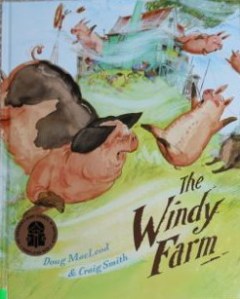
The Windy Farm by Doug MacLeod and Craig Smith

Standard

IMG_1391The Windy Farm by  Doug MacLeod and illustrated by Craig Smith, hardback picture book, published by Working Title Press in 2013.

Living on the windiest farm on Windy Hill is difficult when the wind tries to blow away family members and the pigs. They all have to wear special heavy shoes to avoid being blown right off the hill, but part of their house isn’t so lucky. What will they do with so much wind? Why build a wind-farm of course!

My kids and I really enjoyed The Windy Farm, it was an interesting story with an environmental message. By harnessing the wind, the family was able to produce so much electricity they could sell it and become rich. This book highlights that wind is an infinite resource that we can make use of to fuel our modern lives, as opposed to using oil and coal which will run out in time, just as Uncle Jeff’s well does in the story. This was a nice way to introduce young children to wind power as an alternative energy resource.

I liked both the story and the illustrations. My preschooler loved that the pigs were pictured being blown away by the wind, though Grandpa was just too large for the wind to take him. She has asked me to read this book a number of times, and becomes engrossed in it every time. My second-grader also enjoyed The Windy Farm, taking it away to read on her own. Both kids laughed a lot at the ending! A fantastic book for preschoolers and lower primary school children, it is also a pleasant read for adults, making this book perfect for sharing.

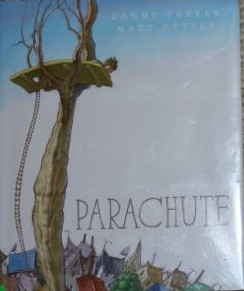
Parachute by Danny Parker and Matt Ottley

Standard

IMG_1397Parachute by Danny Parker and illustrated by Matt Ottley, hardback picture book, published by Little Hare Books in 2013.

Toby is an anxious child, frightened and worried about many things. He especially doesn’t like heights. To combat his fear, he wears a parachute all the time. The parachute helps him to feel safe when getting out of bed, playing at the park and even hopping off the step stool in the bathroom after brushing his teeth. Then his cat needs the parachute more than he does, and Toby realises that he can face and conquer his fears all by himself.

A simple story about overcoming one’s fears and learning to rely on oneself. The illustrations in Parachute are a bit quirky, but I liked them. The pictures showing the exaggerated height of things, as perceived by Toby, were particularly well done. My kids weren’t wrapped in this book though, and have declined to read it a second time. My second grader is an anxious child, so I thought this story would appeal to her, but she thought it was a bit silly that Toby wore a parachute all the time, since she didn’t think it would be much help if he did fall out of bed or off the breakfast stool. My preschooler liked the pictures, and seemed to enjoy the story well enough, so perhaps this book is just more suitable for preschoolers.

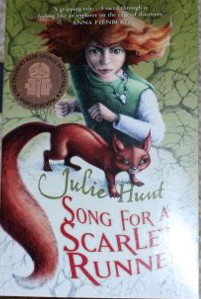
Song for a Scarlet Runner by Julie Hunt

Standard

IMG_13590Song for a Scarlet Runner by Julie Hunt, paperback novel, 315 pages, published by Allen & Unwin in 2013.

Peat was cast out by her village as a baby for nothing more than her red hair and different coloured eyes. She is banished along with her sister and mother to the Overhang, where they tend the cows and make cheese for the village. A village that is four days walk away with no other settlements in any direction, only marshes and the Badlands. They live a life of work and isolation, until a stranger appears on the road from the Badlands. He continues on to the village, but brings with him a terrible disease, a disease that hits the village hard, and for which Peat is blamed. Suddenly she finds herself running for her life, knowing she cannot return, but not knowing where she might go either.

Peat encounters a small reddish furred creature with small sharp claws and teeth, which attacks her, steals her food, and then saves her life. She calls him the sleek, and he guides her through the marshes, helping her, feeding her, and occasionally biting or scratching her. The sleek leads her to a island in the marshes where she is trapped by a Marsh Auntie called Eadie. Peat finds herself learning the art of storytelling from the old healer. But, the healer has a secret, a long while before, she made a bargain and now she must pay up, and Peat is the price. Peat is trapped again, this time in a strange, far away land where time has stopped, and her only companions are a little boy that is 900 years old and his ghostly hound, who are also trapped there. Together and with the help of the sleek, can they find a way to escape, to re-enter the world they once lived in? Can they find the happy ending to their own stories?

An excellent read, Song for a Scarlet Runner, was unputdownable, a truly magnificent novel for younger readers from Julie Hunt. This fantasy adventure story was engaging and exciting, with vivid landscapes and detailed characters. The descriptive qualities of this novel were superb, bringing the adventure to life. I could hear the sleek chittering in impatience at Peat, see the multi-pocketed coat that Eadie always wore, and feel the wiry hair of the giant hound as they rode him away from the river. I became immersed in the story as I followed Peat through misfortune, injustice, friendship and love. Ultimately this was a journey of discovery to find her place in the world, and though pushed to take the first steps along the road, Peat makes the most of this opportunity to create her own destiny.

Song for a Scarlet Runner would be most suitable for middle to upper primary school children, though I would be happy for my second grader to read this book. The length of the novel is probably more prohibitive to very young readers than the content or the language. Though, as always, parents should help guide their children to make good book choices for their reading ability and interests. And, of course, reading a book like this with or to your child can be very rewarding!