Author Archives: TodayWeDid

Unknown's avatar

About TodayWeDid

I spend my time sharing my love of reading, arts and crafts with my four children. I also review children's and YA books.

Wombat Stew by Marcia K Vaughan and Pamela Lofts

Standard

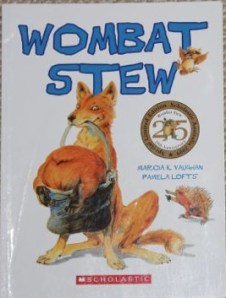
Photos - 14870Wombat Stew by Marcia K Vaughan and illustrated by Pamela Lofts, paperback picture book, first published by Scholastic Australia in 1984, this edition published in 2009.

This classic Australian picture book was a favourite of mine as a child, and now it is a favourite of my own children.

When a very clever dingo catches a wombat and decides to make wombat stew, the other bush animals help him to make the crunchiest and chewiest stew imaginable. They suggest adding mud, flies, feathers and even gumnuts to the billy, but Dingo must taste it before he adds the final ingredient, that lovely fat wombat!

This is a wonderful book to share with preschoolers and primary school children. The story is well told, and funny, with realistic illustrations. My kids particularly like Dingo’s song about his wombat stew as he dances around the billy. They laugh when each new ingredient is added to the billy, and they love it when Dingo tries the stew. A valuable addition to every home library, Wombat Stew is a book that will be read and enjoyed many times!

Hand Shadow Show

Standard

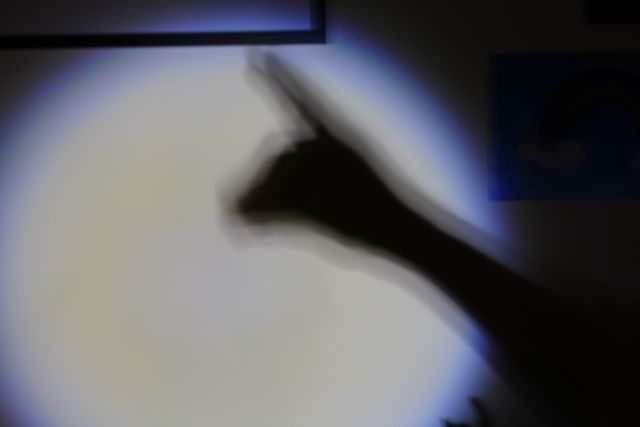
One night last week we had a blackout after dinner. The kids were a little frightened to start with, but then we pulled out torches and candles. This led to the kids putting on a shadow puppet show to pass the time.

A shadow bunny.

A shadow bunny.

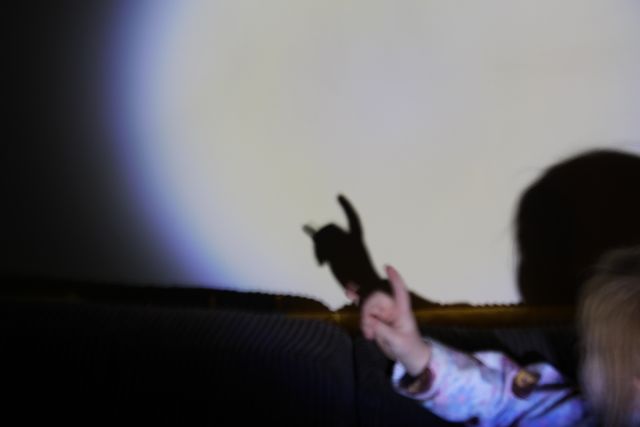
We set up one of the big torches aimed at a clear space on the lounge room wall. The kids stood off to one side and used their hands and arms to make different shadow shapes on the wall. They mostly made animals, adding sound effects, and telling some short stories. Big L made some shadows too. They had lots of fun performing their shadow show, and sooner than they would have liked the lights came back on.

A making a shadow dog.

A making a shadow dog.

L making a shadow animal.

L making a shadow animal.

Woollen Dryer Balls

Standard

With three kids, one of which is in cloth nappies, we have a lot of laundry to do pretty much every day. We try to hang our washing out on the line as much as possible, but when it is cold and wet, we sometimes have to resort to using the dryer. Some time ago I purchased some blue plastic dryer balls. These spiky balls are supposed to reduce drying time in the dryer, as well as reduce static. I think they work, but they clunk in the dryer, and they can be quite loud.

I have seen woolen dryer balls that are also supposed to reduce dryer time and static, but I never got around to purchasing any. When I discovered that these woolen dryer balls were really just big balls of wool that had been felted, I knew I had to try to make my own.

The wool.

The wool.

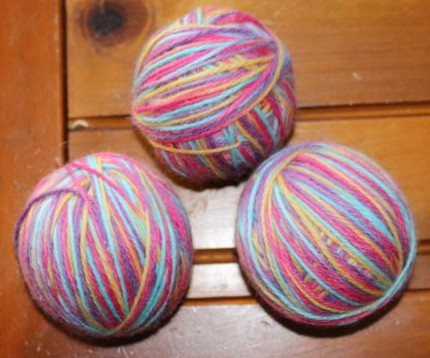
I bought some 100% wool yarn from Lincraft, making sure it was not machine washable (it won’t felt if it is designed to be washed in the washing machine!) Then I proceeded to make my ball. I started off by winding the wool around two of my fingers a dozen or so times, removing it from fingers, and wrapping more wool around this, perpendicular to the first strands. I continued wrapping the wool around and around, forming a small ball. The blue plastic balls we have are about the size of a baseball or tennis ball, so I kept wrapping the wool around until my ball was about this size. Using a big tapestry needle, I darned the end of the wool under a few layers of wool, and then poked the needle through the ball to the opposite side, pulling it through, and clipping off any remaining wool close to the ball.
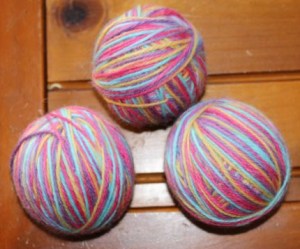
Some of the woolen balls before felting.

Some of the woolen balls before felting.

Some of the dryer balls in old socks.

Some of the dryer balls in old socks.

Felting wool requires water and heat, which is why accidentally placing a damp or wet woollen jumper in the dryer can shrink it and ruin it, as the fibres become felted together. To felt the balls, I placed them into some old odd socks I had lying around, one at a time. I placed hairbands around the sock to close it so that the woolen ball couldn’t come out in the wash. I threw them in the washing machine with some towels and did a hot wash, then they went into the dryer on the hot setting with the towels. This needs to be repeated a few times, until the strands of wool can’t be separated from one another on the outside of the ball. I just waited until I needed to wash towels or sheets and put them through the dryer until the balls were felted enough. I think my first lot of balls went through this process five times before I was happy with them.

This ball has been through the felting process twice, and still needs some more work.

This ball has been through the felting process twice, and still needs some more work.

Each load of washing that goes into the dryer needs around four to six balls to effectively reduce the drying time, more balls are better, especially if you have a large capacity dryer with full loads. I found that I could make three dryer balls from two balls of the Cosy Wool from Lincraft, which were 8 ply 100g balls. So four balls of this wool was enough to give  me six dryer balls for my dryer.

My first lot of finished dryer balls.

My first lot of finished dryer balls.

When it rained last week, I was able to try out my new dryer balls. I was very happy that the clothes didn’t take as long to dry as previously and the woolen balls didn’t clatter about in the dryer like the plastic ones. They will help me reduce our electricity consumption, save me time, and they look pretty! My cat thinks they make good toys to chase down the hall too 🙂

I’m so happy with my new woollen dryer balls, I think we will make some more sets as Christmas presents for some of our family members.

I Love You, Nose! I Love You, Toes! by Linda Davick

Standard

Photos - 15525I Love You, Nose! I Love You, Toes! by Linda Davick, hardback picture book, published by Beach Lane Books in 2013.

This is a wonderful rhyming book that celebrates the body and all the parts that make it up. These children love their bodies, no matter the shape, size, colour or even if it’s bruised or scratched. And you can too!

This was a fun book that we shared, bringing our attention to different parts of the body. As we read , my preschooler pointed to each part on her own body, and made some comments, like ‘My hair is red!’ and ‘That girl’s reading a book on the potty!’ My preschooler loved the rhyming cadence and the clear illustrations. She laughed most at the picture of a girl sneezing with lots of green stuff coming out of her nose! The part about not quite being able to hug the back, got my preschooler trying to hug her back like the children in the picture, it was quite funny. I really liked that this book got my preschooler thinking about her body and just how wonderful it really is.

Yoo-Hoo, Ladybird! by Mem Fox and Laura Ljungkvist

Standard

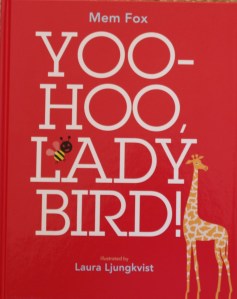
IMG_1189Yoo-Hoo, Ladybird! by Mem Fox and illustrated by Laura Ljungkvist, hardback picture book, published by Penguin Group (Australia) in 2013.

This cute little ladybird just loves to hide. She is hiding somewhere in each picture, can you spot her?

An engaging book for young readers, it involves the child by encouraging them to find the ladybird in each picture. I like that the pages aren’t so packed with items that the ladybird is too hard to find, which makes it perfect for preschoolers. The illustrations are simple, yet unique, with the ladybird hiding among an interesting array of objects. These objects were also fun to spot and name. The story is simple with rhyming text, and my preschooler loved joining in to call ‘Yoo-hoo, Ladybird!’ We really enjoyed this book, and I think it will quickly become a favourite with my preschooler.

My Body by Bloomsbury Discovery

Standard

IMG_1196My Body by Bloomsbury Discovery and illustrated by Joelle Dreidemy, large format non-fiction boardbook with flaps, published by Bloomsbury Publishing Plc in 2014.

Most children love lift-the-flap books, and this one has dozens of flaps that open to reveal lots of fun facts and information about the body. A wonderfully engaging book for preschoolers and children in lower primary, My Body covers human evolution and the various body systems in a detail appropriate for this age group. The main illustrations were plentiful, detailed and clear, showing a good life-like representation of the human body. There were also lots of other illustrations on every page with more facts, and these had more of a cartoon quality about them.

The flaps were a big attraction for my preschooler, but once we started reading, she really got into the information too. She asked a lot of questions while we were reading, she came back to the book later to look through it again herself, and asked me to re-read a few sections to her. We ended up reading the whole book in one sitting as she was enjoying it so much. The information contained within this book was detailed enough that my second grader also found it useful and enlightening. I have heard my preschooler repeat several facts she learnt from My Body, especially that people shouldn’t eat snot because it contains germs!


Ears, Eyes, Nose by Rebecca Bondor

Standard

IMG_1191Ears, Eyes, Nose by Rebecca Bondor, a Rookie Toddler boardbook, published by Children’s Press (Scholastic) in 2014.

This boardbook introduces young children to some of their body parts. It contains clear photographs of children pointing to their own ears, eyes, and other parts. Seeing children just like them can help toddlers and young children to engage in learning new things. And with only one large print word per photo, and a sturdy board construction, this is a great book to start learning body parts with babies and toddlers.

Ten Tiny Toes by Caroline Jayne Church

Standard

IMG_1195Ten Tiny Toes by Caroline Jayne Church, boardbook, published by Cartwheel Books in 2014.

A simple and engaging book for toddlers celebrating their bodies. As I read through Ten Tiny Toes with my son (15 months old), I encouraged him to point to each part of his body and do the actions in the book. He liked looking through the book and pointing to the pictures, and especially grabbing his toes when we read ‘and ten tiny toes!’ He did laugh and giggle when we touched his tummy too. The text was large with rhyming language, and the illustrations were simple, yet nice. This story helped us to focus on learning parts of the body in a fun way that many toddlers will enjoy.

Amazing You! by Dr. Gail Saltz and Lynne Avril Cravath

Standard

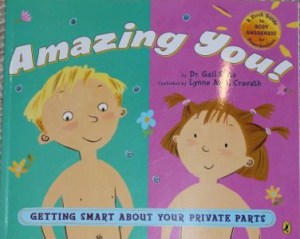
IMG_1170Amazing You! by Dr. Gail Saltz and illustrated by Lynne Avril Cravath, paperback non-fiction, first published by Dutton Children’s Books in 2005, this edition published by Puffin Books in 2008.

Amazing You! is a basic look at the reproductive systems for young children. Aimed at preschoolers, this book provides information on body awareness and answers questions about ‘private parts’. It is a good first journey into what can be an awkward topic for many parents.

The text and illustrations are clear and simple, using anatomical names and easy to understand language. There is also a helpful section at the back of the book for parents on talking about sexual curiosity and where babies come from with their children. When it comes to describe how babies are made, it does not go into extensive detail, but sticks to the basics of egg and sperm, all a preschooler really needs to know. The book mentions that sexual curiosity is natural and normal, including masturbation and asking questions. It also reminds us that our bodies and our sexual organs should not be a source of embarrassment or shame, because they are all part of us, and we are amazing!

Diary of a Wombat by Jackie French and Bruce Whatley

Standard

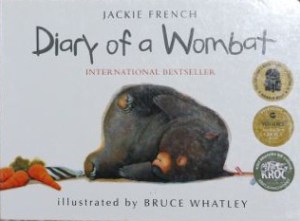
IMG_1171Diary of a Wombat by Jackie French and illustrated by Bruce Whatley, boardboard picture book, first published by HarperCollinsPublishers Australia Pty Ltd, this edition published in 2007.

This is a delightful children’s book about the life of a pet wombat. She sleeps, she eats, she digs holes, she sleeps, and she causes all sorts of destruction and mayhem, she sleeps again. Her human family continue to love her, as she digs up the flowers, chews the doormat and demands lots of carrots.

My children love this book, it is definitely a favourite. They love all the trouble that the wombat gets into, they think it is very funny! The story is written in a diary format, with short, yet descriptive entries for each part of each day. The illustrations are very distinctive, perfectly capturing the wombat’s mood. This is a wonderful book to share with preschoolers and lower primary school children, it will entertain them and it will make them laugh. You’ll probably find yourself chuckling too and wondering why you don’t have a pet wombat to liven up your days!