Category Archives: Nature

Leaf Rubbings

Standard

IMG_3545A, Baby T and I were out walking yesterday and A began to collect some leaves. She mostly picked up gum leaves, but she also picked up some maple leaves, silky oak leaves and some other small leaves from a few bushes. It was a motley collection, but perfect for trying some leaf rubbings.

IMG_3537

We sorted through the crayon tub to find some suitable crayons, and A delighted in pulling off the remaining paper covering these crayons (and then just throwing it on the floor like confetti!). We picked fat crayons so they were easier for A to hold. She placed the leaves on the table and covered them with white paper. I held the paper still while she wielded the crayon on its side, rubbing it over where the leaves were lying. She was amazed to see the shapes of the leaves emerging beneath the crayon. She kept calling them ‘leaf fossils’, I think because we did a rubbing of a dinosaur fossil on a recent trip to the museum.

IMG_3540

Flowers and Vase

Standard

Sometimes we pick flowers from the garden and bring them in to brighten up the dining room, but I always feel a little sad when they wilt and die. So we decided to make some flowers that wouldn’t die, along with a brightly coloured vase to put them in.

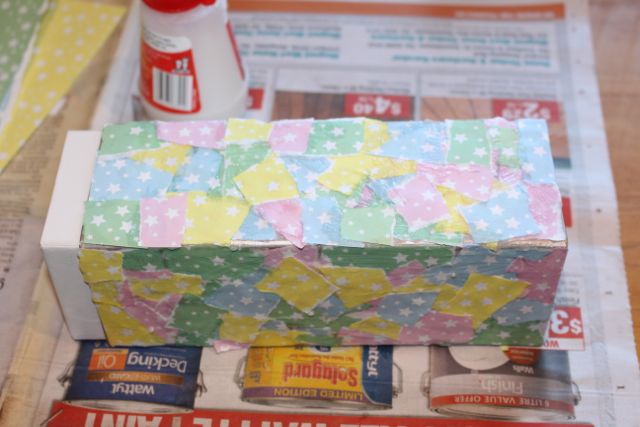
We used a tall, narrow cardboard box for the vase, as I just happened to have a very thick and sturdy box that was perfect for it. A clean tin would have worked equally as well. We started by ripping up some coloured paper into smallish pieces. Our paper was starry and we had the same starry print in four different colours, but any mix of colours or patterns could work. We used glue to paste the ripped up paper pieces on to the outside of the box, so that the surface was completely covered by overlapping the pieces in random order. We did this on each side of the box. L particularly liked ripping up the paper, and A was thrilled to use the glue.

Gluing paper pieces to the box.

Gluing paper pieces to the box.

Half-way through covering the box in paper, letting it dry.

Half-way through covering the box in paper, letting it dry.

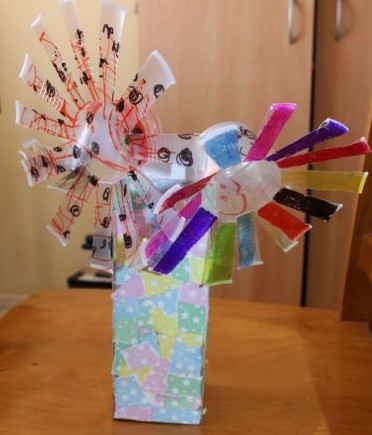
I gave the kids two disposable plastic cups each and a pack of coloured permanent markers to make our flowers. I asked them to colour the cups in with whatever design they would like. Once they had finished their colouring, I cut the tops of the cups into strips, and bent them out to form the petals on our flowers. The edges of the cuts can be a bit sharp, so we had to be careful when handling the cups once I’d cut them. A coloured each of her petals in using all of the different coloured markers. Even though I put down newspaper to protect the paper, somehow L still managed to get blue permanent marker on the table… Big L poked a hole in the base of each cup, and I placed a green pipe cleaner through this hole, bending it down to form the flower stem, and then secured it with some tape on the base of the cup. This gave us four lovely flowers.

A colouring in her cups.

A colouring in her cups.

The cup cut to form petals.

The cup cut to form petals.

Finished vase with some of our flowers.

Finished vase with some of our flowers.

Our finished vase will live on our dining room table, and the kids are already planning to make some more flowers so we can change them over every now and again.

Magnifying Glasses

Standard
Looking at the tree leaves.

Looking at the tree leaves.

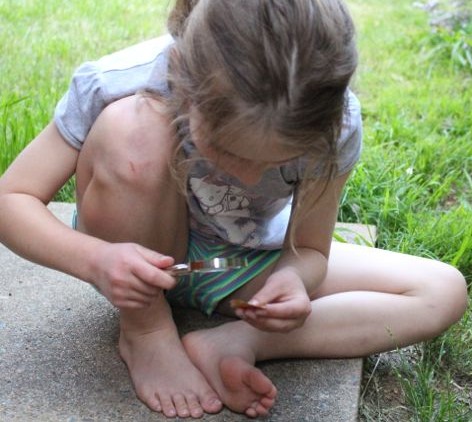
Big L brought home a magnifying glass in a sample bag last week. He gave this to L and found our kids magnifying glass for A. The kids took them into the yard to explore. They looked at leaves, grass, bugs, feathers, flowers, the concrete path, pegs, and many other things, including their own hands and feet. This gave the kids a different perspective on the outside things that they see every day. They really enjoyed using the magnifying glasses, and have asked to explore with them again soon.

Investigating a leaf.

Investigating a leaf.

Investigating a curled up leaf.

Investigating some bark.

Sprouting Birdseed

Standard

Now that’s it’s spring, we’ve started barbequing again. We love to use the bbq, and eat outside when it’s nice. Having our first BBQ of spring made me think of plastic plates and napkins. And since the kids had been playing with a tub of birdseed earlier in the day, I thought we could have a go at growing some of it.
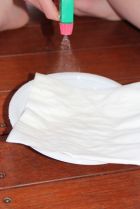
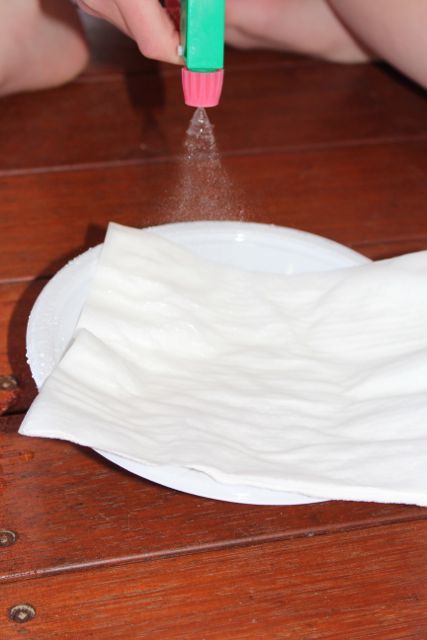
Pre-wetting the napkins.

Pre-wetting the napkins.

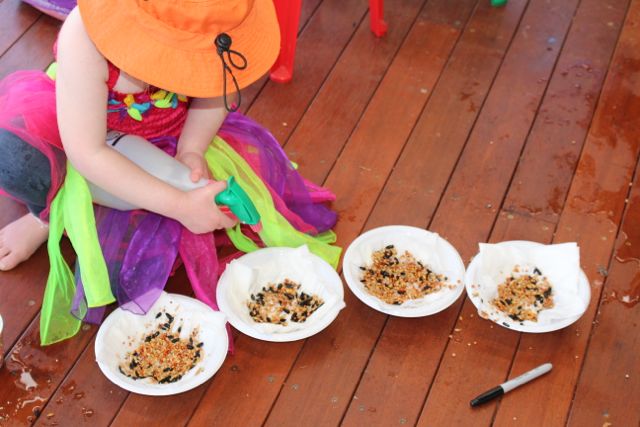
Turns out we didn’t actually have plastic plates, but Big L found some plastic bowls and napkins hidden away on top of a cupboard. The kids took two bowls each, lined them with a couple of napkins, and then sprayed them with water. Then they each tossed some wild birdseed into the bowls, and sprayed them again. A was a bit disappointed when nothing happened straight away.

Birdseed in the bowls.

Birdseed in the bowls.

We moved the bowls into a spot on the dining table where the sun shines through a window in the mornings. Both L and A have been very dedicated in watering the bowls at least twice a day (along with the table, floor, and anything nearby).

A spraying the seeds with water.

A spraying the seeds with water.

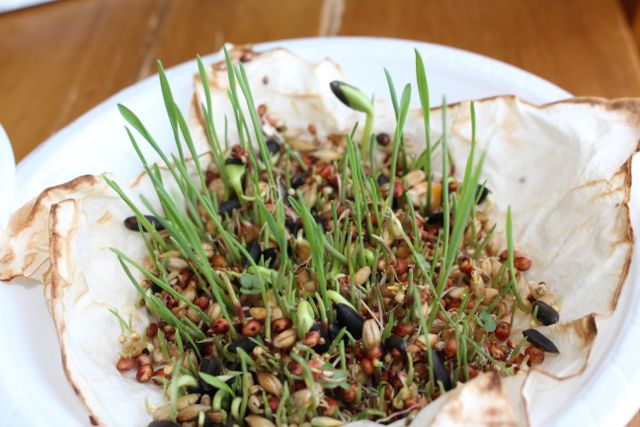
After a few days some of the seeds began to sprout. A was very excited to see the first sprouts coming up. The kids have checked on their bowls multiple times each day to see how they are going, and they have started to notice that the different seeds have different sprouts, and some are different shades of green. L noticed that the different seeds have sprouted at different times, and some are growing more quickly than others. A has been particularly interested in the sunflower sprouts, as the seed shell is still on most of the sprouts, and she’s been wondering if it will come off. I told her she will have to continue to watch and see.

After 8 days.

After 8 days.

This activity has stimulated discussion about the differences between plants and their growth, including what they need to grow. L was a bit sceptical that anything could grow on the paper napkins, as plants normally need soil. Growing them like this has been good because she could see them from the first tiny sprout, that she can’t see when it is growing in soil. She has enjoyed watching the seeds grow, and we will continue to watch them for as long as we can.
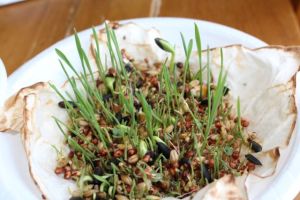
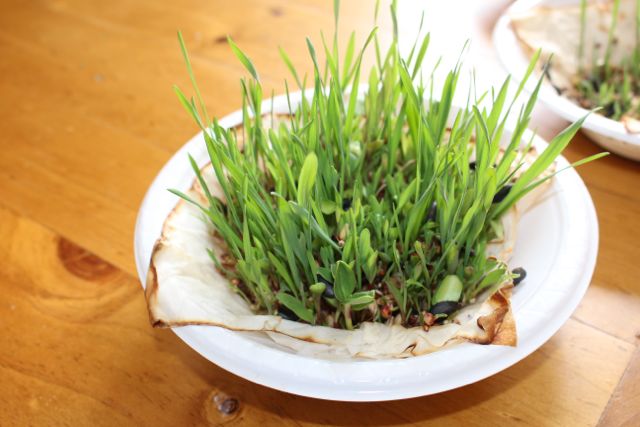
The bowl with the best growth (also the most seeds, thanks to A's enthusiasm).

The bowl with the best growth (also the most seeds, thanks to A’s enthusiasm).
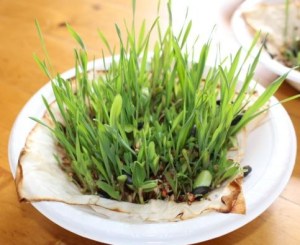
After 2 weeks.

After 2 weeks.


Investigating a Coconut

Standard

L asked what was inside a coconut. So we decided to buy one and see for ourselves.

Draining the milk.

Draining the milk.

Both kids held the coconut and touched its rough skin prior to us attempting to open it. Then Big L took a screwdriver to one of the coconut’s eyes, and pierced a hole into the centre. He drained some of the coconut’s milk out through this hole. L was surprised that this milk wasn’t white like cow’s milk, but she didn’t want to try drinking it.

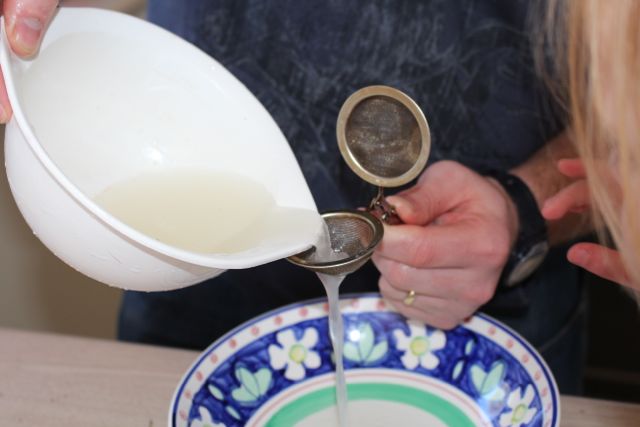
A helped Big L put the milk through a fine sieve to remove the debris from the shell.

Sieving the milk.

Sieving the milk.

Big L upgraded to a bottle opener to make the hole bigger so that the milk would drain more quickly, and he let each of the kids use a corkscrew in the hole too.

Using a corkscrew to open a hole in the coconut.

Using a corkscrew to open a hole in the coconut.

Once all the milk was drained, Big L used the dull side of a large knife to tap the coconut’s shell until it weakened, and he was able to cut the coconut open. The kids were fascinated by the white flesh inside the hairy brown shell. We explained to A that this was where the white stuff on the outside of lamingtons comes from (lamingtons being one of her favourite foods at the moment).

Opened coconut.

Opened coconut.

Unfortunately the coconut had a crack in the shell when we bought it (I can thank online grocery shopping for that) and some mould had grown in the crack, infiltrating the flesh, making the coconut unsuitable for eating. We did have fun opening it and seeing what was inside though, and I think we will probably get another one sometime so that we can try the fresh milk and flesh too.