Author Archives: TodayWeDid

Unknown's avatar

About TodayWeDid

I spend my time sharing my love of reading, arts and crafts with my four children. I also review children's and YA books.

Sight Words Finger Painting

Standard

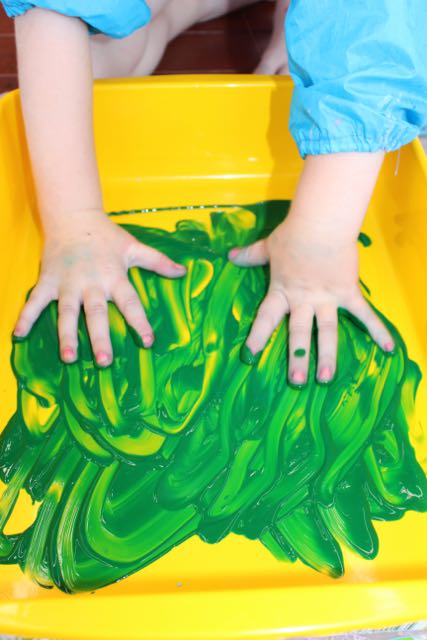
IMG_3893Finger painting last week was so much fun, A asked if we could practice her sight words with finger paint. This time we used ordinary poster paint (Baby T was sleeping), and we squirted some into one of our play tubs. The tub was yellow, so we used green paint as it gave us a good contrast.

Squirts of paint.

Squirts of paint.

Smoothing the paint around the tray.

Smoothing the paint around the tray.

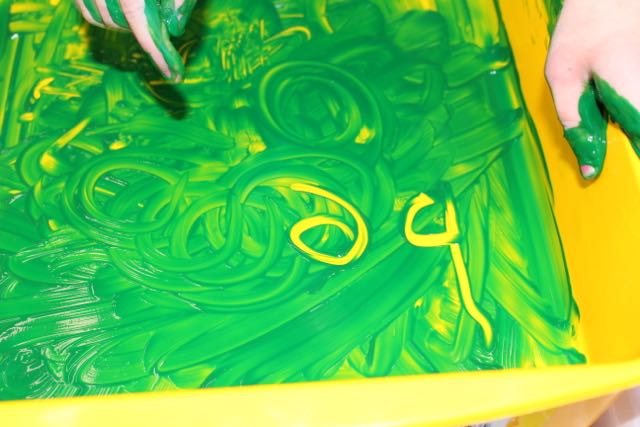
A had a great time spreading the paint around the bottom of the tray, squishing and sliding in it. When she was ready, she smoothed the paint across the bottom of the tray, and then proceeded to use the tip of her index finger to write her words. When she had filled the tray with words, she smoothed the paint over, and wrote some more words.

Writing a word.

Writing a word.

Writing more words.

Writing more words.

Potato Stamping

Standard

IMG_4020

Potato stamps.

Potato stamps.

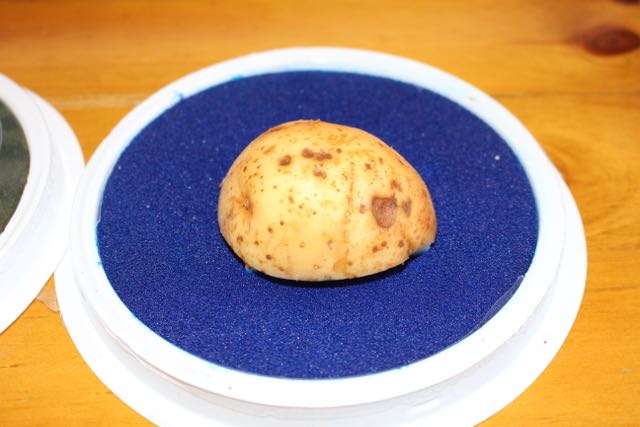
There were some potatoes going soft at the back of the cupboard. I used two of them to make some stamps. Each potato I cut in half, and then cut a basic shape into the flesh of the potato. I used a small, sharp knife to cut away the extra potato, so I had to be very careful.

We used giant paint pads to apply the paint to the potato. These kind of stamping pads are great because they prevent excess paint getting on the stamp, and also avoids waste.

Potato on the paint pad.

Potato on the paint pad.

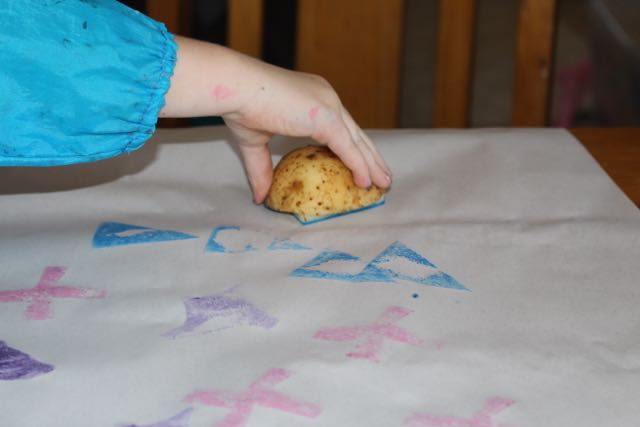
A stamping.

A stamping.

A used the potato stamps to stamp randomly all over the piece of paper. It looked very interesting, and she had fun. We will save this paper as wrapping paper.


IMG_40171

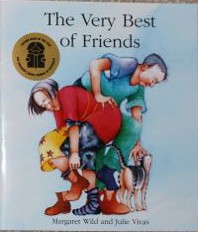
The Very Best of Friends by Margaret Wild and Julie Vivas

Standard

IMG_3948The Very Best of Friends by Margaret Wild and illustrated by Julie Vivas, paperback picture book, first published by Margaret Hamilton Books in 1989, this edition published by Scholastic Australia Pty Limited in 2004.

James and Jessie live on a farm with lots of animals, but only one cat, William. As James goes about his jobs on the farm, William goes with him, he curls up on his lap in the evenings and on the bed at night. And then James dies suddenly and Jessie falls deep into grief, shutting William out, letting him run wild and become mean, something he never was with James. To move forwards, Jessie must work on her friendship with William and regain his trust.

A poignant tale of friendship and loss, beautifully spun for younger children, The Very Best of Friends will touch your heart. It is a reminder that all relationships need work, and if you fail to tend them, they will wither, but with a little love, kindness and attention they might thrive again.

While the story is beautiful, the illustrations are distinctive and just gorgeous. I love the way that William is depicted, and how he changes from the well-tended cat to the wild thing he becomes after James dies.

The Very Best of Friends is suitable for primary school children. It is a book I read as a young child,  and I am now sharing it with my own children. This wonderful picture book can be used to start a discussion on the complicated issues of loss and grief, and that life must go on. Though something sad happens, the friendship that blooms between Jessie and William is lovely and inspiring. It is important to keep living your life even when you have lost someone, and I found this book to be helpful in explaining that to my children.


* The Very Best of Friends won the 1990 Children’s Book Council of Australia Book of the Year in the Picture Book category.


Ratburger by David Walliams

Standard

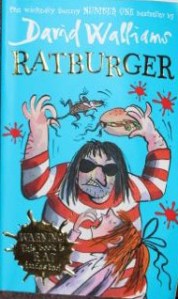
IMG_3921Ratburger by David Walliams and illustrated by Tony Ross, paperback novel, 317 pages, published by HarperCollins Children’s Books in 2012.

In a council flat high in an old leaning building, lives Zoe, with her unemployed father and her horrible and lazy stepmother. She is quite alone in the world, with her Dad always at the pub, and her hateful stepmother eating crisps on the couch all day either ignoring her or screaming at her, but never once being nice. The school bully lives in the same block of flats too, and never misses an opportunity to give Zoe a hard time. Then comes a small rat into Zoe’s room and changes her life forever. Zoe’s rat is intelligent and Zoe begins training him to do tricks, whilst planning to become famous performers. Unfortunately the man that runs the burger van outside the school at lunchtime hears about her pet, and forms a nasty plan of his own.

Reminiscent of a Roald Dahl tale, possibly crossed with an Andy Griffiths story, Ratburger was funny, inspiring and touching, a tad silly, but most of all it was entertaining. Filled with plenty of gross stuff, such as disgusting grown-ups, nose picking, foul food, spitting, rats and of course ratburgers, this book appealed to my third grader and her friends. At the moment they all seem to be obsessed with bodily functions and smells… even just the names for different body parts and functions can have them in hysterics! My daughter also liked that many of the grownups in the story were depicted as being a little evil and a lot eccentric. Even Raj, the shopkeeper, had his oddball moments, including re-selling lollies Zoe had sucked, or chocolate bars less one bite. This view of adults satisfied my daughter’s perception that adults are just as weird as kids deep down, normally they just hide it better!

Ratburger was interspersed with black and white illustrations by the wonderful Tony Ross, author/illustrator of the Little Princess picture book series (very much loved in our house!). These illustrations caused much giggling alongside the story, adding further interest to an already engaging plot.

Ratburger was our first taste of David Walliams as an author (I’d already been laughing at him for years as a comedian, but my kids don’t know that!), and it has not been the last. My third grader begged for more of his books while barely laying this down after reading it for the first time. I love a book that can make my kids laugh, so as soon as I could, I bought a few more of his books, and they have been quickly devoured. If you’re looking for something that’s sure to make your middle to upper primary school child laugh themselves silly, try Ratburger, and wait for the guffaws!

Butterfly Card

Standard

IMG_3849A simple card that the kids can make quickly and easily.

Tissue paper set of wings.

Tissue paper set of wings.

We started with a plain red card. A chose a couple of tissue paper circles to use for her butterfly wings, which were pink and orange. Each circle was scrunched into the centre to form a bow shape. Rectangles or squares of tissue paper would have made good wings too. I helped A to glue the scrunched up piece of the wings onto the front of the card, then we left it to dry.

Drying butterfly wings.

Drying butterfly wings.

A drew the bodies and antennae of her butterflies on once the wings were dry. She used a heavy black marker for this. She also did some drawings inside the card using metallic markers and wrote her birthday message.


Finger Painting

Standard

IMG_3905

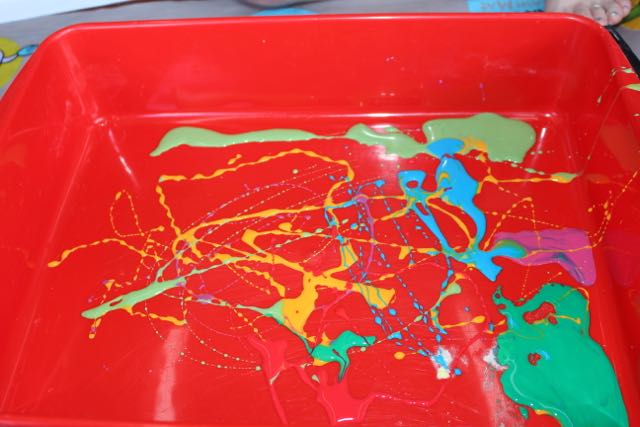
Finger painting palette.

Finger painting palette.

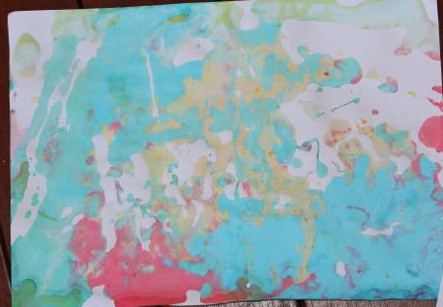
In order to make finger painting available for Baby T, I tried making some home-made edible paint. It probably wouldn’t taste very nice, but I just wanted something that wouldn’t hurt him if he put it in his mouth! So I mixed up a runny mixture of cornflour, water and food colouring, making it thick enough to feel like paint but thin enough to spread. It’s just a runny version of the slime we like to have sensory and messy play with.

Dipping her fingers.

Dipping her fingers.

Drizzling paint onto paper.

Drizzling paint onto paper.

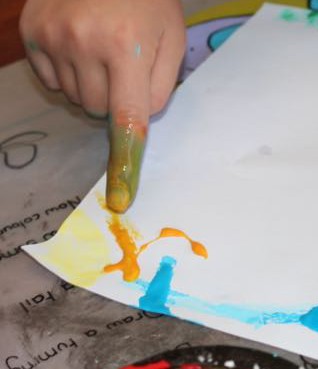
Finger painting.

Finger painting.

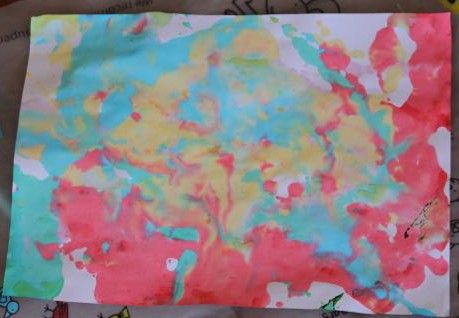
The kids had a good time spreading the paint around in the tubs, drizzling it to make patterns, and swirling it together. They squished their fingers through it, and then made some paper prints from it. The paper soaked up the coloured water from the cornflour, leaving pretty patterns on the paper. They also used it to paint directly onto paper.

Paint in the tub ready to use for prints.

Paint in the tub ready to use for prints.

Once they were finished, it all washes off with soap and water. This was an inexpensive, easy and fun activity for a lazy Saturday afternoon.

A print.

A print.

L's finger painting of a red sunset.

L’s finger painting of a red sunset.

Rainbow Sight Words

Standard

IMG_3872A has just started kindergarten. To help her with her reading we have been learning sight words. To help her learn and retain these words, we like to do activities with the words, the same way we learn our spelling words.

IMG_3860This week we tried making rainbow words with the sight words. First I wrote each word in large letters on some paper, and then A traced over the letters with different coloured gel pens and pencils. She particularly liked using her sparkly gel pens! Markers, crayons and chalk also work well. A continued tracing over and over the word with different colours to form rainbow letters.

This is a great activity for practicing the letter shapes, learning the words and learning the spelling. It is fun too! IMG_3867

Simple Tissue Paper Card

Standard
The finished card.

The finished card.

For a long time the kids have preferred to make their own birthday cards for friends. This often involves drawing the birthday child on the card doing something they like or just holding birthday balloons, eating cake, etc. Now they want to make their cards more sophisticated on the outside, and still fill the centre with drawings.

Sticking tissue paper to the card.

Sticking tissue paper to the card.

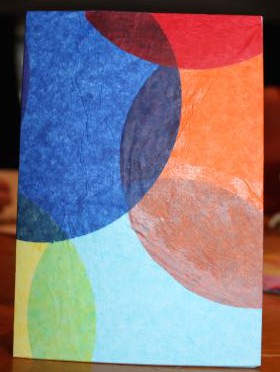
Today L made a very simple card using coloured tissue paper circles layered on a plain white card. We used circles because that was what we had, but any shape could work. Next time I’d like to try ripping up small pieces of tissue paper and covering the card with them for a different effect.

Tissue paper drying on the card.

Tissue paper drying on the card.


L used a glue stick to apply glue to the card, and then carefully placed the tissue paper circles, overlapping them here and there to combine the colours, until the whole card was covered. Some of the circles overhung the card, and these we folded into the inside of the card and glued down. Alternatively, we could have carefully cut this extra tissue paper off at the edge of the card to leave the centre completely free for writing and pictures.

The outside of the card before folding.

The outside of the card.

How the inside of the card looked after folding the tissue paper in.

How the inside of the card looked after folding the tissue paper in.

Once the glue was dry, L wrote her birthday salutations inside, including some lovely drawings, and it was ready to go.


What do Werewolves do when it’s not Halloween? by Heath McKenzie

Standard

IMG_3820What do Werewolves do when it’s not Halloween? by Heath McKenzie, paperback picture book, published by Scholastic Australia in 2013.

Halloween comes but once a year, when all the spooky things emerge from the shadows, but what do they do with the time in between? Find out what the witches and vampires, ghosts and mummies get up to in their free time. And specifically what do the werewolves do when they are not scaring the wits out of everyday people?

A hauntingly funny book for primary school children, What do Werewolves do when it’s not Halloween? is another great story from Heath McKenzie. The rhyming text is amusing, and the illustrations divine. The thought of those mummies changing their bandages never fails to make me laugh, and my kindergartner loves to pore over the pictures finding all the little quirks, like the ghost playing guitar and the vampire rubber ducky. The ending is her favourite part, and she can recite the last few pages to me! Reading this book has been a good inspiration for both my kindergartner and my third grader to create some of their own funny halloween pictures, with what they think could be alternative activities for the spooky creatures. I love that reading this book has prompted them to be artistic and creative.

This book is enjoyable for adults as well, the zombie scene is my favourite, have a look at those library cards! A great read out loud book to share and laugh over. After reading What do Werewolves do when it’s not Halloween? and What does Santa do when it’s not Christmas?, I do so hope that Heath McKenzie will tell us what the Easter Bunny is up to next!

Esau the Paw by Chris Gurney and John Bennett

Standard

IMG_3819Esau the Paw by Chris Gurney and illustrated by John Bennett, paperback picture book, published by Scholastic New Zealand Limited in 2014.

Esau the Paw is a very fluffy cat, and very proud of his full fur coat. He also likes to explore the great outdoors, rolling through mud, climbing trees and squeezing under bushes. Unfortunately all that outdoor fun leads to many tangles and knots that just can’t be brushed out. A quick trip to the vet and Esau finds himself with rather less fur, and is highly embarrassed by it. Will it ever grow back?

Humourous rhyming text, an engaging story and charming illustrations makes Esau the Paw a very entertaining book. Perfect for reading aloud, Esau has delighted my kindergartner and my third grader equally. I am also quite taken with him. My grandmother’s elderly cat had to be shaved for the same reason, and the pictures of Esau match the reality perfectly. There is something innately amusing about a cat that only has a furry head with a fluffy pom pom on the end of their tail! Esau’s attempts to regrow his fur are also highly amusing, and I feel for him as his friends show off their own thick coats. Poor Esau!

Esau the Paw is quickly becoming a favourite in our home. We will be searching for more books by this wonderful Kiwi author in the future.