Category Archives: Investigations

Playing Eskimos

Standard

It’s mid-winter and the weather is cold, especially at night. Unfortunately we get quite cold with lots of wind, which brings down the apparent temperature, but it doesn’t often snow 😦

Last week, Big L had told off A for something or other minor, so in reaction, she told us that she was going to move onto the deck, and that’s where she would sleep. Our deck is covered, but not enclosed, so it was really cold out there, and windy. The temperature was probably hovering around freezing, but she insisted. We decided to let it play out to see what would happen next.

A pulled out an old cot mattress and blankets and set them up as a bed. At this point I insisted that she put more clothing on. L also got involved then, as they decided to play Eskimos. I helped to dress them both, with tights, track pants, two pairs of socks and slippers, singlet, long sleeve shirt, jumper and parka, as well as a beanie and mittens. A couldn’t find her mittens (she has three pairs, yet none could be found….), so she put an extra pair of socks on her hands. They were complaining that they were too hot while they were still inside, but I explained that they would need it outside.

Ready to play.

Ready to play.

They took some toys with them and headed out to the deck. Big L and I could see our breath billowing out as we helped get them set up in their bed, snuggled together and piled up with blankets. They were using a giant white bunny toy as a pillow. We pulled their hoods up over their beanies, and tucked them in. I was feeling very glad I wasn’t camping out in that cold.

Snuggled in their bed.

Snuggled in their bed.

Big L and I went back inside and waited. We could hear them talking and playing on the deck, but after about ten minutes they both came in and said they didn’t want to be Eskimos any more. They would really much rather sleep in their own beds in the warm house! They might not have lasted long, but they had fun while they were playing out there, despite the cold. They are both so imaginative, and they love pretend play.

Rainbow Milk

Standard

When I was in school, we did an experiment with milk and food colouring that was really cool. I couldn’t remember exactly what went into the milk, so I had a look about the internet, and found the experiment I was thinking of over at DLTK’s Crafts for Kids, and they even had a video showing how it’s done!

Food colouring and milk in the tin.

Food colouring and milk in the tin.

This experiment is really easy, yet so amazing! We placed a shallow layer of milk into a cake tin. We only had light milk, so that’s what we used, and it worked just fine. A used a pipette to place some red, yellow and blue food colouring at roughly evenly spaced intervals around the edge of the tin. Once the food colouring was in, I placed a squirt of dish washing liquid into the centre of the tin, and we watched eagerly to see what would happen.

A few moments after the dish washing liquid was added.

A few moments after the dish washing liquid was added.

The dish washing liquid doesn’t mix with the milk, so it spreads out across the surface of the milk. The food colouring gets caught in the movement of the dishwashing liquid, and causes the colours to move and mix. We got a rainbow! The reaction can continue for a while, making new colours and awesome patterns. There’s no need to mix or move it for the colour mixing to continue. After about ten minutes, A wobbled the tin a little to see what would happen. It made the colours mix even more.

After a few minutes.

After a few minutes.

After about 10 minutes.

After about 10 minutes.


A thought this experiment was so incredible, she asked to repeat it once L and Big L were home. L put a lot of dish washing liquid into the milk, and the reaction happened much more quickly than our earlier attempt. As the colours mixed, Baby T was completely mesmerised by the movement of the colours. This time, after the colour mixing had begun, we let the kids have a toothpick to drag through the colours to make even more interesting patterns. They enjoyed doing this, and kept doing it until the colours had mixed so much it was a murky brown colour. Science is pretty cool 🙂

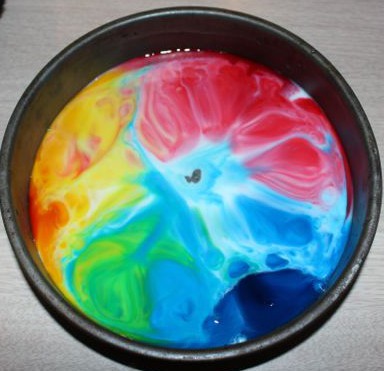
A few minutes into the second experiment. The spot in the middle is the dish washing liquid.

A few minutes into the second experiment. The spot in the middle is the dish washing liquid.

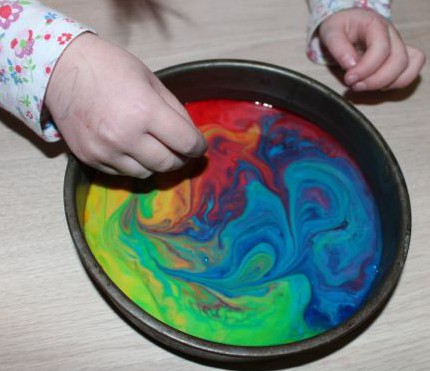
Using a toothpick to make new patterns.

Using a toothpick to make new patterns.

Rising Colours

Standard
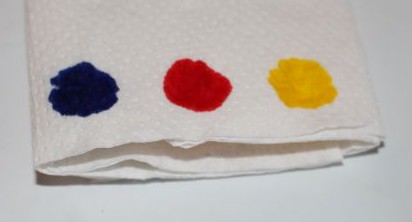
Primary colours on paper towel.

Primary colours on paper towel.

We were talking about primary colours yesterday, and I thought we could try a little experiment with paper towel.

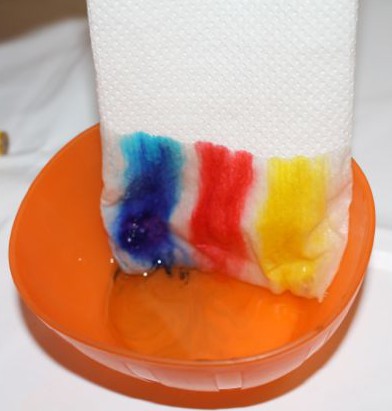
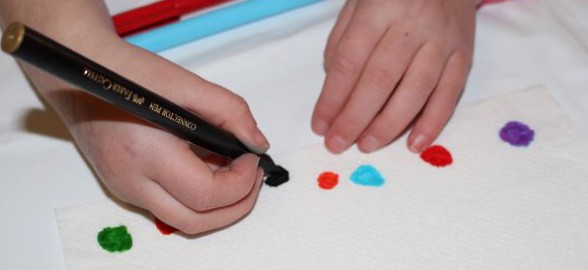
A and I made some coloured spots with markers on paper towel and placed it in water to see what would happen. As the paper towel sucked up the water, it took the colours with it, making them rise up the paper towel. A was amazed and excited by this.

Colours rising up the paper towel.

Colours rising up the paper towel.

A colouring in her spots.

A colouring in her spots.

A used markers to make more coloured spots on another piece of paper towel and placed it in some water on a plate. She let the paper towel lay flat, rather than upright. The colours spread out on the paper towel as the water was absorbed.

The colours spreading out.

The colours spreading out.

We also tried drawing the primary colours on top of each other before placing the paper towel in the water. The yellow rose up into the red, then both of them into the blue. Up went the water, and up went the colours, mixing together to make some orange, and purple and brown.

The colours stacked on top of each other.

The colours stacked on top of each other.

The colours rising into each other.

The colours rising into each other.

This was fun and easy, and I loved watching A’s eyes light up when she saw what was happening.

Colour Mixing

Standard
Food colouring.

Food colouring.

A and I got talking about colours today, and how some colours can be mixed with others to make new colours. We spoke about the three primary colours, red, blue and yellow. I asked A what she thought would happen if we mixed two of the primary colours together. She wasn’t sure, so we went out to the kitchen and did a little experiment.

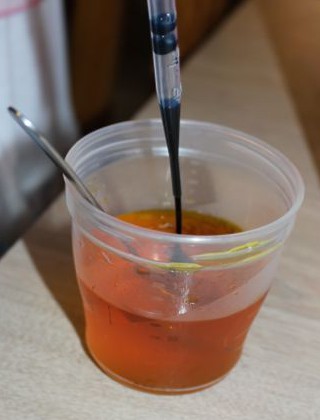
We used food colouring in water. I filled three small cups with water, and then let A use some plastic pipettes to squeeze some food colouring into the water. She placed red food colouring into one cup, blue into one and yellow into one. She mixed the colour into the water with a spoon.

Adding blue to yellow to make green.

Adding blue to yellow to make green.

Then to the cup containing yellow water, she added some blue colouring. She mixed it up and was delighted to see that she had made green water.

Before squirting some yellow dye into the red cup, A accurately predicted that it would make orange. She was very pleased to see that it was indeed orange once she’d mixed it in.

Adding red food colouring to the blue water.

Adding red food colouring to the blue water.

Finally, to the blue cup A added some red food colouring. She had no idea what colour these two would produce, though she hazarded a guess of pink. As these colours are so dark, it was a little hard to see what had happened, until A lifted some of the water out of the cup with the spoon. She broke out with a huge grin when she saw the water had turned purple. It was very exciting for her.

This was a very quick and easy way of showing A how the primary colours mix to make the secondary colours. And it was fun 🙂

A's cups of purple, green and orange water.

A’s cups of purple, green and orange water.


Round Sensory Tub

Standard

This week I collected some round objects for Baby T’s sensory tub. We had some soft and hard balls, an egg ring, plastic plate, cookie cutter, baby food jar lid, a round sponge, a toy ring, pom poms and other round lids.

IMG_0057

Baby T had a great time with this tub, especially throwing the balls around. He investigated each of the items, and we talked about the shape, colour and texture of the items with him. We also talked about other things that are round, like the wheels on the car.

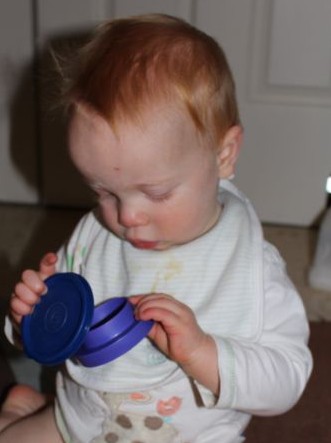
He put the sponge through the ring over and over, before putting the pom poms through one at a time, and then trying the big woolen ball, which was much too large to fit through. He found this a bit frustrating, and after several attempts he went back to putting the sponge through the hole. He also spent quite a lot of time trying to put the small blue tupperware lid onto the cookie cutter. It was a good size to fit, but didn’t seal, so it kept falling off. The items that formed rings he wore as bracelets, even crawling around with them like that while laughing!

Putting the sponge through the ring.

Putting the sponge through the ring.

Trying to put a lid on the cookie cutter.

Trying to put a lid on the cookie cutter.

Blue Sensory Tub

Standard

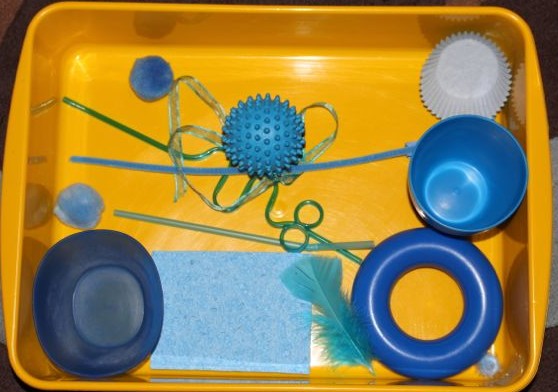
Now that Baby T is getting older, I have been thinking of ways to get him more involved with out activities. Sensory tubs seem like a great start for him. I made up a very simple tub using blue items. I found a range of blue things from around the house, including a peg, ribbon, pom poms, straws, cup and a spiky dryer ball.

Ready for playing.

Ready for playing.

Putting the straw into the cup.

Putting the straw into the cup.

Baby T was very interested in the tub, and straight away pulled out the cup and curly straw. He spent a lot of time investigating the straw from all angles, and putting it into and out of the cup. He also put the end of the straw into his mouth just like his sisters do.

Tasting a pom pom.

Tasting a pom pom.

The pom poms were also popular, though he tried to put them into his mouth a lot. He licked all the pom poms a number of times too, I suppose their furriness was interesting on his tongue.

L tickled Baby T all over with the feather, making him laugh. He was particularly ticklish on the bottom of his feet, and around his ears. The feather also went in his mouth, as did almost everything in the tub. He even tried to bite a piece out of the sponge.

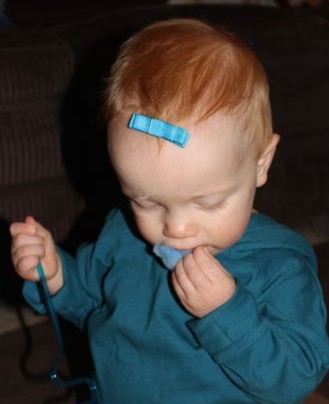
L put the blue clip into his hair, but he didn’t notice, he was too busy putting the smaller items into the cup and the bowl. He crunched up the muffin case, seemingly enjoying the sound that it made.

Crinkling a muffin case.

Crinkling a muffin case.

We let Baby T lead this activity. Throughout it we named each item he picked up, and described it. We talked about the colour blue, the textures and sizes of the items, as well as their uses. He spent much longer exploring this tub than I thought he might, he was extremely interested, and very happy with the contents of the tub. We will be doing more sensory tubs for him soon.

Coloured Rice for Sensory Play

Standard

L’s school has been running a ‘paint and play’ or ‘stay and play’ program on a Friday morning for a while now. And we like to go along and enjoy it. There is usually some art and/or craft activities, toys, music, books, and sensory play. L liked in when she was still in preschool, and would probably still like to come to it if she didn’t have to be in class instead 🙂 I’ve been taking A regularly and she has made friends with some of the other kids that come regularly too. It is mostly other families that have older kids at the school. It is nice and easy to take L to class and then read books or do puzzles in the library until it’s time to gather under the trees at the front of the school for a play.

One of the sensory play items they sometimes have out is a huge tub of rainbow coloured rice. A loves it. A few times we’ve been, that is the only thing she has played with the entire time. She loves to run her fingers through it, pour it into different containers, spoon it around, put play animals in it, tell the other children it is hers and they can’t play with it…

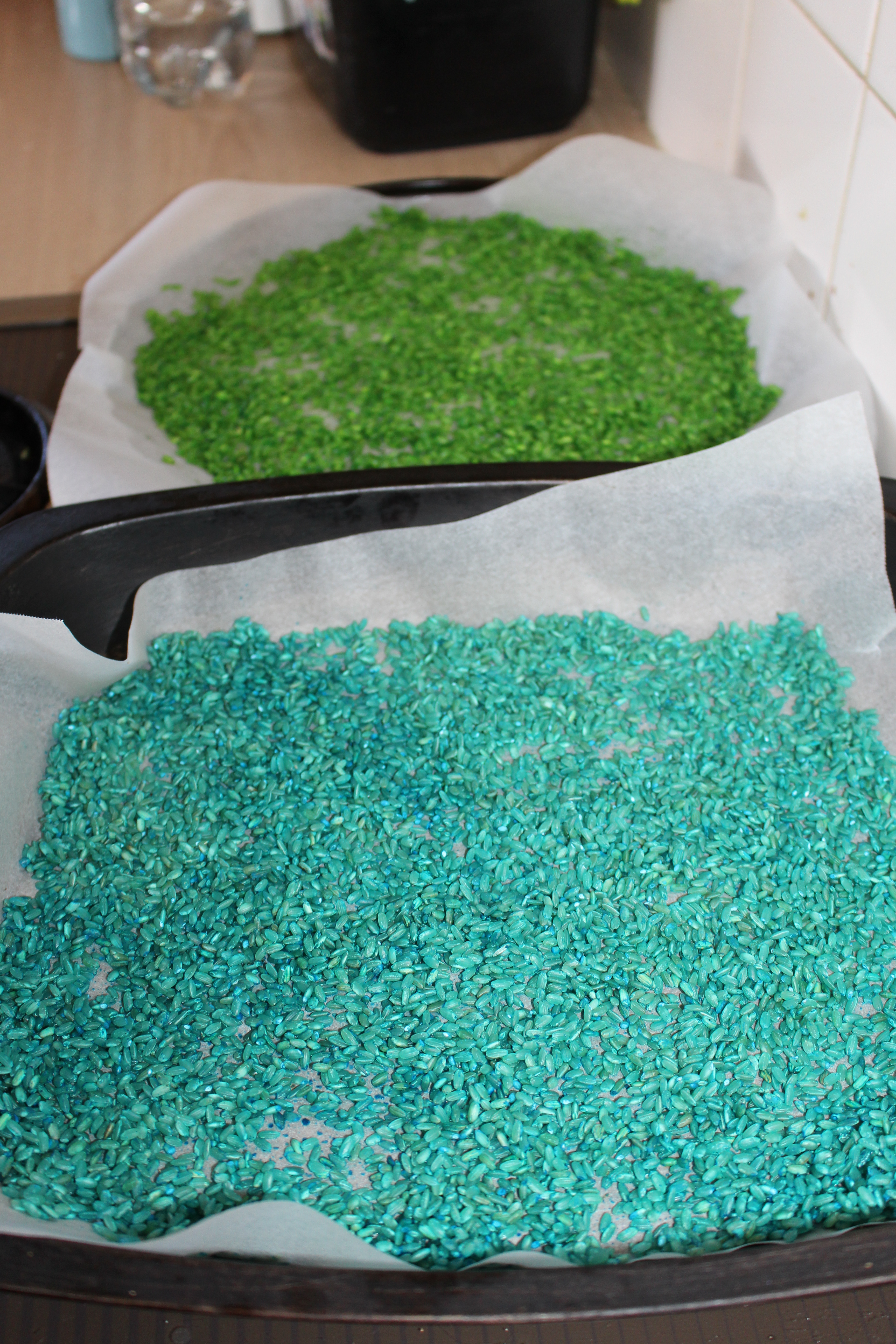
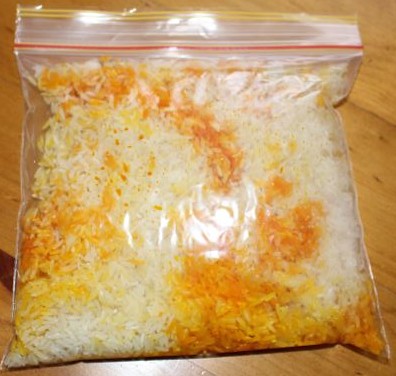
I’d been thinking for a while that I should find out how to colour rice and make some for home, so I finally did. Turns out it’s pretty easy to do (thanks Powerful Mothering for showing me how!) A little bit of white vinegar mixed with food colouring in a ziploc sandwich bag made it super easy. I used about a cup of rice for each colour until I ran out of rice. A helped by putting the rice into the cup measure for me. I wish I’d taken a photo of the kids mixing the colour through the rice in the bag. They really liked squishing it around and shaking it to get the colour on all of the rice. The colour would have been more vibrant had we used white rice, but we had some old brown rice in the cupboard that we weren’t going to eat, so we put it to good use. I think the colour still took fairly well, though the red and pink look rather similar.

Coloured rice drying.

Coloured rice drying.

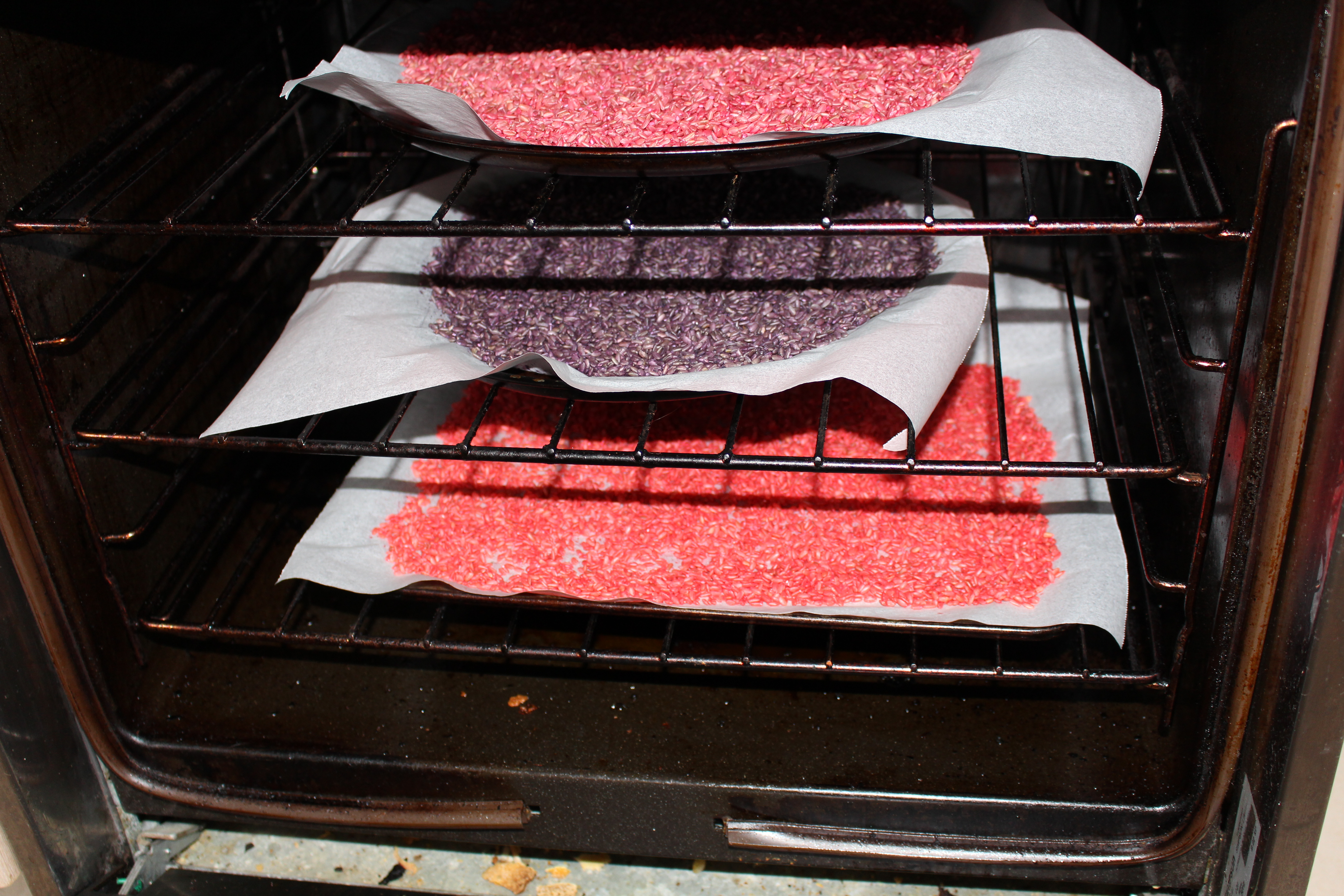
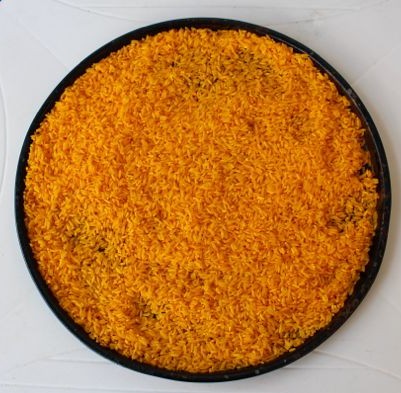
The rice needed some time to dry so I spread it out on baking trays. I popped it in the oven on low

Coloured rice drying in the oven on low.

Coloured rice drying in the oven on low.

with the door propped open  for a little while to speed up the drying time, since it’s still so cold here I thought it would take ages to completely dry, and I couldn’t put it outside in the sun as it was too windy. It didn’t take too long to dry like this, though the kids asked when it would be ready several dozen times.

Ready to play with.

Ready to play with.

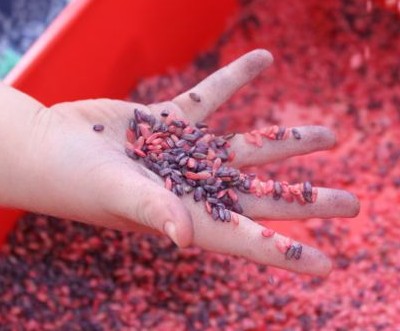
The kids started out with one colour each, but predictably, that didn’t last long, and we soon had rainbow rice. They also wanted a little bit more, so we added some plain white rice to the mix as well.

Feeling the rice.

Feeling the rice.

Mixing the colours together.

Mixing the colours together.


They ran their hands through it, put their feet in it, mixed it with whisks and spoons, measured it, put it in sieves and poured it through funnels. They really enjoyed the feel of the rice.

Feeling the rice with their feet.
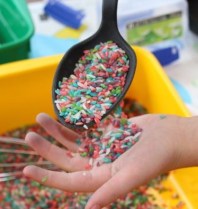
Feeling the rice with their feet.

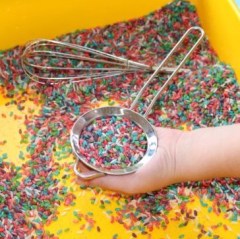
Sifting the rice through a slotted spoon.
Sifting the rice through a slotted spoon.


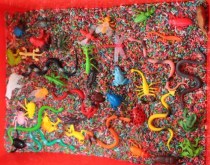
A's pet store.

A’s pet store.

L made her tub into a Chinese Restaurant, while A opened a pet store in her tub. A offered snakes, frogs, lizards, bugs, a polar bear and a camel for sale. She charged Big L $28 for a couple of lizards. L made us entrees of spring rolls and prawn crackers, mains of rainbow pork, and dessert of deep fried ice cream. She used the sieve to deep fry the ice cream, and some containers became the stove where she cooked the pork.
Making deep fried ice cream.

Making deep fried ice cream.

We had a wonderful time playing with the coloured rice. Not only was it a good sensory play activity, it also inspired some beautiful pretend play. I love watching the kids bringing their imaginations to life during pretend play, and it’s even better if I’m allowed to play too!

I have stored the rice in an airtight container for more play later, and the kids have asked that I make some more colours to add to the tub for next time.


Update March 29 2014:

Colouring the rice yellow.

Colouring the rice yellow.

I made two new batches of coloured rice today using white rice. The colours are much more vibrant, and I’m very happy with them. The kids wanted yellow, and I made some more red. It was sunny and calm today too, so I was able to put the trays outside to dry. It took much less time than our earlier batches. Once it was all dry, I mixed the new colours in with the others. The kids are very happy with their rainbow rice.

IMG_8782

New yellow rice.

New red rice.

New red rice.


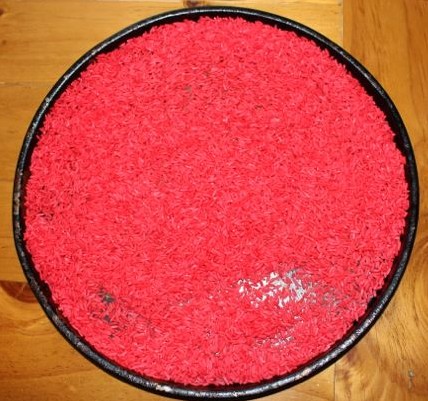
The new mix of colours.
The new mix of colours.


Melting Crayons

Standard

The other evening I went through all of our drawing implements and sorted them out. We have them stored in a five drawer storage unit, a drawer for pencils, one for markers, one for crayons, one with stickers, and one with lead pencils, pens, erasers, and pencil sharpeners. I threw out any markers and pens that didn’t work. I sharpened all of the lead and coloured pencils, throwing away ones that kept breaking. I waded through the stickers, throwing out sticker sheets that actually had no stickers left on them, and rescuing some sticker sheets that had fallen down the back of the other drawers. Then I got to the crayon drawer…. there were dozens of crayons jammed in this drawer, so many that it was very difficult to shut the drawer. I took them all out and sorted the broken from the unbroken. I collected all of the broken pieces together and put them into a pencil case to deal with later. IMG_4897

Later came around when I decided to try and melt some of the crayons together to make a bigger usable crayon. I wasn’t sure what would happen, so I put a random selection of crayon pieces into a muffin case, and microwaved it. My microwave wasn’t particularly happy about this, and turned itself off near the end. Since I previously blew up a microwave by accidentally microwaving a pop-stick, and I didn’t want a repeat of that, I immediately removed the crayons. Luckily the microwave is just fine, it was just protesting, and given the smell the crayons gave off, I can’t blame it. However, the crayons did melt, and mixed all together, ending up brown. That was fine though, as at least I knew they could be melted.

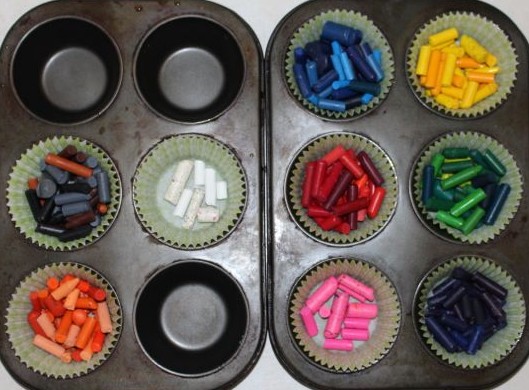
I thought my other option would be to heat them in the oven, but with the hot weather I wasn’t keen to put the oven on. I had a bit of a Eureka moment then, when I realised that I could use the hot weather to my advantage. Nature could melt the crayons for me! So after I removed all of the paper coverings (sliced down the side with a small blade and peeled the paper off), I sorted all the crayon pieces out into piles of different colours, placing them into muffin cases in the muffin trays. I sat the muffin trays outside in the sun this morning.

Separated into like colours.

Separated into like colours.

After about an hour and a half I went out to see how the crayons were going in the sun. They were melting quite well, and the trays were very hot. After about three hours the crayon pieces were pretty much all melted, and I gave them a bit of a stir to mix it together. There were a few pieces in some of them that didn’t melt, but I think they were all pieces that came out of the Crayola Twistables Crayons. I guess this sort of crayon isn’t the same as the others.
After about an hour and a half in the sun.

After about an hour and a half in the sun.

After about three hours in the sun.

After about three hours in the sun.

I brought the muffin trays into the shade using my oven mitt, and once they were a little cooler, I removed the muffin cases full of melted crayon and brought them inside. I sat them on the bench to cool and harden. Once they were completely cooled, I removed them from the muffin cases. Now I have some nice chunky crayons that Baby T can use for his first drawing attempts, instead of the mostly unused broken pieces I had before.

My new chunky crayons.

My new chunky crayons.

Next time I have a bunch of broken crayons, I think I will melt them and then pour them into some of our metal cookie cutter shapes to cool. We have some dinosaur shapes that would make great crayon shapes.

Box Construction City

Standard

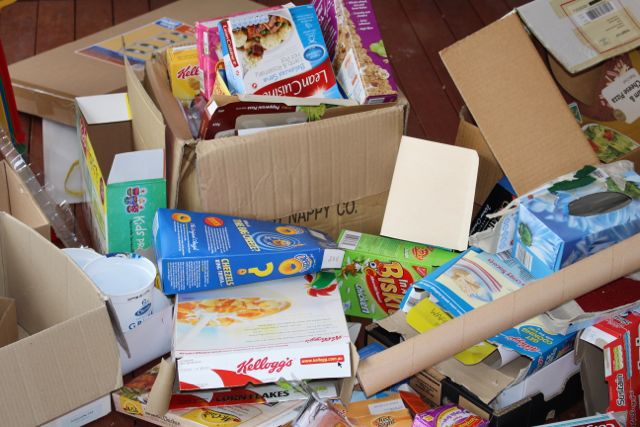
Over the last few months we have been collecting cardboard boxes instead of recycling them straight away. There were also a number of box construction items that had come home from school, and were added to the pile for re-purposing. The pile of boxes grew and grew, until it was taking up plenty of valuable decking real estate. There were a lot of cardboard boxes, of all shapes and sizes, from jelly crystal and bikkie boxes, through to nappy and big packing or freight boxes.

IMG_4715

And what would we do with so many boxes? Well, the answer to that is Boxtown! The end of our deck was transformed into a city this morning by L, A, Big L and myself. Baby T wanted to help, but it was nap time, so he flew off to dreamworld while the rest of us got our builders’ hats on.

Building the library.

Building the library.

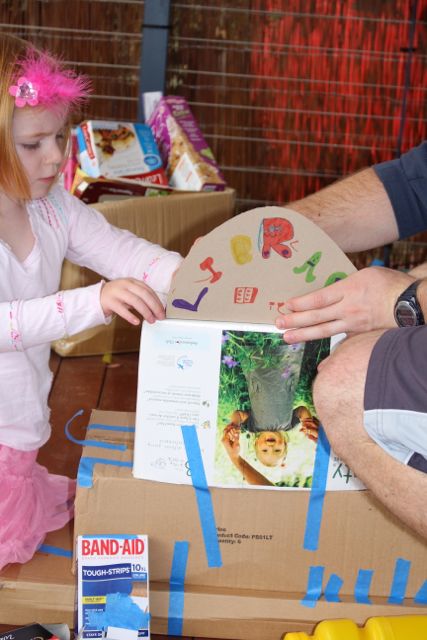
The first large building to be built was a library (I think this must be a reflection of how much we like to read!). L made a lovely sign for the top of it, and both kids helped me tape the boxes together. A tried to attach a thin cracker box as a walkway to another building, but she never made the other building to attach it to, so it just stuck out at the side of the library. Well, at least it did until it fell off, and A didn’t notice, so I didn’t mention it.


Hospital with chopper on the heli-pad.

Hospital with chopper on the heli-pad.

There was also a hospital, complete with heli-pad and helicopter. The helicopter even had a red cross on its side and rotors that could spin. Besides the hospital was an airport and runway made out of painters tape. L made some planes out of cardboard rolls to live at the airport.


Airport and runway.

Airport and runway.

There were other small buildings too, including a dental clinic made from toothpaste boxes, a restaurant made from a yoghurt container, and a doctor’s surgery made from bandaid boxes. These were chosen and made entirely by L, who sorted through the boxes until she found the appropriate ones 🙂

Office tower.

Office tower.

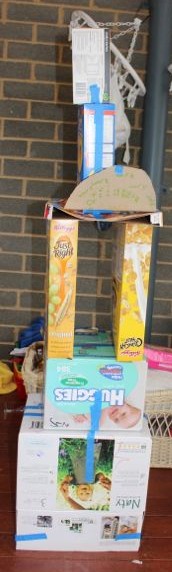
The biggest building in Boxtown  was the office block. Big L helped the kids make it so big, it actually stood taller than L. It was a large skyscraper towering over the rest of Boxtown. A used markers to draw some windows and doors, and make it “pretty”, while L made a sign for it. She wrote the word ‘work’ all over the sign so we had no doubt what was supposed to occur inside the office block, though she made no suggestion as to what work her workers would be performing.

There were also a few houses. A decorated a shoe box, giving it some chimneys and windows, which I think was a house. L made a large dog house too.

This was several hours of building fun, and then some more fun playing in the city. And once the kids have finished playing with Boxtown we will recycle it and reclaim our deck 🙂

Propagating Succulents

Standard

After painting their terracotta pots, the kids wanted to plant something in them. We have a single succulent plant growing out by our letterbox that seems pretty hardy, and I thought it would be fun to try to propagate some new plants from it’s cuttings.

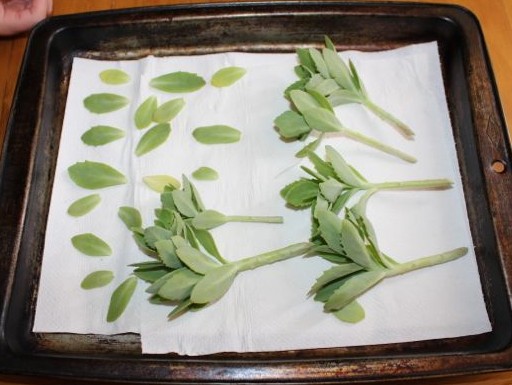
Cuttings drying out.

Cuttings drying out.

The succulent in our garden is a good size, so we were able to take several stem cuttings. We removed the lower leaves from the bottom of each stem. We left the leaves and the cuttings to dry out for a few days.

Succulents generally like well-drained soil, so L collected some red gravel from one of our garden beds to place in the bottom of each pot to improve drainage. She then filled each pot with some cacti and succulent potting mix. My mother had told me to try dipping the base of the cuttings into honey prior to planting them. This is supposed to kill any bacteria on the cutting, and improve growth. I’d never tried this before, but we pulled out some honey and dipped each cutting in. It’s hard to know whether it worked, but all of our cuttings survived, and had new growth on them, so I think we will use honey on our cuttings again in the future. L placed a single stem cutting into each pot, patted the soil down and gently watered them in.

Gravel used for drainage.

Gravel used for drainage.

Adding soil.

Adding soil.


Placing the cuttings into the soil.

Placing the cuttings into the soil.

Patting the soil down around the cutting.

Patting the soil down around the cutting.


We placed them in a sunny spot, and checked on them every day, keeping the soil moist, but not too wet. After a week or so, we noticed some of the cuttings had produced some new leaves, and some little roots had appeared near the base of the stems.

All of these succulents in their decorated pots were given away as Christmas presents, mostly to their teachers. The kids were so proud to show off the pots that they painted and the plants that they had grown. They made unique gifts that were well received and appreciated.

Watered in and ready to grow.

Watered in and ready to grow.

As we began to clean out the laundry this week, in preparation for painting, we discovered some unused pots under the laundry tub. These will make excellent vessels for our next round of succulent growing. I would like to try propagating some cuttings from other types of succulents too.