Tag Archives: painting

Spray Bottle Painting

Standard

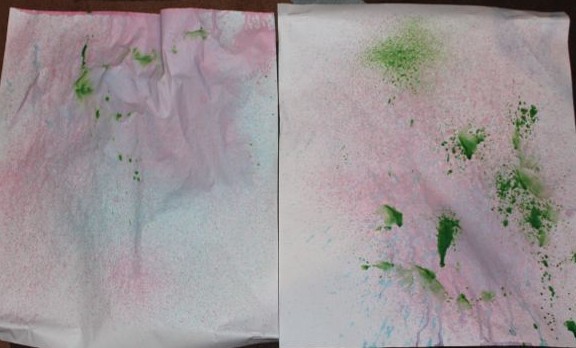
IMG_7781A few cheap spray bottles and some watered down paint made for a wonderful evening of painting in our yard.

I hung paper from the clothesline for this activity. It took the kids a little while to learn not to spray when the wind was blowing towards them, but eventually they got more paint on the paper than on themselves! They were wearing their art smocks, but they definitely required a bath after this.
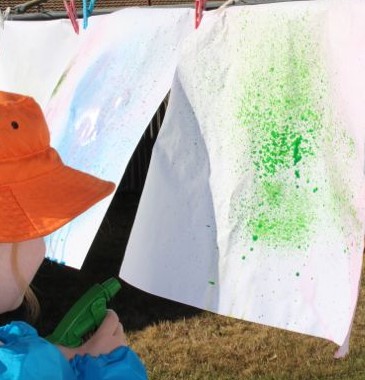
A spraying her paper.

A spraying her paper.

I had a little trouble getting the right consistency for the paint, at first some of it was too watery, and we could barely see the colour on the paper, then one of them was so thick, it wouldn’t suck up the tube. After a bit of trial and error, we got three spray bottles working just right. We also found that the darker paint colours, such as blue and green worked much better than when we tried lighter colours like yellow and orange.
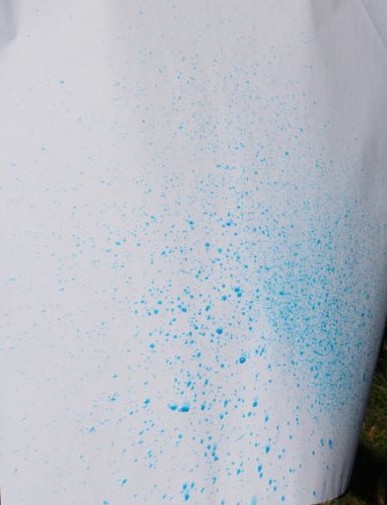
Using the spray setting.

Using the mist setting.

A stood on a chair to be more level with the paper hanging from the line. L was at a good height, and got started right away. First they tried using their spray bottles on the mist setting. It created some great spray patterns, though L and A both wanted to add so much paint that it began just rolling down off the paper. Squeezing the spray bottle handle to spray the paint gave their hand muscles a little workout, but them didn’t seem to mind. A sometimes used both hands to spray and steady the bottle. Accurate aiming took some practice for both of them too.

Using the jet setting on the spray bottle.

Using the jet setting on the spray bottle.

They also tried using the jet setting on the spray bottles, which sprayed the paint quite a long way. They loved the noise it made when the paint hit the paper, but they also missed the paper a number of times. Once they hit Big L in the back while he was across the yard tending the garden, but most of the missed paint sprayed onto the clothesline. After the paintings were dry and I’d removed them from the line, I hosed as much of the paint off as I could. Most of the paint came off that way, the rest just adds character to our clothesline 🙂
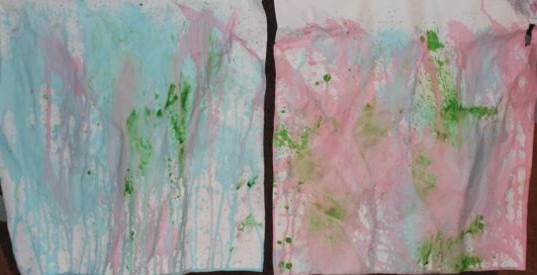
Jet setting spray painting.

Jet setting spray bottle paintings.

Spray setting spray paintings.

Mist setting spray bottle paintings.

Golf Ball Painting

Standard

IMG_7646Last week we bought some storage products that came packed in cardboard trays. We put these cardboard trays to good use for painting with golf balls.

One ball at a time.

One ball at a time.

No one in our family plays golf, but sometimes while we are out walking we find a golf ball on the oval, or near the path. The kids love picking them up and bringing them home. We used four of these golf balls to do some interesting paintings in the cardboard trays.

Adding another colour.

Adding another colour.

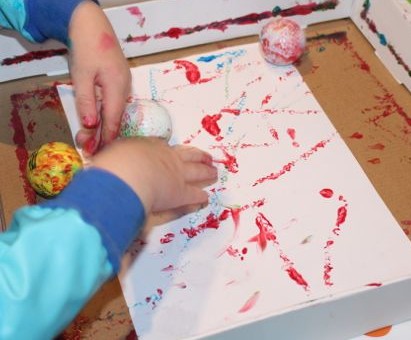
I put some paint onto sponges and the kids rolled the golf balls in one colour, placed it in the tray with their paper, and moved the box about to make the ball roll around. This allowed the paint to be transferred to the paper in tracks. When the paint wasn’t too thick we could even see the pattern of the golf ball on the paper.


IMG_7640

Interesting patterns.

L started with just one golf ball in the tray at a time, while A put paint on three golf balls, and put them all in together. They shook the trays, and moved them side to side to make the balls move about. A also used her hands to push the balls around.

Pushing the balls around.

Pushing the balls around.


They both made some really great patterns.

IMG_7643IMG_7648

Sponge Painting

Standard

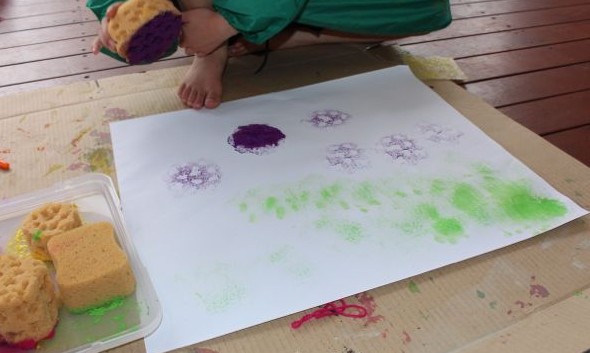
IMG_4866Using sponges can be a fun way to paint. We had a set of synthetic sea sponges I’d picked up from somewhere (probably Bunnings, I’ve been spending a lot of time there lately), and we set to work with some poster paints. I placed some paint onto a plastic tray so that L and A could dip the sponges into the paint easily. This, in theory, should have worked nicely, except both L and A pushed the sponges down until the sponges had absorbed all of the paint from the tray. This was way too much paint, so when they first put the sponge on the paper, it just left a big blob instead of the sponge texture I’d been aiming for.

L making prints.

L making prints.


A squashing the sponge down.

A squashing the sponge down.


It was very hard to convince A to press the sponge to the paper more gently. She just wanted to squish all the paint out of the sponge in one go. And when my attention was diverted by L asking me a question, A used that opportunity to paint her palm with the sponge and do some hand prints too. By the end of the activity, L was managing to get some nice textured prints from the sponge. On one of L’s paintings, she used one colour to make lots of prints across the paper, and then, when that was dry, she used a different colour over the top. This gave a nice layered and multi-coloured effect. Most of the paintings ended up with lots of sponge prints all over them in all of the colours we had out. This is definitely an activity that we will be doing again.

Using the sponge to make multi-layered art.

Using the sponge to make layered art.

Some of the finished sponge paintings.
One of the finished sponge paintings.

Painting Paper Doilies

Standard

IMG_4807I hadn’t seen paper doilies around for some time, so upon spying a packet of them in Wheel & Barrow, I bought some, thinking they would come in handy for our arts and crafts.

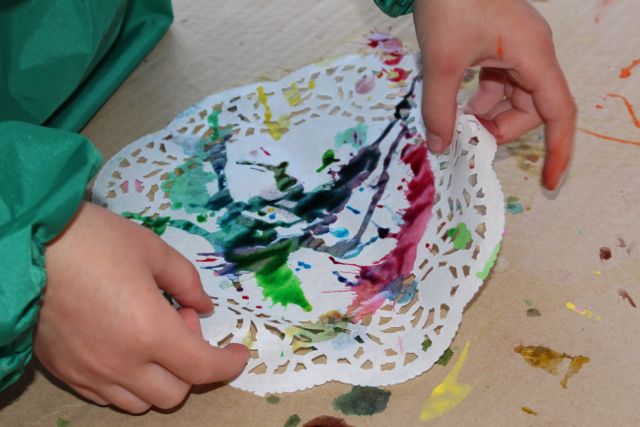
Dropping colours onto the doily.

Dropping colours onto the doily.

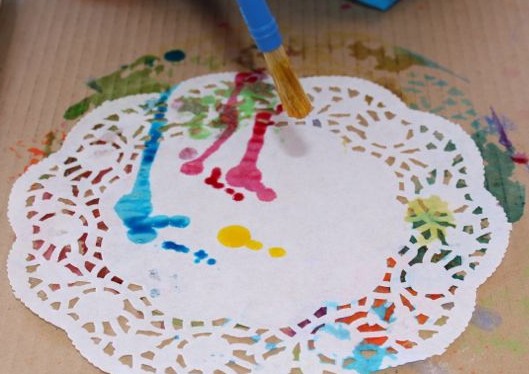
Paper doilies are quite thin, and readily suck up liquid, so we used food colouring in water as our paint. We had some green, pink, yellow and blue coloured water, and when they mixed it made some interesting colours and patterns.

Tipping the doily to spread the colour.

Tipping the doily to spread the colour.

moving the colour about.

moving the colour about.


We used a different paint brush for each colour, dropping the coloured water onto the doilies and then picking them up to make the colours run across the doily. After placing some drops of coloured water on the doily, we found that turning the doily around slowly like a steering wheel made some good patterns. A found it easiest to put some coloured water on, and then pick the doily up from one side and let that colour run off, and then put more drops on and pick up a different side so that that colour ran in a different direction.

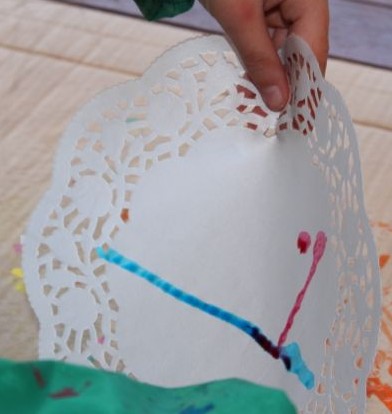
Painting the doily.

Painting the doily.

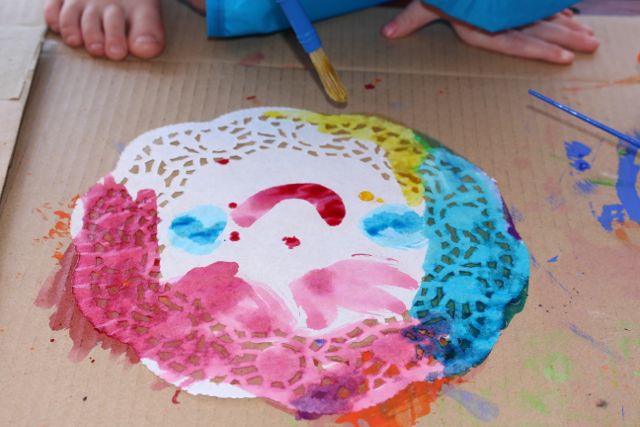
Both kids also used the paint brushes to apply the colour directly to the doilies, painting the edges, and giving some of the doilies faces.


The doilies dried quickly and we placed them up on some of our windows. I like the way they have brightened up those spaces.

Displayed on the window.

Displayed on the window.

Bubble Wrap Prints

Standard

IMG_4865We sometimes get parcels or items that have bubble wrap protecting their contents. If I can grab it before the kids pop all the bubbles, I usually collect the bubble wrap to be re-used when we post something. In my pile of bubble wrap, I discovered three different sizes of bubbles which was perfect for doing some bubble wrap prints.

Adding paint to the bubble wrap (and hands).

Adding paint to the bubble wrap (and hands).

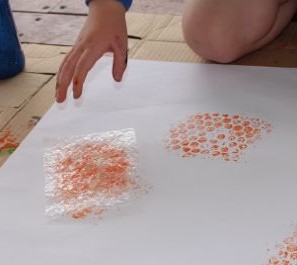
First we tried using a paintbrush to apply the paint directly to the bubble wrap, and then placing the painted bubble wrap onto the paper, but there was just too much paint, so we weren’t able to discern the bubble pattern. It worked much better when we added paint to some kitchen sponges and then pressed the bubble wrap against the sponge to get a little bit of paint. Then L and A pressed the bubble wrap against the paper, and lifted it up to reveal the bubble wrap print left behind.


Pressing the bubble wrap to the paper.

Pressing the bubble wrap to the paper.

Using the large bubble wrap.

Using the large bubble wrap.


The medium sized bubble wrap (orange) worked the best of the three sizes. We used different colours for each size too, adding further variety to our prints. L favoured the large bubble wrap, while A liked using the medium bubble wrap best.

IMG_4793IMG_4867

Glitter Glue Baubles

Standard

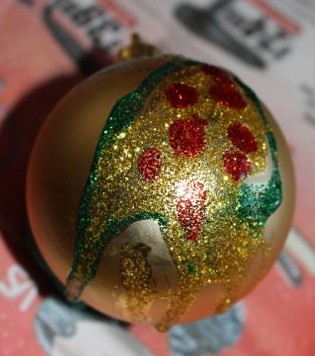
IMG_4153I went looking for some plain, smooth baubles to decorate before Christmas. This task was actually harder than I had anticipated, so many of the baubles were already covered in glitter or patterns. I finally found a pack of gold baubles in Target. They were nice and large, which was good for the kids to decorate. I bought a pack of Christmas glitter glue, which included gold, green and red. These little bottles had fine tips and were easy to control.

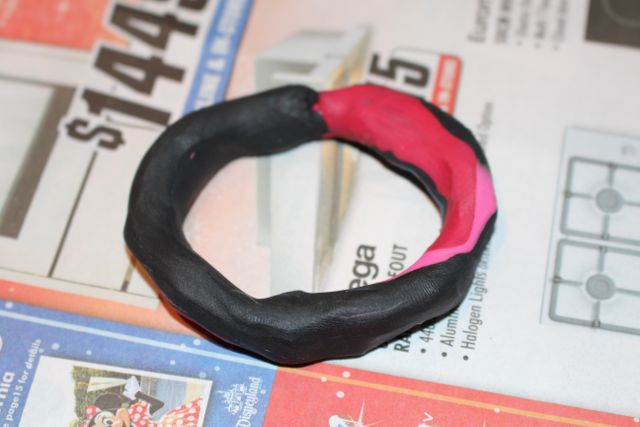
Plasticine ring.

Plasticine ring.

I made little rings out of plasticine to place the bauble in so that it wouldn’t roll away while we painted them with the glitter glue. This was very effective, but when I asked the kids if they wanted to paint another bauble, they both told me they just wanted to play with the left-over plasticine!

A bauble sitting in its plasticine ring.

A bauble sitting in its plasticine ring.

The kids each decorated a couple of baubles each, making dots, swirls, stripes, stars, trees and writing their names. A used a bit too much glitter glue on one of hers, while painting a Christmas tree. The glitter glue ran, making the tree appear as if it had melted.

The melted Christmas tree.

The melted Christmas tree.

Painting  a bauble.

Painting a bauble.

I used the glitter glue to write each child’s name and the year on a bauble. Once these were dry, I turned them over and drew a star on one, and trees on the other two. The kids liked having a bauble that was made just for them. I also dotted one bauble all over with random spots of the three colours. L liked this one, and had a go at making one the same, though some of her dots were bigger, and ran a little.

Name and year on a bauble.

Name and year on a bauble.

A spotty bauble.

A spotty bauble.

IMG_4240

The kids proudly hung up all of the glitter glue baubles on the tree once they were dry.

Christmas Wreaths

Standard

Our first project using items from the Riot Art & Craft Christmas Showbag was a wreath.

The 3D foam wreath shape.

The 3D foam wreath shape.

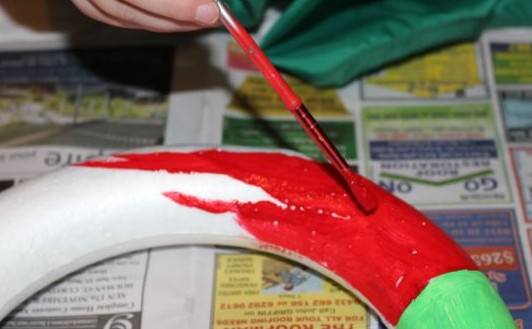
Painting the wreath.

Painting the wreath.

A painted her foam wreath using red, green and blue paint. She wanted to have coloured sections, so while she painted the majority of the wreath, I helped her by painting smooth edges for each section. Once the wreath was dry, A turned it over and painted the other side to match. the paint dried quite quickly, and we were soon able to come back and decorate it.

First we wrapped one of the Christmas ribbons around and around the wreath, and secured it with a couple of metal pins. I put the pins in because they were sharp, and a bit fiddly for A to get in straight.

Adding glitter glue.

Adding glitter glue.


The gaps between where the ribbon lay seemed a little boring to A, so she decided to use silver glitter glue to enhance it. She put great globs of glitter glue of each part of the wreath that wasn’t covered in ribbon, and then she used a paint brush to spread it out. We finished it off by adding a piece of ribbon to the top of it so that it could be hung up. A very proudly hung it on the front door.


Hanging on the front door.

Hanging on the front door.

Terracotta Pots

Standard
L's finished pots.

L’s finished pots.

The pot decoration kits we bought from Bunnings.

The pot decoration kits we bought from Bunnings.

I went to Bunnings looking for some terracotta pots for the kids to paint and decorate. There were lots of pots in all different sizes and shapes. And then we came across some kids craft packs to decorate three terracotta pots, including paint and rhinestones. That seemed like a very easy option, so we bought two kits.

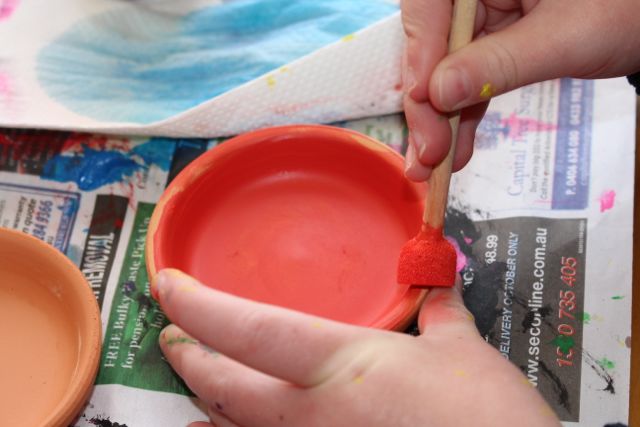
The pots were only little, but perfect for L and A to decorate. We turned A’s pots upside down to make it easier for her to paint. She also painted the bottom of each pot. There was only one small brush with each kit, so we got out enough brushes to have one for each colour. That way we didn’t have to keep washing the brush all the time (it also meant we didn’t need a cup of water on the table that A could somehow manage to knock over…) A did some lovely painting on the outside of each pot, covering the entire surface. She used some sponge brushes to paint the little saucers for each pot, making smiley faces on them. L chose not to cover the whole of the pots in paint, instead she painted pictures, swirls and letters.

A painting her first pot.

A painting her first pot.

Painting the saucer.

Painting the saucer.


L painting a Christmas tree on one of her pots.

L painting a Christmas tree on one of her pots.

Once the paint was completely dry (which didn’t take very long at all), the kids got to add the rhinestones. Oh, how they love to decorate with rhinestones! We used PVA glue to attach the rhinestones. There was a mix of shapes, sizes and colours, and they used a variety on each pot.

Adding rhinestones.

Adding rhinestones.

More rhinestones.

More rhinestones.


Each kit came with some foam flower press outs to make up too. These could be used as a decoration in the pots if desired, but the kids wanted to put real plants into their pots, so the fake flowers were put aside to complete later to add to the vase they made a few weeks ago.

L and A want to give their finished pots (with little plant) to their teachers for Christmas this year, as an alternative to the traditional coffee cup or box of chocolates. The kids had a great time decorating them, and we hope their teachers will like them!

A's finished pots.

A’s finished pots.

Scratch Painting

Standard

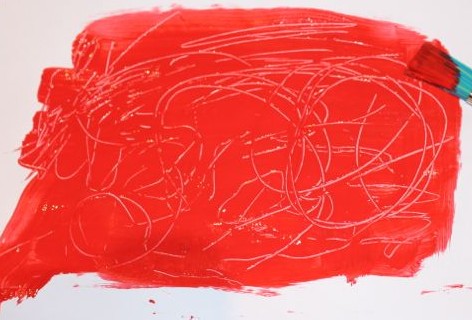
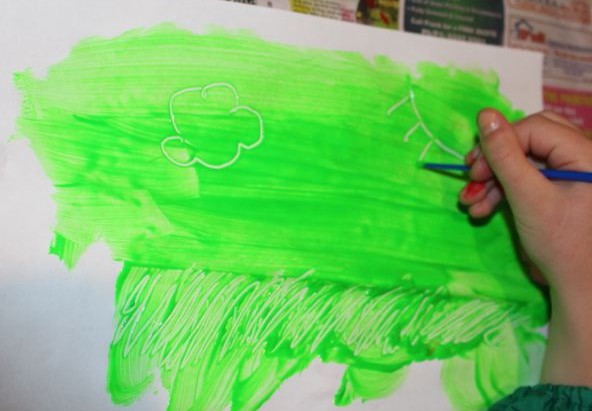
IMG_3724This is a simple painting activity that can be done with just one colour. First the kids spread some paint across a white piece of paper. The paint needs to be thick enough to make marks in, but not so thick that the paper will take days to dry! Once the paint is spread across the paper with a fat brush, the kids then used the end of a thin brush to draw a picture in the paint. The end of the paint brush scrapes away the paint, leaving a lighter section behind it.

Spreading the paint.

Spreading the paint.

L scratching out her picture.

L scratching out her picture.


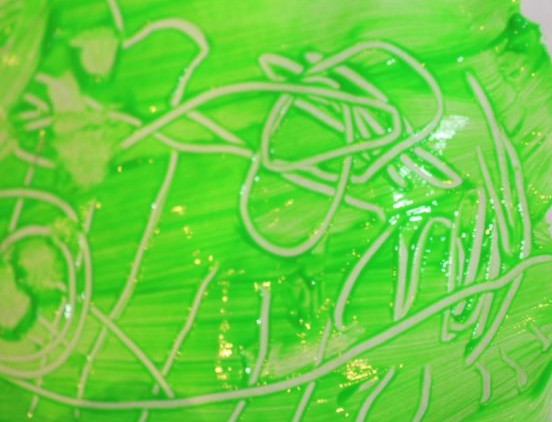
On A’s second painting, she used a fatter paintbrush to draw her picture (well swirls and squiggles anyway).

Done with a thicker paintbrush.

Done with a thicker paintbrush.

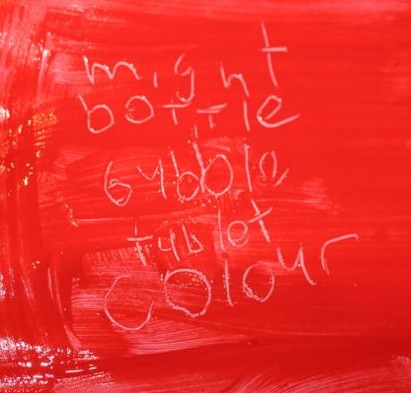
L also used this activity to practice her spelling words. It took a while for the paint to dry as L put it on a bit thick, but once it was dry, we stuck the page in her spelling journal so she could show her teacher.

Scratching out her spelling words.

Scratching out her spelling words.

Spelling words.

Spelling words.

Name Plate

Standard

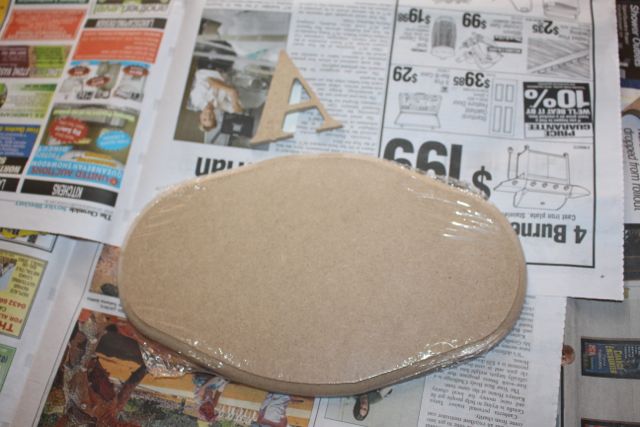
A, Baby T and I had a little trip to Bunnings to get a couple of things….. when I left Bunnings, my couple of things had turned into about a dozen things, and we’d spent an hour just wandering about. Some of our extra purchases included a wooden board, wooden letters and a packet of rhinestones to make a name plate for A’s door.

The base board and one of the letters before painting.

The base board and one of the letters before painting.

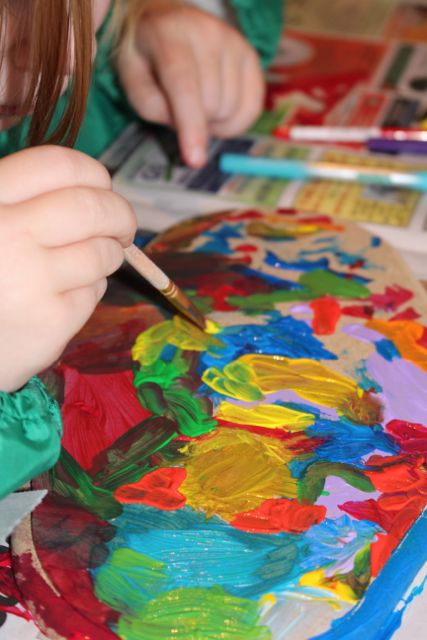
I laid some newspaper on the table to protect it, and I pulled out the box of paints. When I asked A what colour she wanted to paint the base board, she answered “All of them!” So all of them it was…. a little of each in random patches to cover the entire board. She seemed to really enjoy this painting, making it a rainbow, and mixing the colours.

Painting the base board.

Painting the base board.

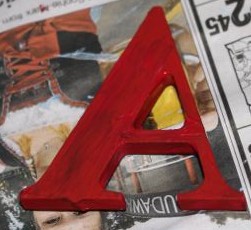
When it came to painting the letters, I suggested she paint each of them a single colour to help them stand out against the colourful background. She chose the colour for each letter, and painted the tops of them, but needed some help getting the paint all around the edges. She put several coats of the paint on the letters to make the colours bolder.

One of the letters painted.

One of the letters painted.

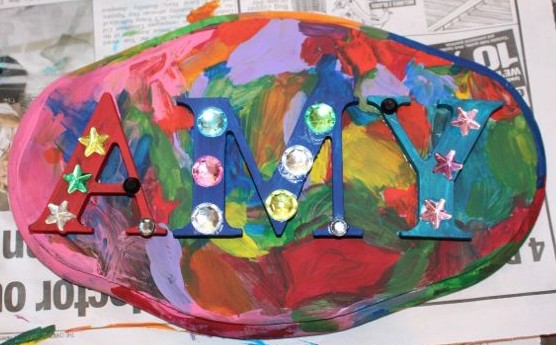
Once all the paint was dry, we had to glue the letters to the base board. A wanted them fairly straight across the board. She used a paintbrush to add glue to the back of each letter, and I placed them carefully in a line on the baseboard. Then she decorated the letters with some rhinestones, and she was finished.

Placing the rhinestones.

Placing the rhinestones.

Gluing the rhinestones down.

Gluing the rhinestones down.


Ready to hang on her door.

Ready to hang on her door.