Category Archives: Animals

The Twelve Cats of Christmas by Kevin Whitlark

Standard

IMG_3004The Twelve Cats of Christmas by Kevin Whitlark, paperback picture book, first published by Scholastic Australia in 2010, this edition published in 2014.

The twelve days of Christmas, cat style. On each of the days of Christmas, my true cat sends me something kitty related, such as “eight felines fishing”.

My kids like this twist on the old Christmas song. They like singing the book, and laughing at the quirky pictures. The story is simple and repetitive, so it’s easy for the kids to learn all the words too. I like the “cats a’ clawing” best, except when my own cat wants to join in!

Enjoy some Christmas entertainment with this fun Christmas book for toddlers, preschoolers and lower primary school children.

Foam Christmas Spoons

Standard

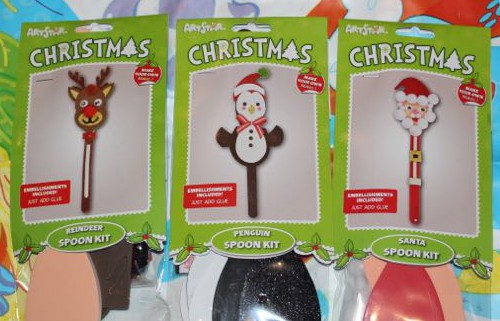
IMG_2860A found these foam spoon kits in Riot Art & Craft last week. She picked out two for her and two for L (who was not with us at the time). They were only a couple of dollars each, and they gave us an hour or so of Christmas crafting fun.

Each pack contained a foam spoon and all the bits to attach to the spoon to make a penguin, Santa or reindeer.

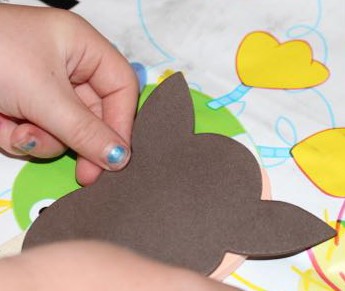
Sticking on the reindeer's head.

Sticking on the reindeer’s head.

The penguin packs had foam with a sticky backing so all we had to do was peel off the backing paper, and stick it where it had to go. The only problem with this was that the sticky area of the body pieces were much wider than the spoon, leaving the back of the body with nothing to stick to. The reindeer and Santa packs weren’t self-sticking, so we used craft glue to attach the foam pieces to the spoon.

Placing tiny bells on the reindeer's antlers.

Placing tiny bells on the reindeer’s antlers.

L and A very carefully followed the pictures to create their spoons. For some reason A’s penguin pack had two wings the same, instead of a left and right wing! She didn’t really care though, she just stuck the second wing on upside down and told me the penguin was waving.

Sticking on the penguin's beak.

Sticking on the penguin’s beak.

We have displayed these Christmas spoons up on the wall. They are very cute!


IMG_2875

Underpants Wonderpants by Peter Bently and Deborah Melmon

Standard

IMG_2804Underpants Wonderpants by Peter Bently and Deborah Melmon, paperback picture book, published by Paragon Books Ltd in 2014.

Wonderpants is the ultimate superhero, flying around and saving everyone with awesome underpants power! Underpants can help in any situation, even when saving the world from an alien invasion.

Underpants Wonderpants is much loved by my preschooler. The story is a bit silly, but amusing, and the language is simple enough for children learning to read. The illustrations are colourful and engaging, my preschooler likes to find the duck on each page.

Underpants Wonderpants is best suited to preschoolers and kindy children, but I get a chuckle each time I read it too. Kids will love what Wonderpants does with his undies. Underpants have many more uses than I previously thought!


Explorers: Insects and Minibeasts by Jinny Johnson

Standard

IMG_2741Explorers: Insects and Minibeasts by Jinny Johnson, paperback non-fiction, 31 pages, first published by Kingfisher in 2011, this edition published by Kingfisher in 2014.

This is another title in the Kingfisher Explorers series of non-fiction for children. The information is pitched well for preschoolers and primary school children, with full colour illustrations and photography throughout.

The layout is simple and the facts interesting. There is lots to learn about bugs and creepy crawlies in this book. It looks at life cycles, insect homes, diets and water creatures. My preschooler particularly liked the pages on camouflage, and defense. She liked the thorn bugs.

As I read through Explorers: Insects and Minibeasts with my preschooler I saw plenty of insects that were new to me, and I learnt right along with her. It’s nice to find non-fiction books that my kids enjoy and that provide us all with opportunities for learning.


Slater Bugs

Standard

IMG_2281

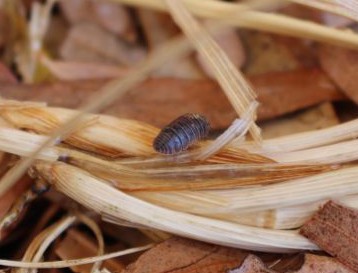
Every time we move something in the yard dozens of little slater bugs make a run for it. These little creatures are covered in what appears to be armour and roll up into tight little balls when they feel threatened. This defensive mechanism is the inspiration for the other common name for these bugs; roly-poly bugs. In fact they are not bugs at all, but a type of crustacean. I believe they are also known by some other names such as woodlice and pill bugs.  A and L are fascinated by slater bugs, as was I as a child.

One evening A found a little slater bug on our driveway, she rescued it and called it Little Champ. She asked if she could keep it. I was on the verge of suggesting she place it back in the garden, but what came out of my mouth was actually “Sure, let’s find a container.” Now I didn’t know anything about keeping a slater bug, so I turned to my friend, the internet, for more information.

I found the following pages helpful in setting up our slater bug enclosure:

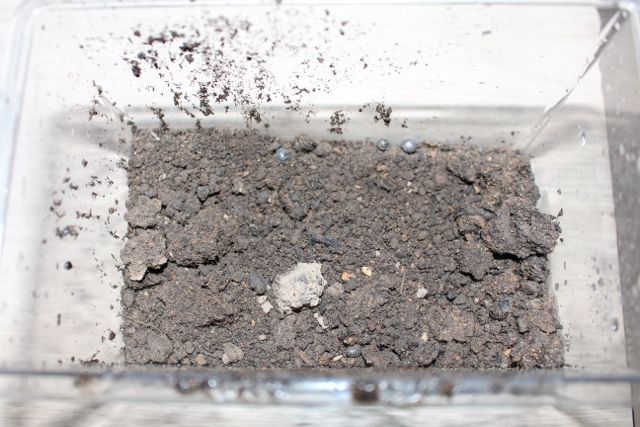
Dirt in the tank.

Dirt in the tank.

Leaf litter.

Leaf litter.

We had an old plastic aquarium that we used to use for mice. We cleaned, rinsed and dried it, before placing some dirt from our garden into the bottom of it. We took dirt from an area where we found slaters so that we knew it would be okay for them. A placed Little Champ into the tank, and then the kids went out to find more slaters. They brought in around a dozen or so and placed them in with Little Champ.

A slater happy in the leaf litter.

A slater happy in the leaf litter.

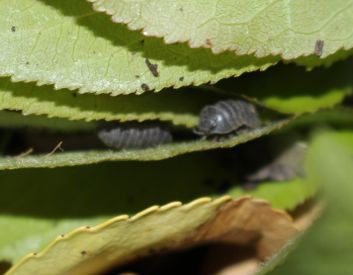
Slaters like to be in places where they can hide and it is damp. We placed dry leaf litter on top of the dirt, and used a spray bottle to moisten the contents. The kids added some fresh cherry tree leaves, twigs and dried grass for the slaters to climb and hide amongst.

I occasionally pull out the old leaf litter and refresh it, and I remove anything that looks like it might be becoming mouldy, but I don’t need to clean out the tank completely. We keep the enclosure moist, but not too wet and we feed them scraps from the table, such as lettuce leaves, snow peas, carrot peel, and bits of fruit. I have found that they like snow peas and beans best.

Exploring the cherry tree leaves.

Exploring the cherry tree leaves.

The slaters must be happy in their new home because they have been breeding. We now have dozens of tiny white babies swarming around the tank. It is amazing to see something so small yet so much like their parents! I think we will have to transfer them to a bigger tank soon.

We love watching the slaters scurry around their tank, they are very interesting! Slaters are extremely easy to care for and very quiet. They make excellent, cheap pets for children, that will provide hours of entertainment.

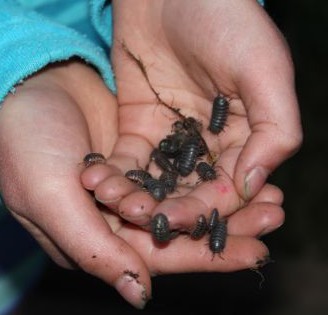
Slaters in the hand.

Slaters in the hand.


Mog at the Zoo by Helen Nicoll and Jan Pienkowski

Standard

IMG_2736Mog at the Zoo by Helen Nicoll and Jan Pienkowski, paperback picture book, first published by William Heinemann Ltd in 1982, this edition published by Puffin Books in 2014.

Meg, Mog and Owl visit the zoo, but Mog is mistaken for a tiger. The zoo keepers chase him past lots of animals until they catch him and lock him in a cage. Meg tries to rescue him, but her spells don’t always work the way they should.

This book is part of the popular Meg and Mog series. I loved it as a child, and now my own children love it! The story is easy to read and fun, while the illustrations are bright and simple. Lots of solid blocks of colours with black outlines make this book good for helping younger children to learn colours, as well as making it easy for them to enjoy the pictures without being overwhelmed by too much detail.

Mog at the Zoo is a great book to share with toddlers, preschoolers and older children. It is also perfect to read alone for lower primary school students. I like when the crocodiles cheer Mog on, and my preschooler liked that the monkeys gave Mog a banana to cheer him up. Kids will love all of the adventures that Meg and Mog have!

Cat and Mouse Cake

Standard

IMG_24141

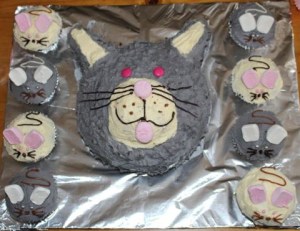
I have made this cat and mouse cake a few times for the kids’ birthdays. It is quite easy and has been a big hit at birthday parties. I normally make butter or vanilla cakes, but A begged for chocolate cake, so I used some White Wings mixes to make the cakes.

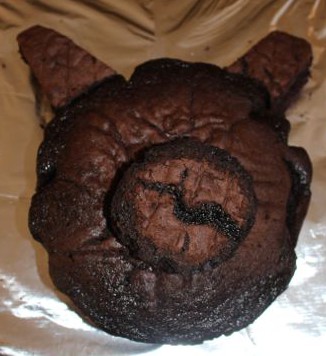
Prior to icing.

Prior to icing.

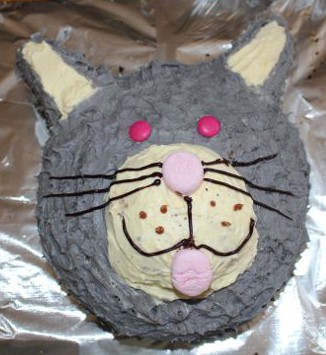
The cat’s head is make with a round cake base, with another cake cut up to make the nose and ears. The mice are decorated cupcakes. I just cut a rough circle section for the nose, and then I sliced the piece of cake so that it was about half the depth. I attached it to the round cake using some white buttercream (vienna cream or frosting). I also used some buttercream to attach the triangular ears to the top of the round cake. I don’t worry too much about how the cake looks at this point because I know I will make it look nice with the frosting!

There are lots of recipes around for buttercream, but I used one I found on taste.com.au, it was light and fluffy and very tasty.

IMG_2395

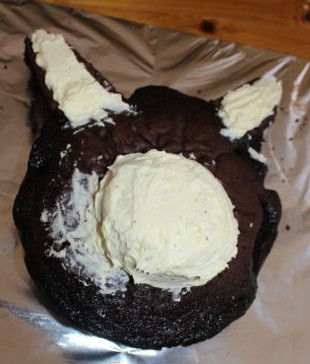
After applying white buttercream.

After applying grey buttercream.

After applying grey buttercream.

A asked for her cat to be grey and white, which is pretty easy. A little bit of black liquid food colouring added to the plain frosting gives a nice grey. As I was also icing the cupcakes in white and grey, I made up a triple batch of buttercream, and divided into two bowls, keeping one white and making the other grey. A double batch probably would have done it, but I’d rather have extra ready to go if needed, especially if I am using coloured buttercream, it’s so hard to get the colour to match if I have to make more.

I roughly added the white buttercream over the nose and to make the inside of the ears. Then I did the rest of the head in grey neatly, butting it up to where the white should end, and covering any excess white frosting along the way. To give the buttercream a bit more texture, I used the flat side of a butter knife’s blade to slap against the buttercream, causing little peaks to form. I did this all over the grey areas, while keeping the white fairly smooth. The kids thought it looked more like fur that way.

IMG_2402

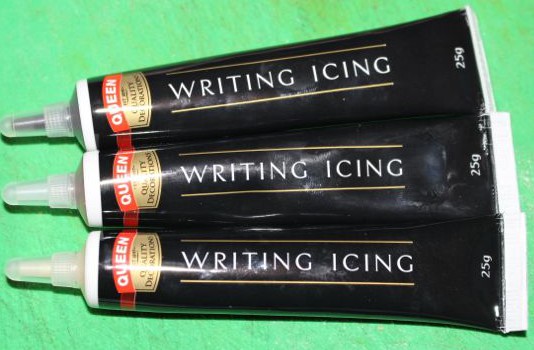
IMG_2377In the end, I decided that I wanted the white to extend a bit further down to encompass the mouth more, so I added some more white buttercream from the nose down. This gave me more room to apply the mouth and nose. The nose and tongue are half a pink marshmallow each, while the eyes are smarties. A chose the pink ones, though I suggested blue or green! The rest of the facial features are drawn on with writing icing. These little tubes are very handy and easy to use.
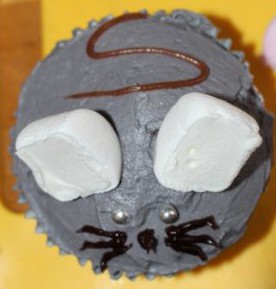
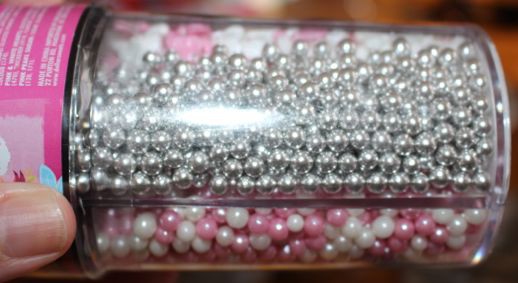
IMG_2411IMG_2421To make the cute little mice cupcakes, I iced half the batch with grey buttercream and half with white buttercream. The ears are made from pink or white marshmallows cut in half. Each half is placed on top of the cupcake so that the sticky cut edge is facing forwards. The eyes are shiny cachous and the whiskers, nose and tails are added using the writing icing. I had thought about using liquorice strips for the tails, but I am the only one in my family that likes liquorice, so it seemed like a bit of a waste.
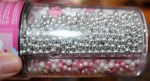
Shiny cachou lollies.

Shiny cachou lollies.

The cat’s head was placed in the centre of the pre-prepared board (a piece of plywood covered in foil), and the mice cupcakes were arranged on either side. I only used eight of the mice on the board. The extras did not go to waste though, the kids finished them off quite quickly.

Unfortunately, before the cake could be unveiled at the party, Baby T leant across it and smooshed a couple of the mice and the cat’s nose. The kids didn’t care, they still gobbled it up!


Explorers: Big Cats by Claire Llewellyn

Standard

IMG_2522Explorers: Big Cats by Claire Llewellyn, hardback non-fiction, 32 pages, published by Kingfisher (Macmillan Children’s Books) in 2013.

This junior non-fiction title is part of the Explorers range of reference books for young learners produced by Kingfisher. It is packed with facts about big cats from around the world, and is the perfect introduction to exploring these amazing animals.

Explorers: Big Cats is suitable for preschool, lower and middle primary school students. It is an interesting look at big cats, and would make an excellent reference for school assignments. Children will learn a little about different types of big cats, habitats, diets and big cat interactions. This is an introductory text, so the depth of information is not extensive, but suits the target audience well. The information is presented in an engaging and logical way, and is not overwhelming for younger readers. The realistic illustrations and clear photography enhance the text, and assist in engaging the reader. This book will satisfy younger readers, and will also inspire children to discover more about these incredible creatures.

Both my second grader and preschooler enjoyed Explorers: Big Cats a lot. They are both highly interested in animals and nature, and this non-fiction title was an anticipated read. My preschooler now wants to have a trip to the zoo to see some big cats (something that we do regularly anyway!) and my second grader has asked me to locate some more books on big cats for her to read. I love watching my children learning about the world, and books like Explorers: Big Cats make that journey fun. I learnt a few things about big cats that I didn’t know too! Now I’m interested to find some more titles in the Explorers series to read.

Freaky Phobias by Joel Levy

Standard

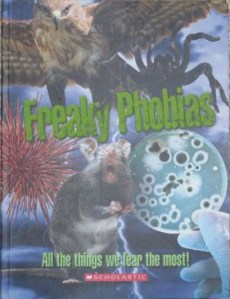
IMG_2519Freaky Phobias by Joel Levy, paperback non-fiction, 80 pages, published by Scholastic Australia in 2011.

This book is a fascinating insight into a range of phobias. It covers the most common ones, such as arachnophobia and claustrophobia, alongside some extremely unusual phobias. I never knew there was a word for the fear of otters or knees or kissing, but there is! And there are many other phobias that I had never considered, but discovered in Freaky Phobias.

Freaky Phobias is an informative and interesting book for primary aged children. I learnt quite a lot whilst reading Freaky Phobias, as did my second grader. It had a good depth of information for children, and plenty of fun facts to engage the reader. The photography depicted all of the terrors contained within the book with such clarity that my second grader wanted to skip some of the pages because she felt anxious.

Freaky Phobias contains an A-Z of Phobias, providing the names and descriptions of quite a few phobias. I think this glossary could have been enhanced by including the phonetic spelling of the names, as some of them are quite long and complicated words, which I had difficulty pronouncing.

This is quite a good non-fiction title for young learners (and big ones too!)


Tortoise and the Hair by P. Crumble and Louis Shea

Standard

IMG_2517Tortoise and the Hair by P. Crumble and illustrated by Louis Shea, paperback picture book, published by Scholastic Australia in 2014.

Tortoise is getting ready for his big singing performance, but he can’t find his favourite wig! He needs that wig to perform, but where has it got to? He starts searching all over the house. Meanwhile, the wig is having its own interesting journey, after Bear picks it up on the bus, and eventually Hare acquires it. Can Tortoise get the wig in time or will he perform without it?

We have laughed plenty through many readings of Tortoise and the Hair. It is an unusual twist to the old tale of the tortoise and the hare, playing with the words hare/hair. When we read this book the first time, I told my preschooler that Tortoise’s wig made me think of Elvis, and she said “who’s Elvis?”…. I really must try to educate my kids on such important things! Despite this shocking lack of knowledge, both my kids liked Tortoise, with and without the wig. I liked the message of the story that Tortoise can accomplish his dreams without the external reassurance of his wig. He is talented and special just being himself. It is an important thing for our children to remember, that everyone is special and being ourselves is the best we can be.

Amusing rhyming text and fantastic illustrations make Tortoise and the Hair a great book to share with preschoolers and lower primary school children. My kids like picking out funny things in the pictures, like the kangaroo paperboy and Monkey in his hammock. I was pleased to see Hare make an appearance too, racing to the venue!