Author Archives: TodayWeDid

Unknown's avatar

About TodayWeDid

I spend my time sharing my love of reading, arts and crafts with my four children. I also review children's and YA books.

Easel Painting

Standard

Painting, painting, painting, we love it!

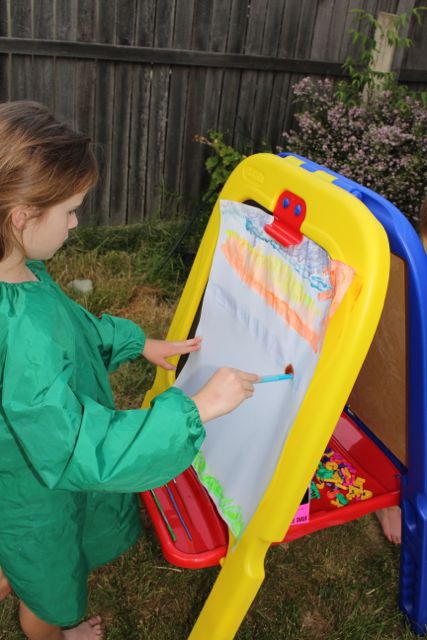
A new Lincraft store has opened nearby, so the kids and I went to check it out last week. We bought a number of things, including some new poster paints. L picked out some fluoro paints, and A chose some glitter paints. We put our new paints to good use on our easel, using a variety of brushes (different sizes and shapes). A mostly likes to just slap the paint onto the paper, making streaks, dots, and swirls. L prefers to paint a picture. Either way, easel painting is fun 🙂

IMG_3372IMG_3369


The finished paintings will go into our present box to be used as wrapping paper.

Sharing the easel.

Sharing the easel.


Marshmallow Sculptures

Standard
Marshmallow and straw building.

Marshmallow and straw building.

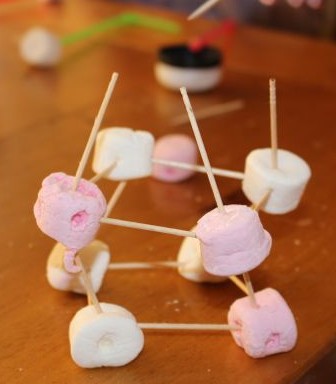
We practiced our architectural skills using marshmallows, plastic straws and toothpicks. It was lots of fun, and the kids loved eating the marshmallows once they were finished 🙂

Marshmallow and toothpick house.

Marshmallow and toothpick house.

L discovered that the toothpicks worked better than the straws, as they were shorter and stronger. She also found that using triangles as her base shape created a stronger structure that could be built up much taller than those made with squares.

After the tower building was complete, both L and A made some original sculptures using the marshmallows.  I particularly liked L’s ‘Cat doing splits’.

Making crazy sculptures.

Making crazy sculptures.

Spiky echidna.

Spiky echidna.

Cat doing splits.

Cat doing splits.

Squishy Press Painting

Standard

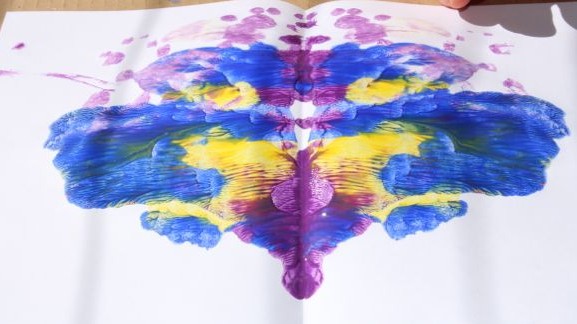
IMG_2907These sort of paintings probably have a real name, but I’ve always thought of them as squishy or butterfly paintings due to the way the paint is squished between the paper, and that the final outcome often looks butterfly-ish.

Blobbing the paint onto the paper.

Blobbing the paint onto the paper.

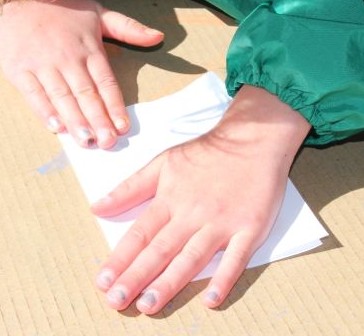
Squishing the folded paper together to spread and mix the paint.

Squishing the folded paper together to spread and mix the paint.


We like doing these simple paintings. The kids like the way the paint squishes and mixes to make pretty patterns. I pre-folded the paper to make it easier for the kids to see where to put the paint. They blobbed paint onto the paper using paint brushes and then re-folded the paper and pressed down on it to spread the paint. It works best if the paint is near the fold of the paper in blobs of different colours, and don’t let it dry before folding. Pressing the paper away from the fold towards the edge of the paper will spread the paint further, and change the shape of the painting. Open the paper, and there is a pretty painting inside!

IMG_2915


Flour Play

Standard

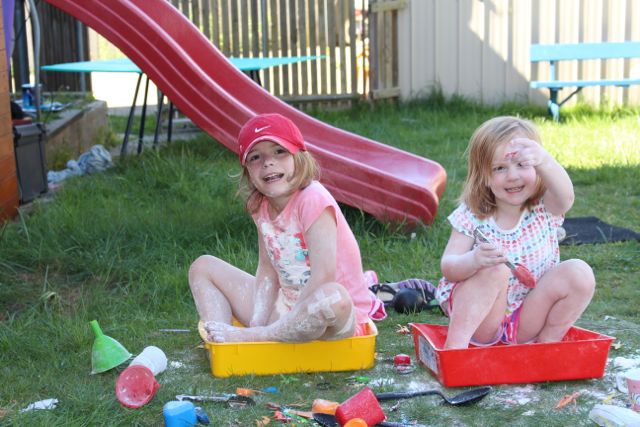
Big L and I were busy outside sanding and painting (more on that later), and the kids were bored (despite all the fun outdoor equipment in the yard). I was a bit sick of being asked when it would be dry, so I tipped some plain flour into two of the sensory tubs to entertain them. They used various kitchen implements such as measuring cups, spoons, whisks and funnels to play with the flour. The little plastic animals went in too.

Making flour castles with the sieve.

Making flour castles with the sieve.

A started with her hands, then put her feet in, and then she climbed into the tub. Not to be left out, L hopped in too. They covered themselves in flour, made a huge mess, but boredom was banished!

Having fun in the flour.

Having fun in the flour.

Bubble Prints

Standard

IMG_2902

IMG_2900

Blowing bubbles.

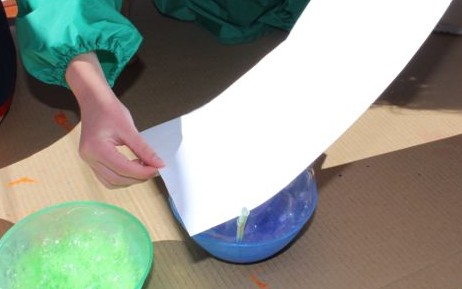
These pictures are fun to make. I mixed some paint with water to make it thinner, and then added a little bit of dish washing liquid to each colour and mixed it all up. A used a straw to blow into the mixture to produce lots of bubbles. L refused to blow through the straw, as she was worried that she would accidentally suck it up into her mouth. That was okay, she still used some paper to make bubble prints after A or I made the bubbles.

The kids carefully placed their sheets of paper over the bowls full of bubbles, transferring the paint onto the paper to make a bubble print.

IMG_2903

Transferring the bubble pattern to paper.

It can become a bit messy when the bubbles pop, as little droplets of paint get sprayed out. When L and A put their heads close to the bubbles they ended up with the droplets on their faces, and in their hair. It was plenty of fun, but the kids needed a bath after we were finished 🙂

IMG_2905

A bubble print.

Matching and Memory Maths

Standard
Matching.

Matching.

During a recent trip to Bunnings I picked up some paint sample cards. Once we’d chosen the colours we wanted, it seemed a bit wasteful to toss the cards out, so we made a matching and memory game with them.

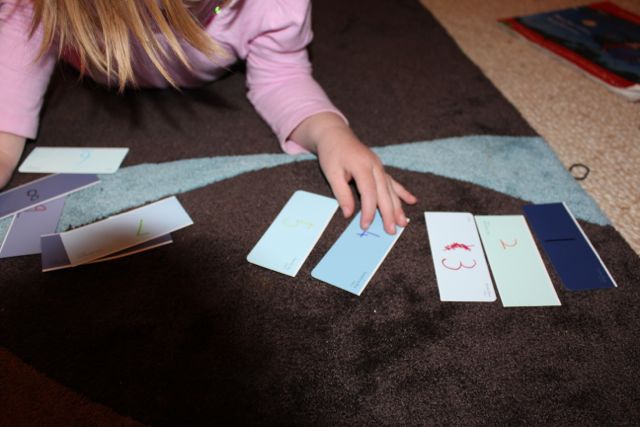
Ordering the numbers.

Ordering the numbers.

Each card had three shades of colour on it, so we separated each card into three. I wrote the words zero to ten on these cards, and L wrote the numbers 0 to 10 on more of the cards. We spread all these cards out on the floor, and A matched the numerals to the words. This was a great activity for learning to associate the numeral form with the word form of these numbers.

A placed the numbers in numerical order, and then matched the words to them.

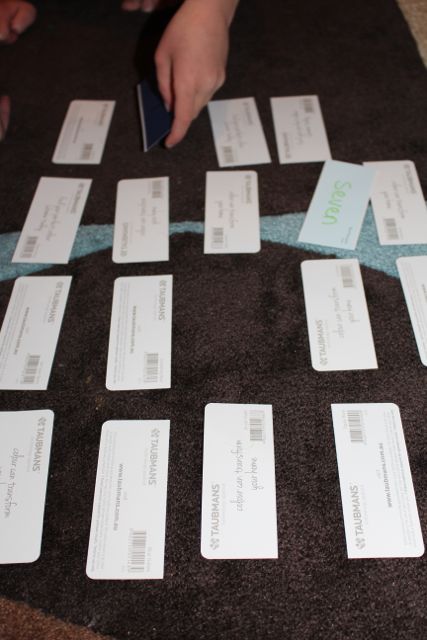
Playing memory with the number cards.

Playing memory with the number cards.

We set the cards out right side down in a grid to play memory. The kids took turns turning over two cards at a time trying to make matches of the numbers to their names. We really enjoy playing memory, and we have several sets of picture memory cards that we often play with. Memory is a simple game for improving concentration, logic and memory and it helps kids learn about taking turns.

Matching 'friends of ten'.

Matching ‘friends of ten’.

L used the cards to match the ‘friends of ten’. These are two numbers that add together to give ten, such as 4 and 6, 3 and 7, 10 and 0, etc. Knowing the ‘friends of ten’ is important for quick calculations and improving maths confidence.

We had enough paint colour cards left over to make a shapes version too, with the shape names on some of the cards, and the matching shapes drawn (imperfectly by me) on others. A named all of the shapes for me, and then I helped her match the words to the shapes. She was less familiar with the shape name words, so this was a harder task than matching the numbers to their names.

Shape matching.

Shape matching.


Headbands

Standard
The headband craft kit box.

The headband craft kit box.

A was given this craft kit for making headbands recently. She was very keen to have a go at it, so we set out all the contents on the table and talked about the design of the headbands. Since there were three headbands to decorate, A picked one, and offered to let L decorate one too. That left one, which A suggested I might like to make up…. and then she could wear my creation 🙂 I was very pleased that she was sharing so nicely with L.

Three beautiful headbands.

Three beautiful headbands.

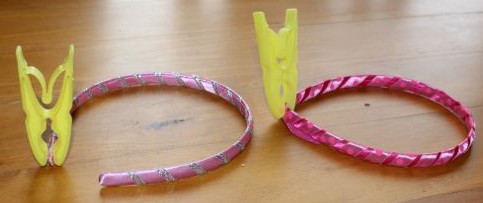
After much discussion about design, A insisted on making hers just like the one on the box. L just wanted the pink spotty ribbon and feathers on hers, and I got what was left. We started with the thin ribbons, which were meant to wrap around the plain satin headbands. The glue that came with the kit was terrible, so I used some silicone craft glue that we have for our craft projects. The kids found it difficult to wrap the ribbon around evenly, so I did that part for them.

Ribbons drying on the headbands.

Ribbons drying on the headbands.

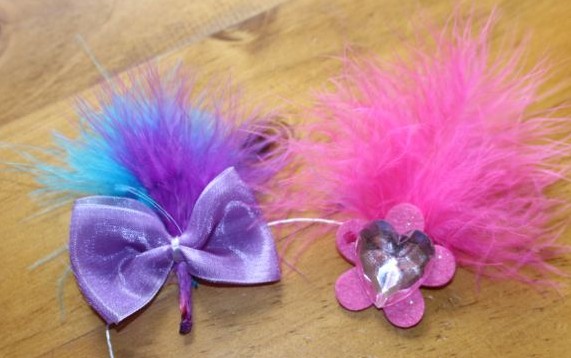
I helped A glue the heart crystal onto the pink flower along with a pink feather. Then I made a bow with the purple ribbon and glued some feathers to it. Once these were dry we stuck them onto the headbands.

Decorations ready for placement on the headbands.

Decorations ready for placement on the headbands.

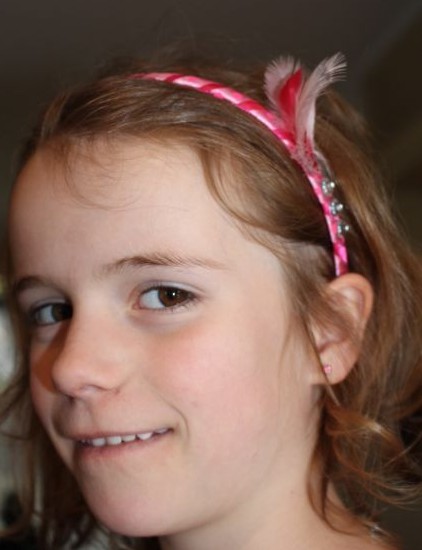
L used some little diamantes to decorate hers, along with some small feathers out of our craft box (the feather left in the craft kit was too big for what she wanted to do). I really like how hers turned out.

It took a little while for the headbands to dry, and the kids were not particularly patient during this time, but we got there eventually. They modeled the headbands for me, and they have been wearing them around a lot. I did most of the gluing in this activity as it was a bit fiddly to get the ribbon and the decorations onto the curved surface of the headband. Despite this, the kids really enjoyed designing and decorating, and then wearing the headbands. And we had some lovely time together whilst doing it.

A modelling her headband.

A modelling her headband.

L modelling her headband.

L modelling her headband.


Pipe-cleaners and Feathers

Standard

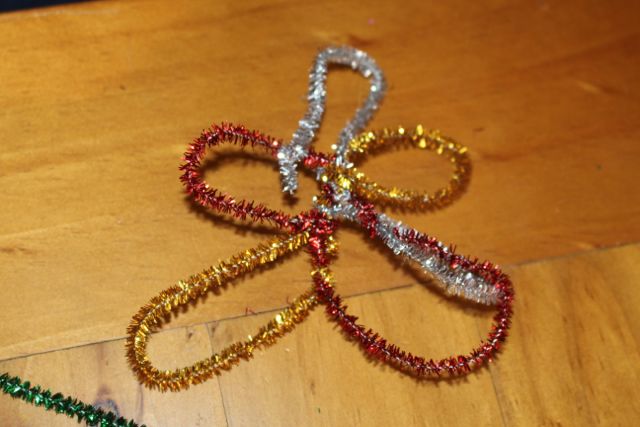
While I was looking for a bag of coloured feathers in one of the craft tubs I found a packet of metallic pipe-cleaners. I also found the bag of feathers I was actually looking for. The pipe-cleaners reminded me of Christmas, and Christmas is less than three months away now… I’ve already noticed Christmas things on display at the shops. Anyway, an idea for Christmas decorations came to mind using the pipe-cleaners.

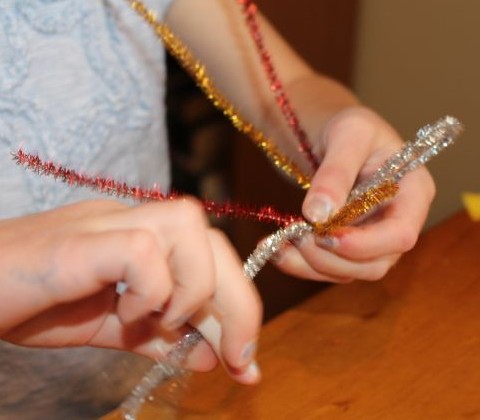
We placed three pipe-cleaners together and twisted them in the centre to anchor them, and then fanned the six points out. Each of these six points were bent back onto themselves to create a star shape. Each piece was finished by twisting the ends of the pipe-cleaners around the middle. To hang them up, one of the star’s points could be used, or we added half a pipe-cleaner shaped into a hook on some of them.

IMG_2754IMG_2760I also made some tree shaped decorations using green, purple and gold pipe-cleaners, but these turned out to be too fiddly for the kids. IMG_2757

The bag of feathers were also open on the table along with the pipe-cleaners. (And yes the kids had emptied both packets all over the table because that’s how craft supplies should be displayed for ease of locating just the right item among many similar or even identical items!) L started wrapping one of the pipe-cleaners around a feather, while A was attempting to string the feathers onto a pipe-cleaner. And so the next set of decorations came about. For these L and A picked out several feathers that they liked to go together, and I helped them wind a pipe-cleaner tightly around the end of the bunch of feathers several times. The end of the pipe-cleaner was shaped into a loop to hang them up.

Feather and pipe-cleaner decorations.

Feather and pipe-cleaner decorations.

Pet Rocks

Standard

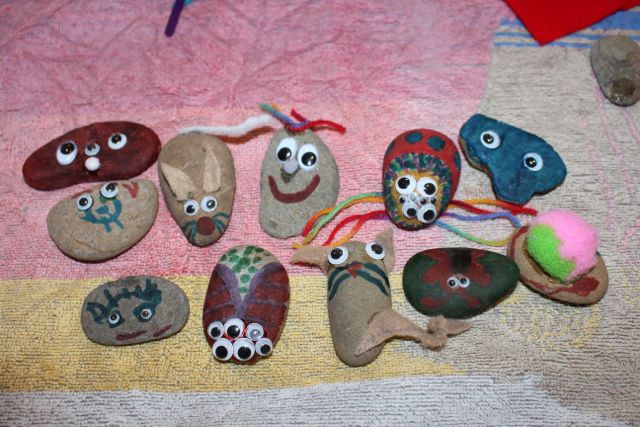
“Can I have a puppy? Can I have a kitten? Can I have a pet bird, frog, fish, mouse…?” Sound familiar? Somewhere around the age of two or three these questions start like a childhood anthem. Kids just love pets, and we’re lucky enough to have a very fluffy cat as part of our family. But if it was left to the kids our cat would rarely be fed, watered or brushed, and his litter tray would never be cleaned out. Big L and I don’t mind doing these things to look after our furry friend, we like having a pet, and the kids are still learning about these responsibilities. But some friends of ours bought a cute little puppy a few months back, and now we are being asked for more pets. We’re not ready for more yet (and I think our cat would be hugely put-out if we brought home a dog!), so we decided to make some pet rocks. These are the kind of pets that don’t take up much room, and they don’t mind if you forget about them now and again.

Some of our pet rocks.

Some of our pet rocks.

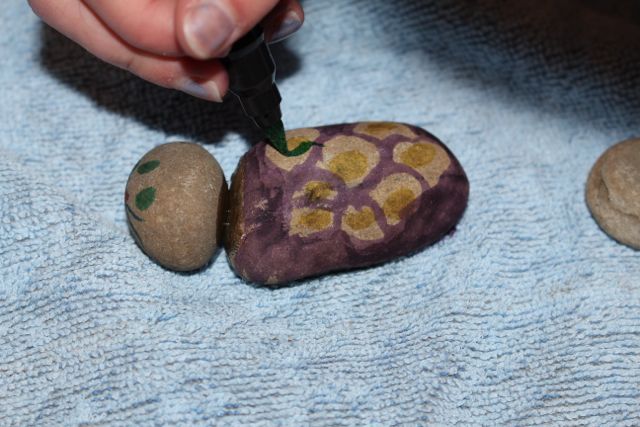
We picked out a number of large smoothish rocks and pebbles from one of our garden beds to use for our pet rocks. The smoother the rock, the easier it was to paint. We used paint pens (by Crayola) for ease of painting. These are used like a pencil or crayon, making them easy for A, and give a quick dry, no drip paint experience. If we had used the craft paints we have the effect would have been more vivid, but it would have been messier. Since we were stuck inside due to the weather, the paint pens were a better choice for us on the day. I would like to make some more with other paints outside another day for a different look.

IMG_2414IMG_2419IMG_2413


Once the paint was dry we stuck on googly eyes and used felt scraps and wool scraps to give them some personality. The felt was great for ears and tails. L also used some mini popsticks to glue onto one of hers for legs. She tried gluing some of the rocks together to make bigger pet rocks, but it took ages for the glue to dry, and it was hard to get them to stick together well.

IMG_2423

Geronimo Stilton Mini Mysteries Series

Standard

These stories are small format books that make for a quick and easy read suitable for lower and middle primary school children. Geronimo Stilton is a very likeable character, and his adventures are fun and exciting. He is the editor of The Rodent’s Gazette, a big newspaper in New Mouse City on Mouse Island. Sounding cheesy? Geronimo is a mouse, and these books are rodent themed in a big way. The characters names are rodent or cheese related, and there are plenty of themed words like fabumouse and enormouse, as well as lots of references to paws, tails, whiskers and cheese. The mini mystery books are shorter stories than those of the regular series, but are still written in the same style. There are colour illustrations throughout, and some words in the text are written in different colours, fonts, shapes and sizes. This makes the text fun and challenging. There are several clues in each of the books to engage and encourage the reader to play detective too. These mini mysteries are a fabulous introduction to the main Geronimo Stilton series, and the Thea Stilton series (Thea is Geronimo’s sister).
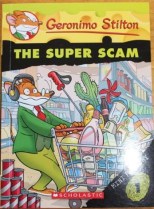
IMG_3410Geronimo Stilton: The Super Scam, paperback, 77 pages, published by Scholastic Inc in 2012. This is the first book in the Geronimo Stilton Mini Mysteries series.

Geronimo gets an urgent letter inviting him to the grand opening of a new superstore. His nephew, Benjamin, is very keen to go, and Geronimo can’t say no. When they finally arrive, they are given a set of free headphones to use, and suddenly they are so happy, dancing and buying everything in sight. When Geronimo is knocked down by another shopper, he realises that something isn’t right with the new superstore, and he enlists Benjamin and his friend Bugsy Wugsy to help him find out what’s really going on.
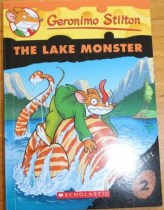
 

IMG_3411Geronimo Stilton: The Lake Monster, paperback, 77 pages, published by Scholastic Inc in 2012. This is the second book in the Geronimo Stilton Mini Mysteries series.

Geronimo’s arch enemy Sally Ratmousen, the editor of The Daily Rat, the main rival to The Rodent’s Gazette, publishes a scoop article and photo of a lake monster. Geronimo heads to the lake with his sister Thea, nephew Benjamin and friends Petunia and Bugsy Wugsy to try to get his own version of the story. Along with his photographer Snapson, Geronimo attempts to photograph the lake monster, but it doesn’t quite happen the way he expects. Something is fishy about this lake monster, and Geronimo is going to find out the truth.
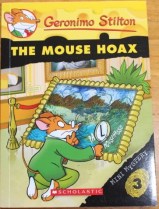
 

IMG_3409Geronimo Stilton: The Mouse Hoax, paperback, 76 pages, published by Scholastic Inc in 2012. This is the third book in the Geronimo Stilton Mini Mysteries series.

When Geronimo is given a painting by the famous artist Pablo Mousehasso there is a mysterious message on the back of the accompanying note. Geronimo must work out the mystery aided by his nephew Benjamin, and his friends Petunia Pretty Paws and Hercule Poirat.