Tag Archives: craft

Paper Doily Angels

Standard

IMG_2972

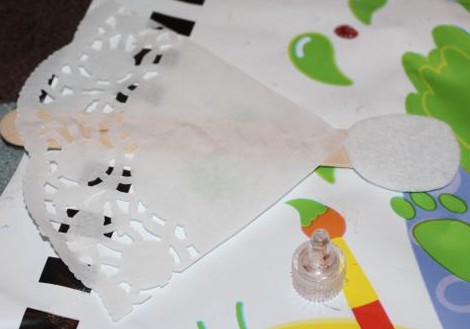
Laying out the wings.

Laying out the wings.

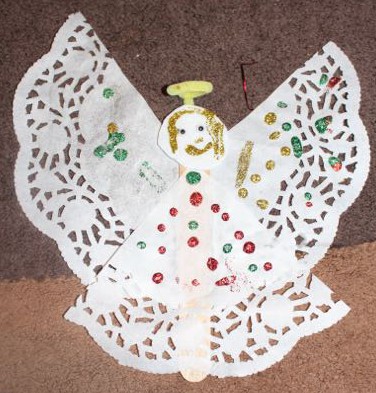
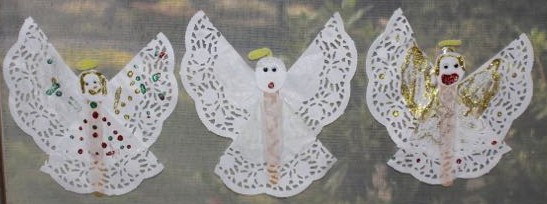
Doilies make pretty angel wings and skirts. We cut a triangular section from a doily, and used this piece as the angel’s skirt, while the rest of the doily was turned upside down and became the wings. We glued the pieces of doily to an oversized pop-stick (like the tongue depressors the doctor uses to look in your throat). This formed the body of the angel.

Attaching the skirt and face.

Attaching the skirt and face.

I cut out circles of white felt to use as the angel’s face, and a third of a pipe cleaner (chenille stick) was bent around to form a halo. The halo was glued to the back of the felt head piece. The kids decorated their angels with glitter glue and glitter paint, and added little googly eyes. The middle angel in the picture above is actually covered in glitter, but it can’t be seen in the photo.

Painting an angel.

Painting an angel.

We stuck the angels up on the window next to where our Christmas tree is.

A halo.

A halo.

The doilies are quite light and will not stay up on their own, and will droop without further support. We used blu-tack to stick the wings to the window, but we could have added another pop-stick (or two) onto the back of the angel to support the wings independent of where the angel was being displayed.

A's angel.

A’s angel.

Pop-stick Christmas Decorations

Standard

Pop-sticks are so versatile, and they can be used to make simple and fun Christmas decorations. We made stars and trees using the regular sized pop-sticks, and some small stars with mini pop-sticks.

IMG_2933

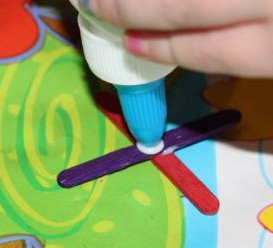
Gluing the pop-sticks together.

Gluing the pop-sticks together.

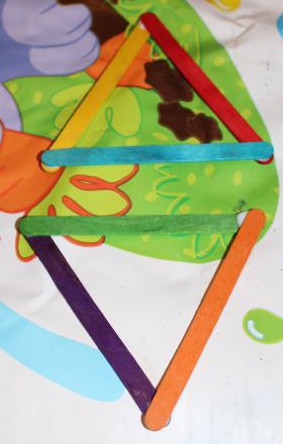
Triangles ready to be glued together.

Triangles ready to be glued together.

For the larger stars, we made two triangles with the pop-sticks by gluing the ends together. Then we placed one of the triangles on top of the other one, so that one triangle was point up, and the other one was point down. We glued the triangles together like this, and got our star. To finish them off we added glitter glue and once they were dry, I tied a loop of string to one of the points so it could be hung on the tree.

IMG_2936

Christmas trees.

Christmas trees.

Adding glitter glue.

Adding glitter glue.

The Christmas trees were made with a triangle of green pop-sticks, and a natural coloured pop-stick glued behind the triangle to form the trunk. We had coloured pop-sticks, but natural pop-sticks could be easily painted green before construction. Glitter glue finished off the trees. Later, a loop of string was added so the tree could be hung up.

IMG_2923

Gluing mini pop-sticks together.

Gluing mini pop-sticks together.

The little stars were made by stacking the mini pop-sticks at different angles to produce eight points. A small dab of glue was all that was necessary to keep the pop-sticks together. Once dry, we tied some string around the stars to hang them from.

These decorations all look great hanging on our Christmas tree!


Foam Christmas Spoons

Standard

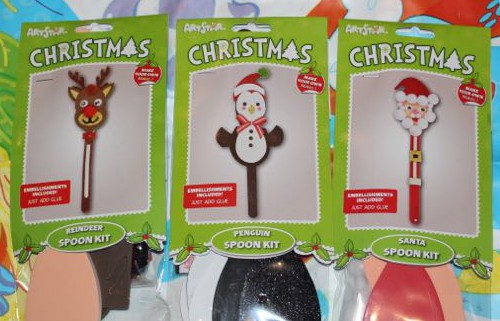
IMG_2860A found these foam spoon kits in Riot Art & Craft last week. She picked out two for her and two for L (who was not with us at the time). They were only a couple of dollars each, and they gave us an hour or so of Christmas crafting fun.

Each pack contained a foam spoon and all the bits to attach to the spoon to make a penguin, Santa or reindeer.

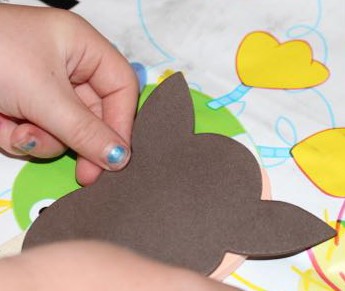
Sticking on the reindeer's head.

Sticking on the reindeer’s head.

The penguin packs had foam with a sticky backing so all we had to do was peel off the backing paper, and stick it where it had to go. The only problem with this was that the sticky area of the body pieces were much wider than the spoon, leaving the back of the body with nothing to stick to. The reindeer and Santa packs weren’t self-sticking, so we used craft glue to attach the foam pieces to the spoon.

Placing tiny bells on the reindeer's antlers.

Placing tiny bells on the reindeer’s antlers.

L and A very carefully followed the pictures to create their spoons. For some reason A’s penguin pack had two wings the same, instead of a left and right wing! She didn’t really care though, she just stuck the second wing on upside down and told me the penguin was waving.

Sticking on the penguin's beak.

Sticking on the penguin’s beak.

We have displayed these Christmas spoons up on the wall. They are very cute!


IMG_2875

Felt Christmas Tree Decorations

Standard

IMG_2671

IMG_2659I was browsing in Riot Art & Craft the other day and we came across these little felt decoration kits. They looked like fun, so I bought two.

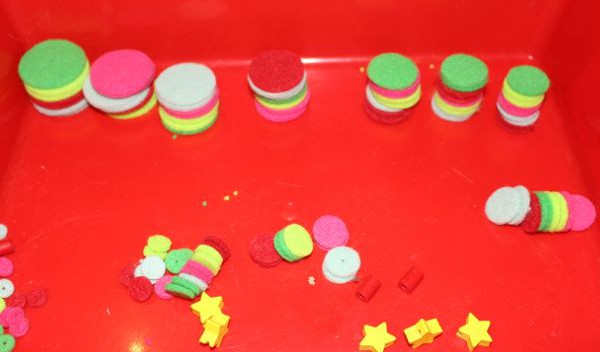
Sorted and ready to go.

Sorted and ready to go.

The circles came pre-punched in felt rectangles, so the kids popped them all out then put the scraps in the bin. Once we’d sorted the circles into piles of different sizes, I noticed that we were short a few circles, and the kids had to go and get them from the bin (luckily they were in a new bin bag so there wasn’t anything yucky in there!). We sorted the piles from biggest to smallest to make it easier to pick up the right sized circles.

Threading the felt circles.

Threading the felt circles.

We tied knots in the end of the silver string and threaded the plastic needles. Then the kids got to work, first adding the cylindrical bead for the tree trunk, and then the felt circles in descending order and finally the star bead. This was where it got a little tricky however, because then the instructions suggested making a loop and taking the thread back through the beads and circles to tie it off at the base where we started. I had to help the kids do this, and the star bead mostly popped off when we tried to tie the thread at the opposite end. The star was easy to thread back on, and then I added a knot above it to stop it slipping off again.

I have added a drop of craft glue to the bottom of the trunk bead and the top of the star bead to prevent the thread pulling through in the future. And I trimmed the end of the thread ready to hang on the Christmas tree.

L (7 years) found this an easy and enjoyable activity that she could complete herself. On the other hand, A (5 years), had more difficulties and required more help with tying the knots and getting the thread back through everything. Putting on the beads and felt circles was easy enough, but she kept letting the thread go, and she had trouble re-threading the needle. A made several trees with help, and still enjoyed it, but L could have done this as a solo activity.

IMG_2672

Calico Bags

Standard
A spotty calico bag.

A spotty calico bag.

We have re-usable bags of all shapes, sizes, and colours. Some of my favourite bags are the calico ones, they are lightweight and scrunch up small enough to carry in my bag. They are great for shopping and make perfect library bags, but they can be a bit boring to look at, so we took fabric paint to some new calico bags to make them unique and appealing.

The tin of fabric paint.

The tin of fabric paint.

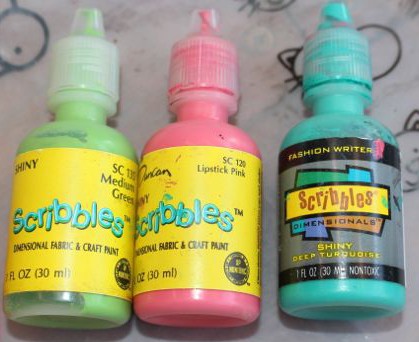
Squeezy bottles of paint.

Squeezy bottles of paint.

A while ago my mother had given me a tin of old fabric paint tubes. She wasn’t sure if they were any good, but thought I might like to try them out. As we went through the tin we found only a couple of the tubes were dried out completely, but almost all of the nozzles were clogged. For these tubes, I cut the end off them to access the paint. There were also some 3D fabric paints in squeezy bottles that were still fine to use too.

Making hand prints.

Making hand prints.

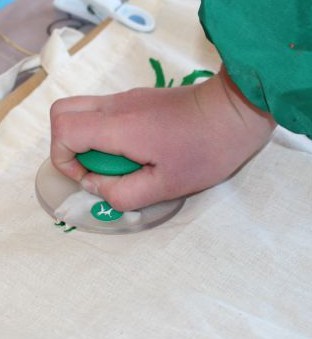
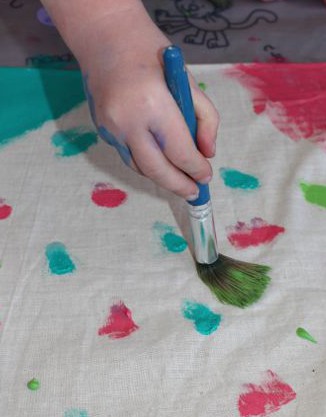
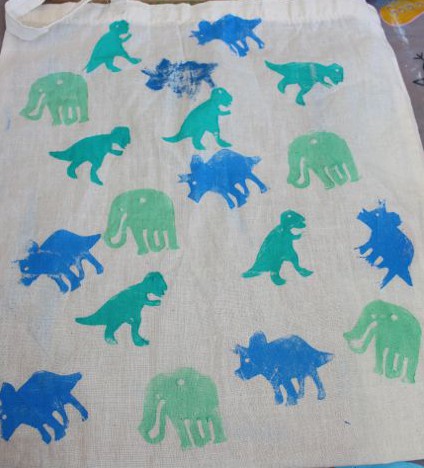
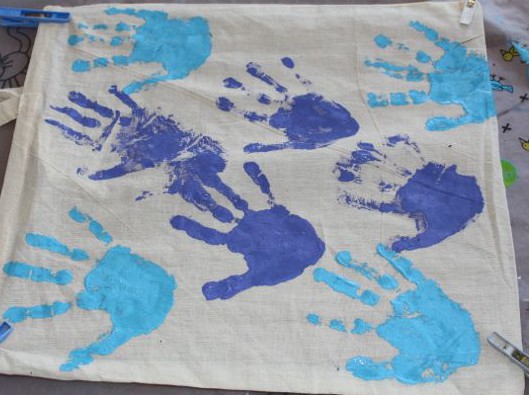
We set out our calico bags with a piece of cardboard inside to prevent the paint from seeping through to the other side, and pegged the bag taunt to make it easier to paint. The kids did hand prints, used stampers, paint brushes, and squeezed the 3D paint directly onto the bags to make each one special. They had a ball. And when all the bags were finished, we waited until then were touch dry, and turned them over and did the other side.

Stamping.

Stamping.

Squeezing on 3D paint.

Squeezing on 3D paint.

Brushing on paint.

Brushing on paint.

Splotching paint on.

Splotching paint on.

Spreading the paint.

Spreading the paint.


By the time we were finished, we were all covered in paint, but we had had fun. Some of the paint didn’t come off as easily as others, and I needed to use some mineral turpentine to remove it from our hands and brushes. The kids thought it was super disgusting! Next time we buy fabric paint I will be checking to make sure it will wash off with soapy water.

Once fully dry, I heat set the paint with the iron. I used a tea towel over the design whilst ironing to protect the design, and prevent any stray bits of paint adhering to my iron. The finished bags look great, and are much more fun than the plain ones!

Dinosaur stamped bag.

Dinosaur stamped bag.

Hand print bag.

Hand print bag.

Rainbow Bookmarks

Standard

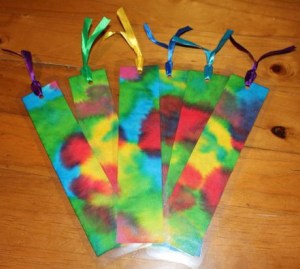
I really love my laminator, it is so useful! Apart from preserving the children’s awards and other valuable mementos, it makes creating unique and durable bookmarks a breeze.
IMG_1942

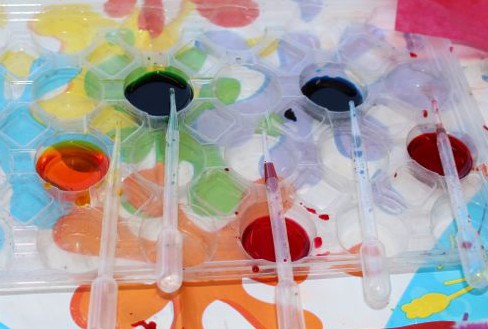
For these fantastic rainbow bookmarks, we used colour diffusing paper (I bought it from Modern Teaching Aids). This sort of paper sucks up the colour and spreads it and mixes it, creating unusual and interesting patterns. Paper towel and coffee filters also provide a similar effect. This paper works well with water colour paints. Using felt tip markers (textas) to draw on the paper, and then using a spray bottle to wet the paper will also cause the colour to spread and mix. But for bright, vibrant colours, we always come back to using a few drops of food colouring in a small amount of water.

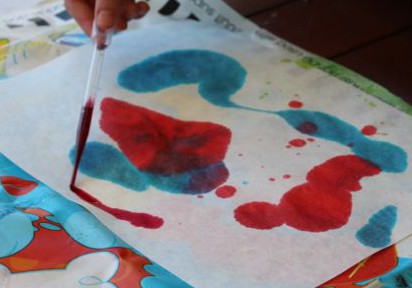
The kids used pipettes to place the coloured water onto the paper. They did big squirts and little drops, lines and puddles, using a range of colours. They enjoyed watching the colour spread out, and making new colours by overlapping the food colouring. They filled up each page with brilliant colour, and in A’s case, so much colour that some of the paper was actually dripping when I laid it out to dry!

A tray of food colouring and pipettes.

A tray of food colouring and pipettes.

Big spots.

Big spots.

And little dots. The blue and red puddle is mixing to give purple.
And little dots. The blue and red puddle is mixing to give purple.

Making lines.

Making lines.


I laid each of the wet pages out on a piece of scrap cardboard to dry flat.


Once these pages are dry, we can use them as beautiful and unique papers for any of our paper crafts.
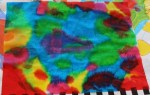
Still wet paper.

Still wet paper.

Still wet. The pattern from the much mat can be seen through it.

Still wet. The pattern from the much mat can be seen through it.


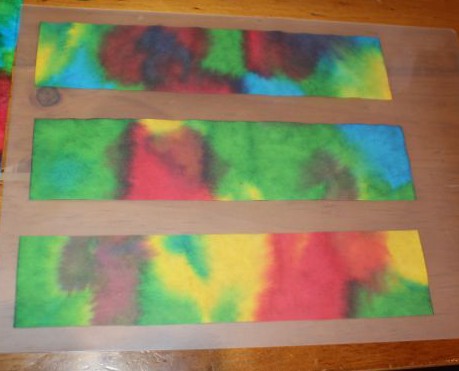
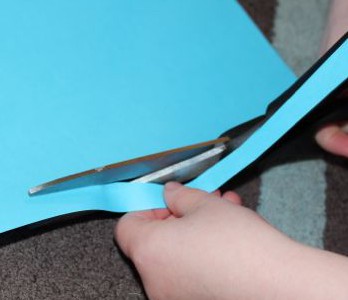
A chose one sheet of paper to use for our bookmarks. The page was 30cm long, so I cut out six bookmarks, each 5cm across, by the width of the paper. I drew a faint pencil line on the back of the paper using a ruler to keep it straight, and then cut them apart. We fit three of these paper strips into an A4 laminating pocket, leaving plenty of room between the strips to make sure the plastic was properly sealed around the paper. L helped me position the laminating pocket and feed it into the laminator. It only takes a few moments for the laminating to finish, and then a few more to cool down.

The same page, dry and ready to use.

The same page, dry and ready to use.

I carefully cut the new bookmarks apart from each other, leaving a border of plastic seal around each one. I rounded the corners of each bookmark to remove the sharp point. L punched a hole in the top of each bookmark, and chose a ribbon to thread through the top. Once the ribbons were tied, the bookmarks were finished and ready to be used.

The paper cut into strips.
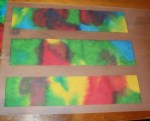
The paper cut into strips.

In the laminating pocket ready to be laminated.
In the laminating pocket ready to be laminated.


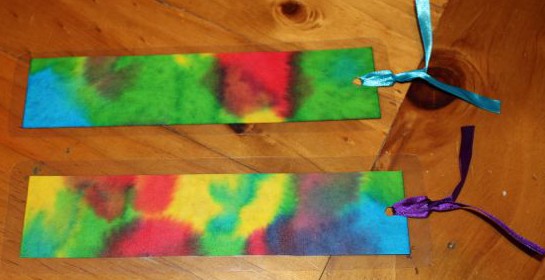
Finished bookmarks.
Finished bookmarks.


Cardboard Roll Trees

Standard

Making play trees is quite easy using some simple materials, such as cardboard rolls, tissue paper and streamers. Using cardboard rolls of different length or width can make an even more interesting forest of play trees.

IMG_1678

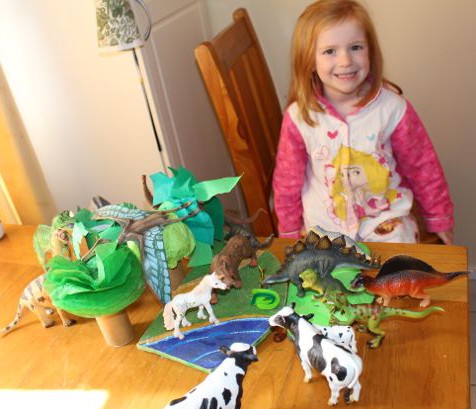
We made four different trees to play animals and dinosaurs with.  A chose to make our play trees green because “trees are meant to be green mummy!”, but I think we could have made trees in other colours to play with. I like the idea of a magical forest of pink and purple trees to play with our fairies and unicorns!

IMG_1658

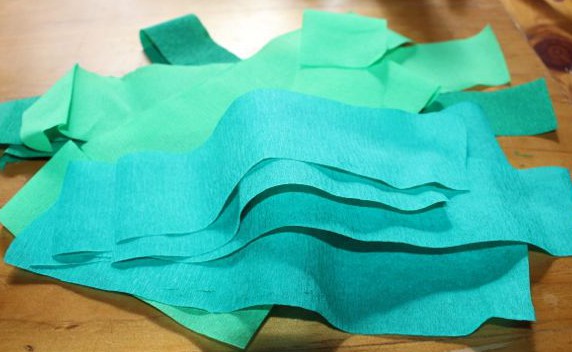
Strips of streamers.

Strips of streamers.

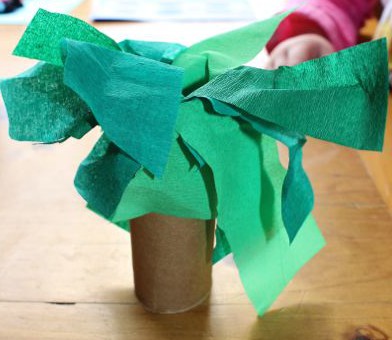
The first tree uses green streamers as the leaves. We had streamers in a few shades of green, so we used strips of each on our tree, but one colour would have been fine also.

The strips taped together.

The strips taped together.

We cut the streamers into strips, and laid them in a pile. Then A twisted the end of the pile together and used sticky tape to secure it. She placed the bundle of streamers into one end of a cardboard roll and taped it down. She fluffed out the streamers in all directions to create the top of the tree. A has been referring to this tree as her “jungle tree”.

IMG_16690

Taping on the tissue paper circle.

Taping on the tissue paper circle.

Adding more layers of tissue paper.

Adding more layers of tissue paper.

The second tree used tissue paper circles for the foliage. A placed a cardboard roll onto the centre of a circle of tissue paper and taped it down. Then she turned it up the right way and used a dot of glue in the centre of the tissue paper circle to attach another circle to the first, and then a third one on top of that. We used four or five pieces of tissue paper, but adding more would have made a puffier tree. Once the glue had dried, we were able to shape the tissue paper to create layers of foliage.

IMG_1668

A cut strip of paper.

A cut strip of paper.

The first leaf attached.

The first leaf attached.

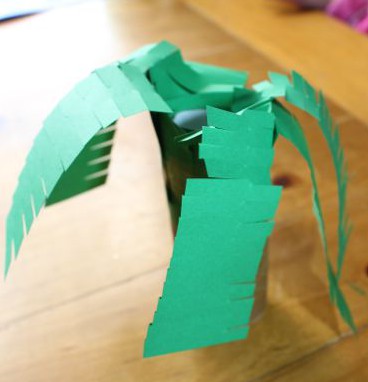
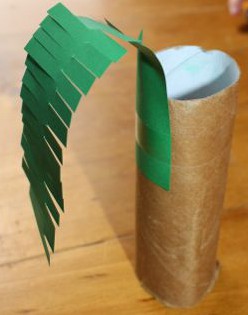
The next tree has foliage made from sheets of green paper. We cut the paper into strips, and then placed small cuts into both sides of these strips to create leaves that A thought look like palm leaves. The key is not to cut right through the strip, though A had a little trouble with this and we ended up with a few short leaves! We left a section at one end of each leaf uncut, where we could attach each leaf to a cardboard roll. A taped the leaves to the outside of the roll, and then let the leaves flop outwards and down. This was her favourite tree.

IMG_1663

Putting the tissue paper into the cardboard roll.

Putting the tissue paper into the cardboard roll.

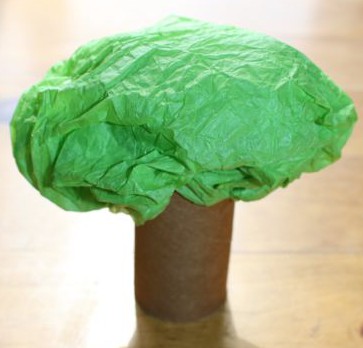
The last tree was the simplest of all. A loosely rolled one end of a sheet of tissue paper and inserted it into a cardboard roll. She used a piece of tape to secure it, and then scrunched and shaped the tissue paper into a ball shape to create the tree’s leaves. She added a few pieces of tape to keep the tissue paper attached to the cardboard roll.

A was very happy with her cardboard roll trees, and used them to create fun play scenes with her animal and dinosaur figurines.

A very happy girl with her new trees and her animals.

A very happy girl with her new trees and her animals.

Paper Bowl Ladybird

Standard

IMG_17471

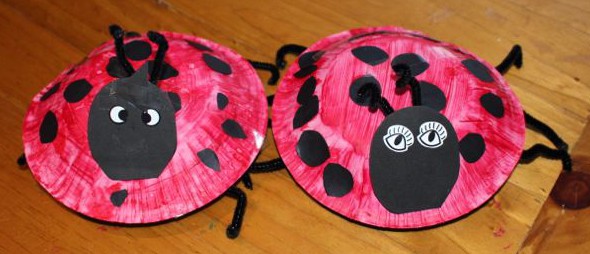
The kids are very excited by bugs at the moment, and they think ladybirds are particularly nice. They made a ladybird each from a paper bowl.

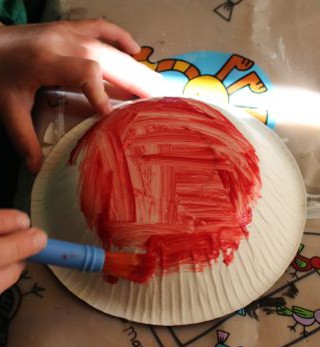
Painting.

Painting.

The faded colour of the painted bowls.

The faded colour of the painted bowls.

They started by painting their upside-down bowls with red paint. The tube stated “Rockin’ Red”, but it looked far more pink on the bowl. We did three coats of red paint on each bowl, but it still looked pinkish and thin. It’s a new tube of paint, and I’m quite disappointed in it, I was hoping for a more vibrant red for our ladybirds. No matter though, the kids still liked the colour!

Gluing on spots.

Gluing on spots.

I cut out the heads from some black foam, and the kids glued them onto the ladybirds’ bodies. They stuck on eye stickers, and added a curled black pipe cleaner for antennae. They also glued on lots of black paper dots that I had cut out earlier.

Sticking on the legs.

Sticking on the legs.

Six legs per ladybird made from black pipe cleaners, and sticky taped to the underside of the bowl, and they were finished. The kids are very proud of their new ladybird friends.

A's ladybird.

A’s ladybird.

L's ladybird.

L’s ladybird.


Tissue Paper Flower Art

Standard

IMG_1682

Sheets of tissue paper.

Sheets of tissue paper.

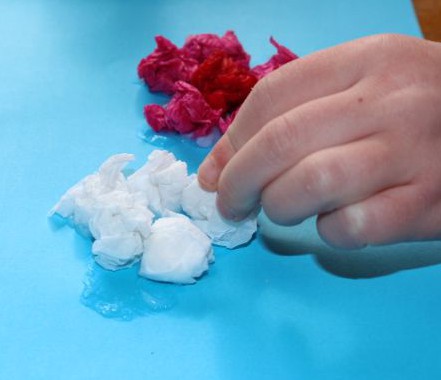
Spring has sprung, and A is feeling like doing lots of flowery arts and crafts at the moment. She made this delightful picture by scrunching up circular sheets of tissue paper into small balls and gluing them onto a sheet of blue paper.

Gluing down the tissue paper balls.

Gluing down the tissue paper balls.

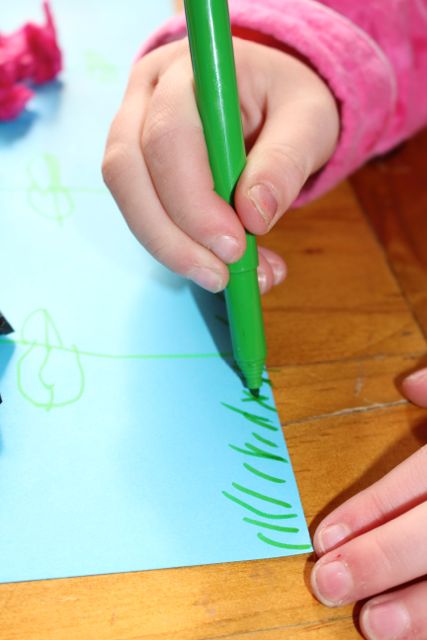
Every time she scrunched up a piece of tissue paper, she said “Scrunching it up like I don’t want it any more.” And then she would stick it down using Clag glue. She even put a sun up in the corner to help the flowers grow. The stems, leaves and grass, she drew using green markers.

Adding grass.

Adding grass.

Paper Weaving

Standard

IMG_1683Paper weaving is a simple activity that kids love. It can be done with just two contrasting pieces of paper. A chose a sheet of purple paper for her base, and then some green, light blue and dark blue paper for her weaving strips.

The cut base, with the edge forming the frame.

The cut base, with the edge forming the frame.

I folded the sheet of purple paper in half (short ends together), and then cut in from the folded side, leaving a couple of centimetres at the end and edges to form a frame around the edge. Each cut was about two centimetres apart, but there’s no need to be exact.

Cutting a strip of paper.

Cutting a strip of paper.

A cut some strips of coloured paper to weave through the base sheet. She made some thin and some fat. I think having uneven strips makes the finished artwork more interesting than even strips.

A started weaving strips through the cuts of the base sheet. She practiced over, under, over, under… until her strip was all the way across the base. Once she had a strip weaved through, she pushed it up against the edge of the last one, and did another one. It was a little difficult to get the last strip in, as there wasn’t much space left, so I helped her finish it off.

Weaving paper strips.

Weaving paper strips.

A added a dab of glue under the end of each strip to hold it in place. The Clag glue made the colour in the paper run a little, so we could see where the glue was even once it had dried, so next time we will use a glue stick!

Putting on some glue.

Putting on some glue.